

The Americas region has been under a microscope this past year like never before. A series of events, the start of lethal airstrikes against alleged drug boats, the 2025 National Security Strategy’s positing of a “Trump Corollary” to the Monroe Doctrine, and of course the January 3 raid that plucked Nicolás Maduro out of his bed and into U.S. custody are just a few of the factors driving media attention and foreign policy interest in the region. Even as war with Iran has diverted U.S. attentions inexorably back to the Middle East, the United States has remained heavily involved in the Americas as well.
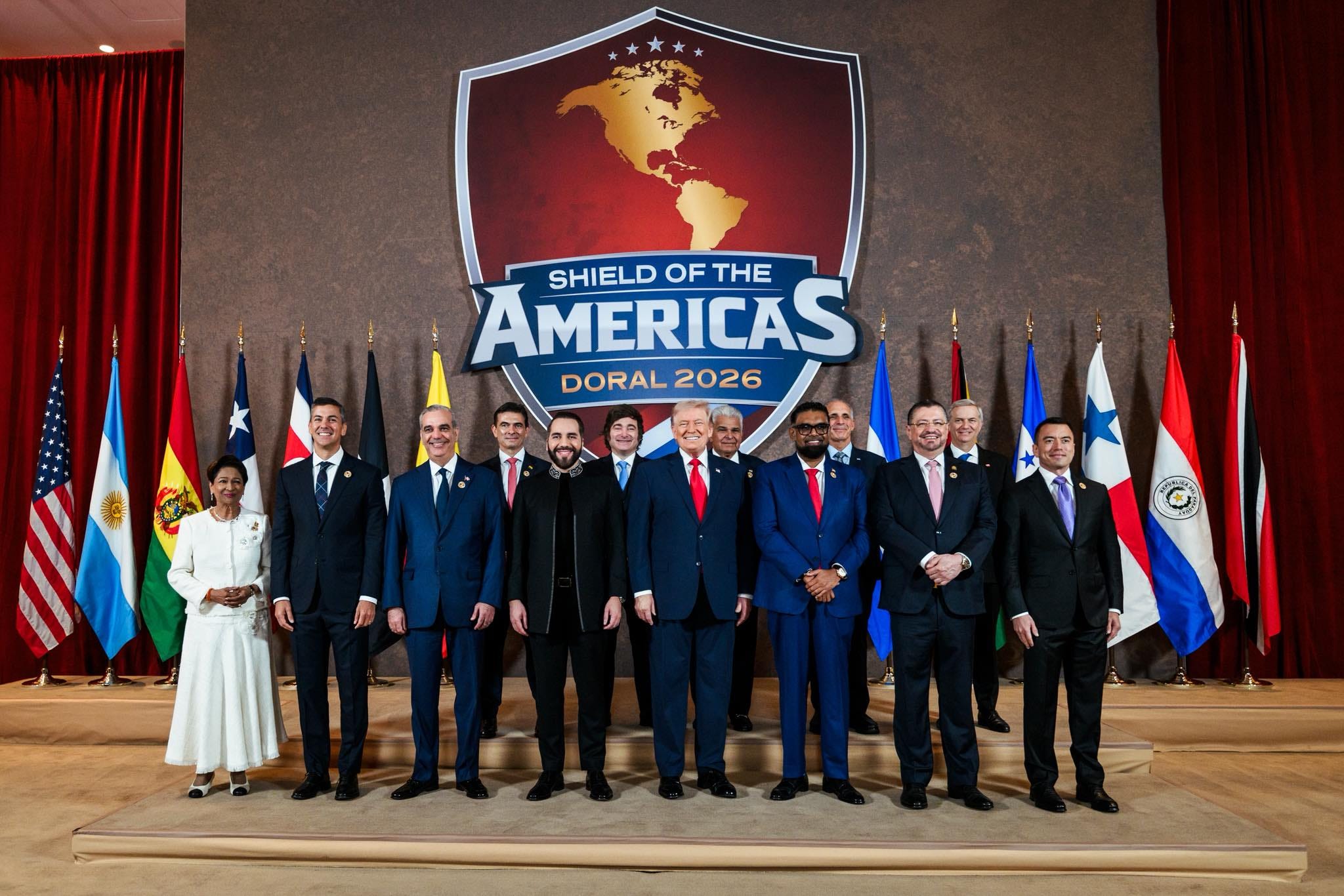
As missiles and drones crisscrossed the Strait of Hormuz, the United States convened an assemblage of Latin American and Caribbean (LAC) leaders for the inaugural “Shield of the Americas” Summit. Earlier that week, the United States announced it was undertaking joint military operations with Ecuador against drug trafficking organizations. Donald Trump has also steadfastly insisted that, once the current unpleasantness with Iran is wrapped up, “Cuba is next.” It seems that even if LAC ends up playing second fiddle to the Middle East for the rest of the Trump administration, it will still receive far more attention than has been the norm historically.
But for all this unprecedented focus on the Americas, I’m increasingly left with the feeling that the “Donroe Doctrine” is failing to live up to the hype. This assessment isn’t new, when the 2025 National Security Strategy came out, I wrote that:
“it seems profoundly unclear what new dimension the Trump Corollary brings to the table. Instead, the NSS lays out a grab bag of things it doesn’t want to have happen in the Americas. We don’t want countries trafficking drugs, or migrants, we don’t want China controlling critical infrastructure, we don’t want to lose access to the Panama Canal. But are those things preconditions for the use of military force? Or does a country need to check several of those boxes (like Venezuela) before bombs start dropping? If countries work with the United States to stop those things from happening, will it be rewarded, and if so, in what way? These are fundamental questions about how you connect means with ends, the exact thing the NSS promises to do, but I feel myself having to fill in the blanks left in the document.”
Now, about four months later, I think that assessment holds up. While I do believe Washington’s foreign policy apparatus is trying to approximate a cohesive doctrine, at the strategic level the Trump Corollary has remained mostly a branding exercise.
This lack of coherence has caused the diminishment of the Donroe Doctrine from a sweeping hemispheric program, to a series of one-off engagements, and caused the United States to overinvest in counter-crime initiatives while ignoring for the most part China’s still deeply entrenched influence in the region. This is a problem because a Western Hemisphere focus is genuinely overdue, but the current U.S. approach risks sabotaging the long-term viability of such a strategy.
From Hemispheric Defense to “Greater North America”
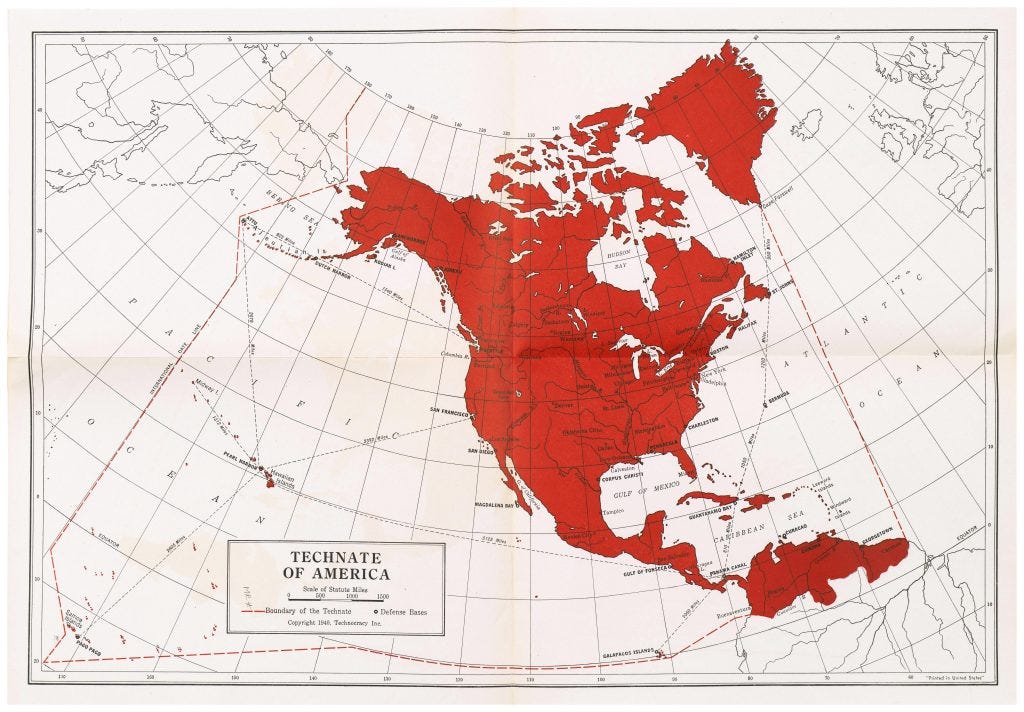
The most recent downgrading of the Donroe Doctrine came with Pete Hegseth’s remarks to LAC dignitaries at the March 5 Americas Counter Cartel Conference. There, Secretary Hegseth articulated a vision of “Greater North America” encompassing “every sovereign nation and territory north of the Equator, from Greenland to Ecuador and from Alaska to Guyana.” These countries, bounded by the Amazon and Andes mountains to the south, constitute the United States’ “immediate security perimeter.”
I understand the United States’ rationale for this to an extent, strategy means prioritization, and if you have to draw a line somewhere, Greater North America seems pretty good. Through the lens of U.S.-China competition, Beijing has advanced the furthest in countries south of the Equator, while the United States remains ahead from Ecuador on up.
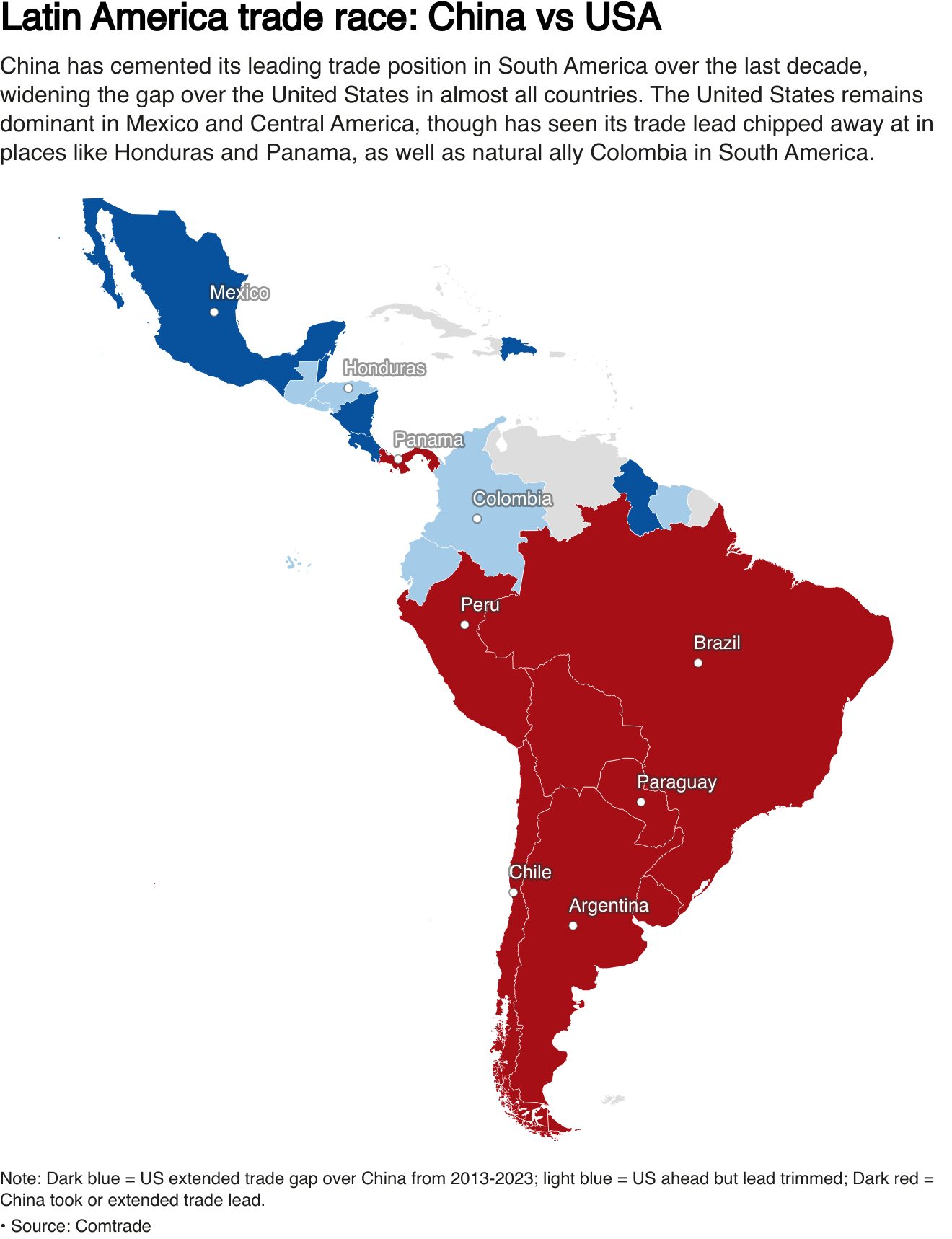
There are, of course, exceptions to this general rule, but the United States has been cleaning house this past year to shore up its north-western hemispheric dominance. Venezuela, previously a bastion of Chinese and Russian influence in the Americas, is now a de-facto U.S. protectorate. Panama, the first LAC country to accede to China’s Belt and Road Initiative in 2017 has been actively curtailing Chinese influence in and around the Panama Canal, much to Beijing’s displeasure. Cuba is rhetorically defiant, but in no position to sign any provocative new economic or security deals with U.S. adversaries, and Nicaragua, which has stayed out of the spotlight for now, remains massively exposed economically to U.S. sanctions.
It’s not necessarily a bad idea to double-down on areas of comparative U.S. advantage, but drawing a security perimeter that includes only half of the Western Hemisphere is a deeply flawed approach. From a U.S.-China competition perspective, Greater North America does little to obstruct China’s access to Latin American raw materials or markets. Indeed, if the Donroe Doctrine truly ends at the equator’s edge, it would mean giving China unfettered access to some of the world’s largest reserves of critical minerals, agricultural powerhouses, oil and gas deposits, as well as critical Antarctic gateways.
Now, clearly the United States is not just ignoring the rest of South America, but its moments of focus have been more episodic than strategic. The Trump administration cancelled visas for Chilean diplomats to protest a planned Hong Kong-Chile fiber optic cable, and continues to raise alarms over the Peruvian port of Chancay. These efforts have certainly rattled China, however, to date they seem insufficient to compete with, let alone outcompete, China in the countries where it still holds a few cards.
In Panama, whose recent Supreme Court decision to cancel the leases held by Hong Kong-based CK Hutchison for two ports along the Panama Canal was hailed as a geopolitical win for Washington, the United States may have been its own worst enemy. Rhetoric about “taking back” the canal, by force if necessary, placed the government of José Raúl Mulino in the unenviable position of having to placate Washington’s demands, and fend of nationalist protest at home. In the end, it was Panamanian political will, more than U.S. strategic savvy that carried the day.
In the case of Venezuela, the geopolitical rationale for U.S. intervention is looking weaker as the United States continues pass Venezuelan oil along to China (albeit now at market rates). Further south, Argentina has been steadily increasing its grain exports to the PRC. China’s supply chains for oil, minerals, and foodstuffs from the Americas seem to be relatively untouched, whether their source countries fall within or outside the United States’ declared security perimeter.
Maybe I’m also blowing the “Greater North America” concept out of proportion. Hegseth’s speech was mainly focused on security and organized crime in particular, so perhaps the hemispheric Donroe Doctrine is alive and well, just with the countries of Greater North America getting a bit of extra attention.
But that argument still means the United States will be leaving several erstwhile allied governments in the lurch. Fully one-third of the 12 LAC leaders who attended the Shield of the Americas Summit hail from countries south of Greater North America. Even if unintended, revising the Donroe Doctrine from a hemispheric to half-hemispheric strategy signals that the rewards for being a staunch U.S. ally in South America are likely to be limited.
Towards a True Hemispheric Strategy
It is telling that, less than four months out from Operation Absolute Resolve, people are already starting to question how long U.S. interest in LAC will hold. U.S. midterm elections are on the horizon, and likely signal the end of the Trump administration’s blank check on foreign policy. Most analysts seem to implicitly or explicitly assume the Trump Corollary has an expiration date of January 2029, if not sooner.
I think that these assessments are directionally correct, but at the same time I believe we still haven’t hit peak Donroe Doctrine yet.
In the days following the U.S.-Israeli strikes on Iran for instance, I saw lots of speculation that, much like the perpetually deferred “Pivot to Asia” before it, the current pivot to the Americas may end up falling victim to runaway escalation in the Middle East. The most extreme version of that argument is unlikely for a few key reasons.
First, by this point the United States has created tethers to the region that will lock in a greater focus on hemispheric affairs for the foreseeable future. Managing Venezuela, figuring out what to do with Cuba, controlling migration, and maintaining drug interdiction efforts all demand continued attention, and impose reputational costs if they fall through the gaps.
Second, the cost of power projection in the Western Hemisphere is extremely low. The military and economic imbalance between the United States and its neighbors, along with the emergence of a like-minded bloc of countries means that it seems to be only getting easier for Washington to throw its weight around.
For a useful comparison, look at Operation Absolute Resolve versus Operation Epic Fury. In the first case, U.S. forces were in and out of Venezuela in a matter of hours, suffered zero killed in action, and left with a pliant successor firmly in place. In terms of munitions the operation was remarkably parsimonious, the majority of strikes on Caracas being conducted with lower-end, and easier to replace platforms.
That has clearly not been the case with Iran, and even though I think the United States has exceeded its wildest dreams in terms of military overmatch, Washington has no clear path to translating tactical success into strategic victory. While a tenuous ceasefire prevails for now, war with Iran has already resulted in U.S. deaths, depletion of critical interceptors and strike platforms, and a price tag in the billions.
Finally, it seems like a focus on the Western Hemisphere plays well with all the disparate factions of the modern Republican party in a way that other foreign policy adventures doesn’t. Isolationists still like the idea of blowing up drug traffickers at sea before their illicit cargoes can reach U.S. victims. Prioritizers are convinced that a new Monroe Doctrine will help secure the United States’ homefront for the coming war with China. Meanwhile primacists see no reason why the United States should have any more compunctions about intervention in its own neighborhood than it has in more distant lands.
The fact that all these groups can find common cause could even lead to increased action in Latin America as a way of scoring quick wins in response to foreign policy setbacks in the Middle East.
So the Greater North America focus at least isn’t going to change dramatically until 2029, but what happens after that? I’ll avoid speculating on likely electoral outcomes, but suffice it to say with the sole exception of a Rubio presidency, I would expect the next administration to seek to curtail Western Hemisphere activities across the board.
I understand this temptation, but viewing the Donroe Doctrine as merely a costly diversion from more important geographies is still throwing the baby out with the bathwater. Instead, we should recognize that the germ of the idea, a belief in the need to reprioritize the Western Hemisphere, is a good one, even if the form it took proved lackluster.
It may be instructive to look to another period where the United States confronted a world order in decay. On the precipice of the Second World War, Franklin Delano Roosevelt understood the importance of a truly hemispheric strategy. Fearful that the rising tide of fascism could engulf the Americas in whole or piecemeal, FDR breathed new strength into the Inter-American system.
Notably, FDR and his advisors saw a “quarter-sphere of defense,” in other words Greater North America, as untenable for the United States. To avert this possibility, Washington worked with a diverse coalition of partners to secure critical supply chains, and present a united front against the Axis powers.
In Mexico, left-wing Lázaro Cárdenas cut off oil exports to Germany, Italy, and Japan in due time after nationalizing the country’s oil sector. In Brazil, Getúlio Vargas’ autocratic government funneled raw materials to support Washington’s defense industrial juggernaut, and even dispatched Brazilian soldiers to the Italian campaign. Countless other countries furnished materiel and manpower to help the allied cause, while remaining insulated from the heaviest fighting taking place oceans away.
If the United States truly wishes to replicate the herculean efforts that carried it to victory in 1945, the worst thing it can do is turn its back on the Americas at large. Instead, I hope that we can learn the right lessons from our present moment that a Western Hemisphere focus harbors great potential, but also that alliances built on fear and encompassing only half the hemisphere are doomed to fall short.
I am deeply invested in the development of Latin America; therefore, the launch of the Shield of the Americas this past March was a particularly compelling development. My initial takeaway is that the U.S. is aggressively reasserting itself as the sole hegemon of the Western Hemisphere, effectively maneuvering to sideline Chinese influence.
While the overarching geopolitics are clear, my primary focus remains on the initiative’s commitment to combating regional narcotrafficking—a goal I firmly support. In my earlier analysis, I nearly overlooked the trade-offs involved because of my focus on security, so it has been refreshing to see the nuances of how this movement is actually manifesting.
I believe this "Donroe Doctrine" will continue to prevail, largely because we are witnessing a "second swing" in Latin American political dynamics. Years ago, the region experienced the "Pink Tide" of leftist and socialist regimes. Today, the pendulum has swung back; major players like Argentina, Ecuador and El Salvador now have right-wing leaders who are closely aligned with the current U.S. administration. The notable exceptions to this trend are Mexico, Colombia, and Brazil. However, with Colombia and Brazil both heading into pivotal elections this year, the regional landscape could shift even further. It will be fascinating to see if these remaining powers eventually fold into the Shield of the Americas movement or continue to hold out as bastions of regional autonomy.