

Happy new year, Caballeros readers, and boy, are we starting things off with a bang.
On January 3 I woke up to my phone ringing. Answering it I was treated to the breathless voices of two friends informing me that the U.S. had just captured Maduro and his wife and was flying them back to stand trial in New York.
Admittedly, my first thought was that this must be a prank, so I did what any self-respecting analyst does and opened Twitter to confirm my suspicions. Instead, I was treated to a video at the top of my feed of U.S. helicopters flying over Caracas, with the caption “can we get a Venezuela edit of ‘Fortunate Son’?” At long last, the promised operation against Maduro had come.
The subsequent messaging from the White House has been, predictably, largely confusing and not a little bit contradictory. On Saturday, Trump announced that “we need total access” to Venezuela’s oil infrastructure, and that the revenues generated from that would help the U.S. “run” the country. The next day, Secretary of State Marco Rubio told NBC “we don’t need Venezuela’s oil” and that running the country really meant working with now-interim president Delcy Rodríguez to find areas of mutual interest.
For the most part, I think the current raft of think pieces covering these events is pretty good, and has converged on what I view as the right take, namely that the operation itself was a tactical masterpiece, what comes next is harder (and more confusing). So in this post, I’m hoping not to rehash that take, but give my view on why the implications of the U.S. capture of Maduro go far beyond Venezuela itself.
Right-Sizing Operation Absolute Resolve
In my view, no matter what comes next, the United States has already won. Operation Absolute Resolve surely ranks as one of the most impressive and audacious special forces missions in history. I can think of no other instance in which a foreign head of state was taken prisoner in the heart of his own capital and exfiltrated with no loss of life among the capturing force. As time goes by and we learn more about the true scale, complexity, and contingency of this operation I am sure it will swiftly take its due place in the annals of special operations history.
Even more importantly, the operation proved the United States was willing to use military force against the sovereign territory of a country in the Americas. I’ve argued before that Venezuela is merely the most convenient testing ground for a more expansive, and less restrained, vision of U.S. power. Maduro’s international isolation, domestic illegitimacy, and fraught history with Trump made him the first target, but he will not be the last.
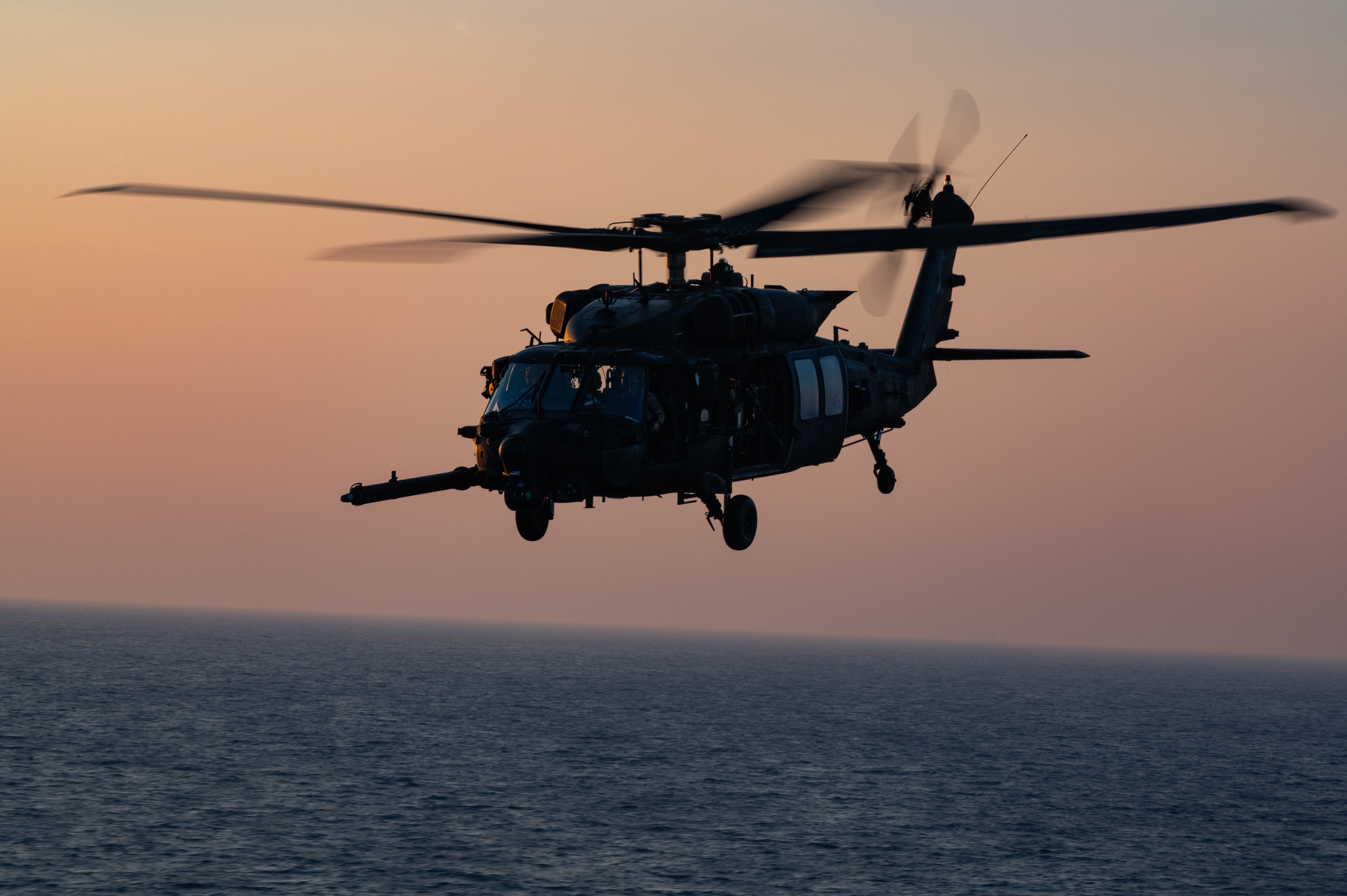
The messaging from the White House has been remarkably consistent on this point, the United States expects to reign supreme in its hemisphere. From the “Trump Corollary” expressed in the 2025 National Security Strategy, to the President’s repeated statements that the next step in the ongoing counternarcotics campaign would involve going after traffickers on land. Indeed, it is telling that shortly after the capture of Maduro, Trump reiterated his desire to acquire Greenland, as well as threaten the governments of Colombia and Cuba.
Of course, as other commentators have pointed out, U.S. military intervention in the Americas is anything but unprecedented. This operation is more the United States reverting to the historical mean than departing from one, but the breaking of a three decade streak of non-intervention in the hemisphere deserves a eulogy at least.
The way the United States intervened in Venezuela also matters. The fact that U.S. forces were able to get in and out so smoothly again is a victory for Washington on several fronts. In particular, it leaves Venezuela with little recourse, their president is gone, held securely in the New York Metropolitan Detention Center, there seems to be little to no prospect of getting him back in the near term. Meanwhile, any retaliation the Venezuelan armed forces might wish to inflict on U.S. forces in theater would almost certainly be met with an overwhelming response. If U.S. and Venezuelan forces were still skirmishing on the beaches that would be one thing, but practically speaking there is nothing for the Venezuelan military to do right now.
In this way, criticism that the Trump administration launched a war of choice without the approval of Congress also rings somewhat hollow. Practically speaking, there is no conflict right now between the United States and Venezuela, U.S. forces were already safely out of the country, with their prisoners in tow, before the first reports of what had happened became known.
The unmitigated success of Operation Absolute Resolve therefore also strengthens the United States’ hand in negotiations with Delcy Rodríguez and the remaining Chavista inner circle. Washington has proven that the FANB’s ability to impose even token costs on the U.S. is severely limited. While another snatch-and-grab operation seems unlikely, the United States could almost certainly reach out and kill senior leaders like Defense Minister Padrino López or the interim president herself at its leisure and without much risk to its own personnel.
Other governments in the Americas are likely taking similar notes. While the spectacle of Operation Absolute Resolve probably raised eyebrows in Moscow, and Beijing, it should be even more alarming for governments in the Western Hemisphere. That is because unlike the United States’ peer adversaries, there are few (if any) countries in Latin America or the Caribbean that could hope to resist an operation on the scale of what was seen in Venezuela. Even the most capable militaries in the region would struggle to field 50 aircraft in a single operation, let alone the more than 150 used in Absolute Resolve.
Indeed, the operation’s success goes to show just how wide the gap has become in terms of the types of effects high-end militaries can create against low-end militaries. The temptation is surely strong to see whether the same feat could be replicated against, say, cartel leadership in Mexico.
But tactical success often carries with it strategic risk. Not only does the United States find itself now with the task of managing a fraught relationship with Venezuela, but it could easily succumb to the trap of overreach.
In 1954 a ragtag force of disgruntled exiles backed by the CIA succeeded in toppling the government of Jacobo Árbenz in Guatemala. The operation was, in retrospect, sloppily planned and hinged more on internal tensions within the Guatemalan government than any stroke of operational genius among the coup plotters. Nevertheless, the success of the Guatemala operation fed a myth of invincibility that historian Nick Cullather documented led the CIA in part to green-light another ambitious effort to invade Cuba via the Bay of Pigs in 1960. Compared to both of these operations, Absolute Resolve was infinitely more competently organized, but the danger remains that tactical success in Venezuela could lead to the United States embarking on riskier and less well-thought-out actions in the hemisphere. Past successes can make future blunders more likely, with devastating consequences for U.S. servicemembers, civilians, and the stability of the region as a whole.
A Word of Caution on Spheres of Influence
There are some who have taken Operation Absolute Resolve, and Trump’s invocation of the “Donroe Doctrine” as evidence of the United States’ continued shift into a world where the global great powers carve up the world into spheres of influence. To the United States goes the Western Hemisphere, while Russia and China are given free reign in eastern Europe and east Asia respectively. I remain skeptical of these claims. Even as the United States might seem eager to dance upon the grave of the rules-based international order, this does not mean Washington will consent to rule merely half the world.
Trump wants to be master of the Western Hemisphere, that much is certain. But the United States has never let domination in one region prevent itself from voicing concerns elsewhere. Indeed, it seems laughable to suggest that the United States plans to withdraw from other regions when it lobbed missiles into Nigeria little over a week prior to the capture of Maduro. It seems equally implausible as well to suggest that Trump would let Iran’s nuclear ambitions be managed by Moscow or Beijing as the masters of the Eurasian sphere of influence.
Even when it comes to Europe, Trump’s foreign policy is not one of neglect, but engagement in its own way. The 2025 NSS which drew much condemnation across the Atlantic, did so not because it sought to dust the United States’ hands of Europe, but because it sought to leverage U.S. power to meddle more in domestic European politics by supporting “patriotic European parties” aligned with the Trump administration’s ideological project. The United States is still engaging the rest of the world, it just may not be with the same language other countries are used to.
Thus, while China in particularly might feel emboldened by U.S. behavior in the Americas to push its own expansionist goals in the Indo-Pacific, that is not guarantee the United States will not snap its focus back to Asia should it sense a vital interest at stake there. Multipolarity does not guarantee the great powers of the world will find equilibrium, far from it, it demands a much more taxing dance by diplomats and generals alike to maintain an increasingly fragile status quo. We should beware the embrace of spheres of influence by world powers not so much because of what they may inflict within their designated boundaries, but because the very spheres themselves often overlap and provide new fuel for interstate conflict.
One question worth considering is how U.S. leverage over Rodriguez will increase or decrease over time. Does she simply have to “weather the storm” so to speak until Trump fixates on the next shiny object, or will pressure mount to show tangible concessions to the U.S.