

Two weeks ago, Elbridge Colby penned an article in Americas Quarterly calling, among other things, for Latin American countries to increase their defense spending. This predictably drove a fair amount of online debate and discussion.
Readers of this blog will be unsurprised to learn that I agree with Colby’s argument that Latin America should spend more on its defense. I disagree with his assertion that spending should flow primarily into buying American weapons (U.S. defense exports should compete for international orders on their merits) but I do understand why a senior Pentagon official would make this case. I’m also conscious that is not a particularly popular argument at a time when militarism seems to be on the rise both within Latin America and the United States.
My goal with today’s post is to highlight that the country currently doing the most to modernize its defense capabilities is Brazil, one of a shrinking number of Latin American governments ruled by the left. Brazil’s successes (and failures) at bringing its armed forces into the 21st century, as well as developing a globally competitive arms industry, illustrate how military modernization in Latin America does not inherently spell a return to the era of coups and juntas, and may even be beneficial for countries looking to climb the rungs of industrialization.
Brazil’s Military Moment
Brazil is the largest country in Latin America by territory, population, GDP, size of its military, and at least a dozen other factors.1 This makes it difficult to generalize lessons from Brazil to the rest of the region. Still, the South American giant confronts many of the pathologies that affect other regional armed forces, ageing equipment, a defense budget that is consumed by personnel expenses with limited space for procurement, and residual civilian distrust of military leadership.
Within this context, the Brazilian defense industry’s advances in recent years are all the more impressive. Between 2024 and 2025, defense spending rose by 13 percent in real terms according to the Stockholm International Peace Research Institute. In 2025 Brazilian arms exports reached record highs, bringing in $3.1 billion amid global rearmament trends.
While Brazil ranks 23rd globally in terms of arms exporting countries, it is the only exporter of note in Latin America, accounting for 85 percent of all arms sales by Latin American countries from 2000 to 2025.
President Luiz Inácio Lula da Silva is hardly a chest-thumping warmonger. He has nevertheless supported the Brazilian defense industry under the umbrella of the New Growth Acceleration Program (PAC), a framework for strategic federal investments in key sectors. When it was announced in 2023 the PAC included some 53 billion reais (about $10.5 billion) for strategic defense projects, most notably naval shipbuilding, border security, and aircraft construction.
Brazil has also pursued a relatively successful offset strategy. Offsets in the defense sector refer to incentive mechanisms used by foreign suppliers to convince prospective buyers to go with non-domestic options for their national defense. Typically, this takes the form of technology transfer and some form of co-production to benefit local industry.
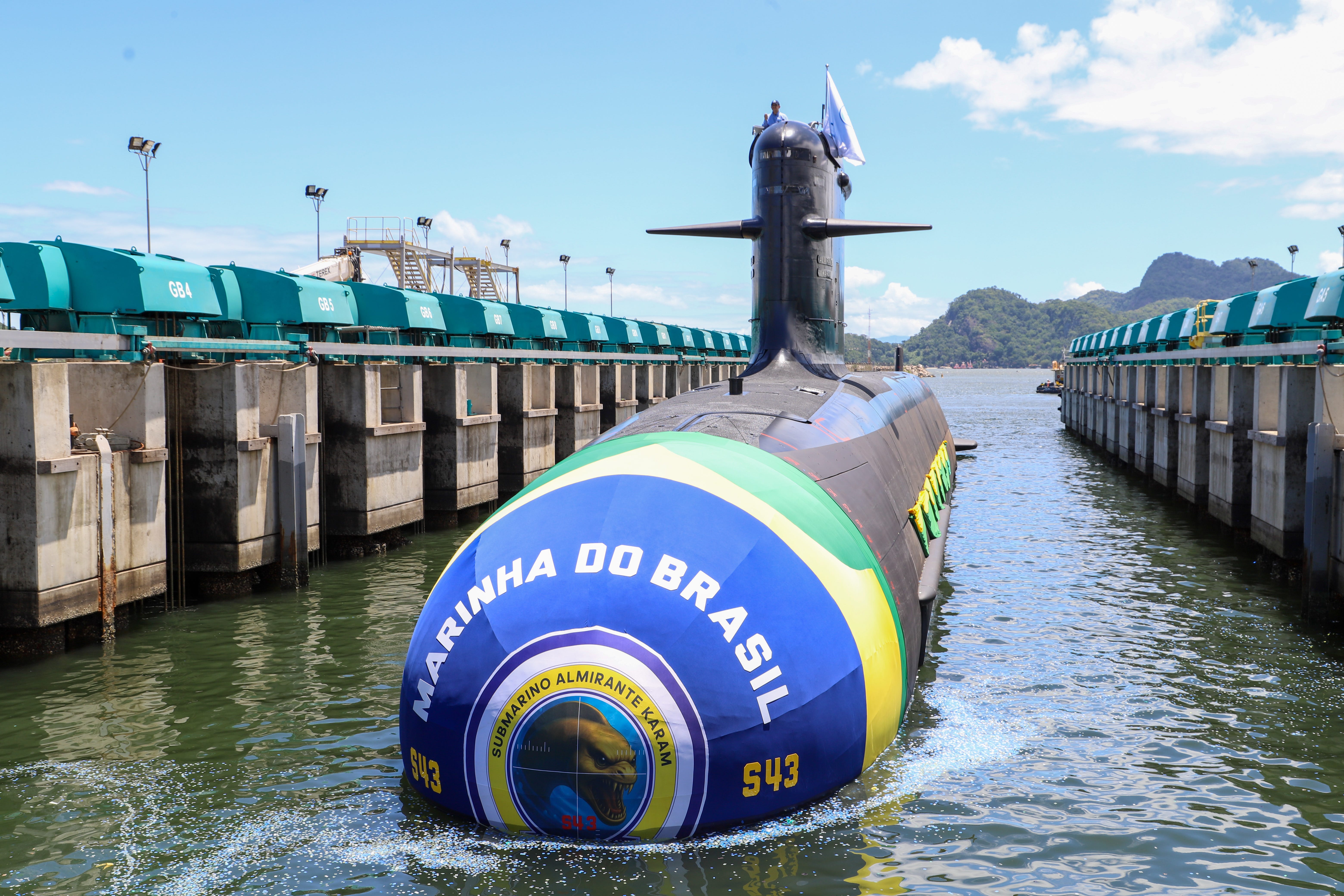
In Brazil’s case, the establishment of a domestic production line for the Saab JAS-39 Gripen fighter aircraft represented a significant offset that provided a boon to Brazil’s already well-established aerospace sector. Other examples include the Tamandaré-class Frigate program and PROSUB submarine program. In both cases, Brazil partnered with European firms, Germany’s Thyssenkrupp Marine Systems and France’s Naval Group respectively, but brought in a host of Brazilian companies and required some level of construction to take place at Brazilian shipyards.
Perhaps no company exemplifies Brazilian defense industrial success better than Embraer. The company’s C-390 Millennium military transport plane and its planned KC-390 aerial refueling variant have been runaway commercial hits. The airframe came into production as air forces around the world began to see their legacy transports and tankers near the end of their operational lives, creating strong demand for a new platform to fill these roles. The C-390 was also cost-effective and a better fit for the operational needs of many militaries compared even to the venerable U.S. C-130, their strongest competitor. To date, three NATO member states, Portugal, Hungary, and the Czech Republic, have taken delivery of the plane, while South Korea, the UAE, Colombia and others are all in the process of planning or awaiting additional orders.
Embraer has historically been adept at identifying and seizing upon market opportunities in both civil and military aviation. The Tucano and Super Tucano ground attack planes are counterinsurgency mainstays found throughout global air forces, while the company is also seeing new opportunities for its narrow-body commercial airliners and private jets.
There seem to be preliminary signs that Brazil’s shipbuilding drive could become another source of export advantage. Brazil made overtures to Argentina about collaboration on submarine construction as the latter country looks to restore its subsurface capabilities. Meanwhile progress on negotiations to procure an additional four Tamandaré-class frigates to the four already on order, should keep Brazilian shipyards humming well into the next decade.
There are still, however, major problems with Brazil’s defense industrial base and procurement strategy. Budget requests from the armed forces routinely outstrip the funds appropriated to it. Brazil’s simultaneous pursuit of multiple complex defense industrial projects also makes it difficult to ensure all projects stay on track when challenges manifest.
Major procurement drives like the Gripen E/F partnership with Saab have been dogged by delays and cost overruns. While the Brazilian air force recently indicated its interest in purchasing an additional 20 fighters, it remains to be seen whether there will be enough cash to go around.


Brazil’s nuclear-powered attack submarine (SSN) ambitions could also wind up becoming an expensive diversion from more pressing focus areas. Envisioned as the crowning achievement of the PROSUB effort, the Álvaro Alberto SSN is currently scheduled to come into service in 2037, with a nearly $4 billion price tag that is liable to climb even higher.
The main advantage nuclear propulsion offers is endurance, SSNs can stay at sea longer, and patrol further than their diesel-electric counterparts can hope to. But while it’s certainly conceivable that Brazil might want the capability to undertake long-range missions, but doesn’t fit within the country’s core national security objectives. From the perspective of securing Brazil’s “Blue Amazon” a single SSN is likely less valuable than a larger fleet of conventional propulsion Riachuelo subs.
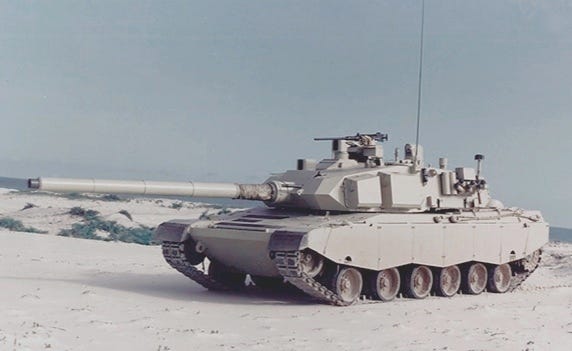
Brazil’s defense industrial ecosystem is the most robust in Latin America, but it still rickety. The country still doesn’t spend enough on arms for companies to rely on domestic demand alone, a feature which subjects Brazilian defense first to the vicissitudes of international arms sales. Perhaps the most notorious case of this is the EE-T1 Osório, Brazilian firm Engesa’s foray into the main battle tank market which bet on purchase orders from the Middle East that never materialized, torpedoing the platform’s chances before it had a chance to enter into domestic service.
More recently, in 2022 Brazilian company Avibras, one of the key manufacturers of the MANSUP anti-ship missile and Astros II mobile artillery rocket system, filed for bankruptcy amid ballooning debt and labor disputes. In the years that followed a range of foreign buyers, including Chinese state-owned defense giant NORINCO, circled the company but were blocked from buying by the Brazilian state. Ultimately it would be a round of private capital that rescued Avibras and allowed the company to reach an agreement with its union to restart production this year. This was not the first time. The company has flirted with bankruptcy several times in the past three decades, with a last-minute $69 million deal with Saudi Arabia rescuing the firm in 1990.
Larger domestic purchases could help Brazilian companies old and new find more stable footing. There are likely major opportunities in the field of uncrewed systems (UxS) where there is substantial demand from countries for low-cost, reliable, intelligence, surveillance, reconnaissance, and strike platforms. I could see a Brazilian medium-altitude long-endurance UAV easily becoming the next Super Tucano with significant export potential within Latin America.
Brazil has all the ingredients to make a play here, the presence of established firms like Embraer that bring a wealth of engineering expertise, alongside newer entrants like Xmobots working on innovative drone designs, and a military that is in theory large enough to place big orders for new UsX capabilities.
But Brazil cannot rely on early export demand to carry its drone industry. The UAV space is a crowded field and getting busier, with platforms like the Turkish TB2 Bayraktar boasting far longer resumes and capturing significant market share. Brazil should endeavor instead to nurture, including through offsets, a drone industry capable of meeting domestic security needs before it looks abroad.
Give Defense a Chance
Since launching this blog, I’ve heard three main arguments against my position that Latin American countries need to spend more on defense. First, that increased defense spending leads to military aggrandizement, erosion of civilian control, and risks plunging the region back to the age of coups and juntas. Second, that Latin America faces no major interstate security threats worth preparing against. Third, and relatedly, that money spent buying tanks, guns, and jets would be better served on social programs.
These are legitimate critiques, and I’m grateful to have debated them with many of you here on this blog and in person. I have three broad responses to each of these as well.
First, I think Latin American states by and large have managed their post-Cold War civil military relations effectively, and it’s not the case that simply spending more on military modernization will automatically undermine this progress. There have been four successful military coups in Latin America and the Caribbean since 1992 according to the University of Illinois Urbana Champaign’s Cline Center Coup d’État Project. In each of these four countries, Bolivia, Haiti, Honduras, and Venezuela, domestic institutions were under serious pressure well before the coup. By contrast, a country like Chile could conceivably increase defense spending rather substantially without worrying about a breakdown in civilian control.
Furthermore, giving the military better equipment in my opinion is probably much less risky from a civil-military relations standpoint compared to other forms that increased defense spending may take. In Mexico for example, the armed forces have assumed new roles in administering public infrastructure projects, collecting customs revenues, and distributing federal aid programs. These moves have undoubtedly increased the risk of politicization and praetorianism within the Mexican armed forces, even as the quality of their equipment has fallen behind the curve.
Second, the absence of major interstate war does not mean countries can afford to let their national security apparatus simply atrophy. The character of defense threats in the region is also changing in ways that necessitate some degree of modernization. Drones for instance have become mainstays in criminal arsenals throughout the region, and no country to date fields enough sensors or countermeasures to defeat this threat. While reasonable people might disagree about the relevance of particular systems and where they might fit in the picture (Brazil probably doesn’t need a nuclear sub, but Peru probably does need new fighter jets), on balance more military spending is probably necessary. Put more simply, the legacy systems that most Latin American countries field are insufficient to combat the threats they are currently facing, let alone future challenges.
Finally, investing in domestic defense industry can have positive spillover effects on the rest of the economy. Brazil’s developmentalist approach to defense industrial spending is a case in point here, but countries like Peru have also had success leveraging defense spending to create jobs and revitalize domestic industry. The Peruvian SIMA shipyard for instance has become a naval hub as well as the jumping-off point for South Korea’s defense-industrial collaboration with the Americas.
Absent a regional war the debate in Latin America will always skew towards butter over guns, but some reweighting of the scales seems to be in order.
My goal with spotlighting Brazil’s defense sector is not to claim that everything is rosy, or that all countries in the region should pursue the same types of investments Brazil had. Instead, I want to point out that you hardly need to be a hard-core militarist to think that military modernization in Latin America could be beneficial for some countries to consider.
Brazilian defense analysts are some of the sharpest (and most opinionated) in the region. I will doubtless fail to do justice to the full range of programs underway, but encourage you to delve deeper into this world. Tecnología & Defesa and the Brazil Defense Brief are both great starting points.
As a Brazilian, there are points I agree with and others I don't. I think the coverage of the history and future of Brazil's defense industrial base was well done! However, I have to disagree with the statement that "Latin American states by and large have managed their post-Cold War civil-military relations effectively"; that depends heavily on the specific country. I view Argentina, for instance, as the country facing the greatest difficulty in restoring social cohesion with the armed forces. Even though they held trials for military commanders after the dictatorship—unlike Brazil—these historical issues still affect public perception regarding the need for defense spending. Furthermore, because the region is (theoretically) the most peaceful in the world, there is no public sentiment to justify such investment. I would also raise another point: Latin America generally lacks political stability, which leads to the discontinuation of strategic projects whenever governments change. This discourages companies from investing in R&D, to the extent that armed forces programs are sometimes scrapped altogether. I think there is more to say, but this is getting too long.
Sharp piece, Henry , and the Osório example does more work than it might first appear. The through-line from Engesa's collapse to Avibras's repeated near-death is, as you say, over-reliance on export demand to compensate for thin domestic orders. But it's worth noting how that same Brazil–Gulf axis is now running in reverse.
Where Engesa bet on a Middle Eastern order that never came, EDGE Group (UAE) is doing the opposite: rather than buying Brazilian, it's buying into Brazil's industrial base a 51% stake in Condor, half of SIATT, the MAX 1.2 already in service with the Army, new production in São José dos Campos. The Gulf demand Engesa waited for externally is now arriving as inward industrial investment.