

When U.S. forces stormed into Caracas in the early morning of January 3, 2026 the operation supposedly heralded a different approach from past, failed attempts at wholesale regime change and open-ended nation building. Former Secretary of State Colin Powell described such operations as being subject to the Pottery Barn rule “you break it, you own it.”1 Instead, in Venezuela the Trump administration sought to surgically extract Maduro, leaving the rest of the Venezuelan state in place, but scared straight by U.S. military capabilities.
Rather than being a drain on U.S. resources, Venezuela would pay for itself many times over in the form of oil revenues and investment opportunities for American businesses. Once the dollars began to flow, transition to democracy would follow smoothly, almost an afterthought for all parties involved who would be more busy celebrating the piles of money they’d be making.
But since Maduro’s ouster it has become increasingly evident that the United States isn’t out of the Pottery Barn yet. Managing Venezuela is demanding increasing quantities of U.S. diplomatic and economic support. Oil companies need constant cajoling to resume operations, Washington has spent at least $300 million on earthquake reconstruction but the country requires billions more, and Venezuela’s external public debt has proven an even thornier prospect than even pessimistic forecasters had expected.
All the while, María Corina Machado and the Venezuelan opposition have become increasingly impatient with Washington’s slow progress on political transition. Machado’s conspicuous absence from dialogues between the regime and opposition over conditions for elections is the latest in a series of indignities that began before Maduro had even landed on U.S. soil. For a time, it seemed many were willing to grin and bear it, trusting that eventually all would be well, but this patience seems to be wearing thin.
If this keeps up there seems to be a real chance of a rupture between the opposition and Washington that would put the White House in the unenviable position of having to choose between backing Delcy Rodríguez in the face of mounting public pressure or rolling the dice on genuine regime change.
Perhaps things would be different if the intervention in Iran had gone better. As it stands, Venezuela is currently the jewel in a tarnished crown of qualified foreign policy achievements. If it were to collapse into anarchy and (greater) economic depression, the United States would find itself bereft of its best argument for unfettered executive power over foreign policymaking.
Going Nowhere Fast
Much in has been spilled covering Venezuela’s uneven economic progress in the wake of Maduro’s capture. The tone of these reports varies considerably, but all seem to recognize that the investment bonanza promised by the White House after Operation Absolute Resolve has yet to materialize.
Venezuela has strong fundamentals: its oil reserves, both a blessing and a curse, remain central in any story, all the more so as disruptions to Gulf hydrocarbon flows have accelerated the search for alternative suppliers, while its mineral resources also represent a potential growth opportunity. The country’s beleaguered private sector remains resilient and innovative, as the initial response to June’s double earthquakes showed. Venezuela was once one of Latin America’s richest countries and could be again, but that scenario remains distant.
Oil production has increased since Maduro’s ouster, and now stands at a respectable 1.25 million barrels per day, about 35 percent more than its neighbor Guyana is currently averaging. But much of that increase has been driven by efforts to squeeze greater efficiencies out of existing infrastructure. Guyana will likely leapfrog Venezuela at some time in the next 12-18 months, while foreign investors have yet to reach for the billions of dollars needed to raise Venezuela’s output past the 2 million barrels per day mark, let alone 3 million.
Venezuela’s muddled economic progress has empowered voices arguing that political transition must jump the queue before recovery can happen. I agree with that position in theory, but I also think it simply isn’t the case that Washington can flip a switch from Delcy Rodríguez to María Corina Machado and everything would fall into place.
For one, there is no guarantee that the security forces would tolerate such a change. Even if fear of U.S. retaliation is enough to deter a full-on coup attempt, without the support or obedience of the military an opposition-led government could find itself confined to a few urban centers while criminal activity in the periphery surges.
Venezuela’s $240 billion debt bill will still need to be negotiated carefully, and besides perhaps some additional goodwill an opposition-led government would probably not hold many more cards than the regime does right now.
Finally, democratization is hardly a guarantee of political stability. Investors are holding off on making large financial commitments to Venezuela because they have little to no confidence in the kleptocratic Chavista rump, but even in the event of a wildly successful return to electoral democracy I suspect most companies would elect to wait and see for as long as possible. Latin American countries have long been buffeted by the winds of political polarization, and concessions granted by one government may be repealed in short order if a rival ideology comes to power in a few years.
None of this means that political transition isn’t a worthy goal or that flawed democracy wouldn’t be absolutely better that what Venezuelans are currently enduring. Rather, we should recognize that Venezuela’s predicament is a consequence of overlapping economic, political, and humanitarian crises. There are no quick or easy fixes to such a situation.
The silver lining is that U.S. sway in Caracas only appears to be getting stronger. Washington has a vice grip on the Venezuelan oil industry, representing the single most important source of revenue for the regime. Not only that, but the proceeds from oil sales, estimated by the Financial Times to be worth potentially $13 billion, continue to be administered by Washington though a roundabout and opaque process.
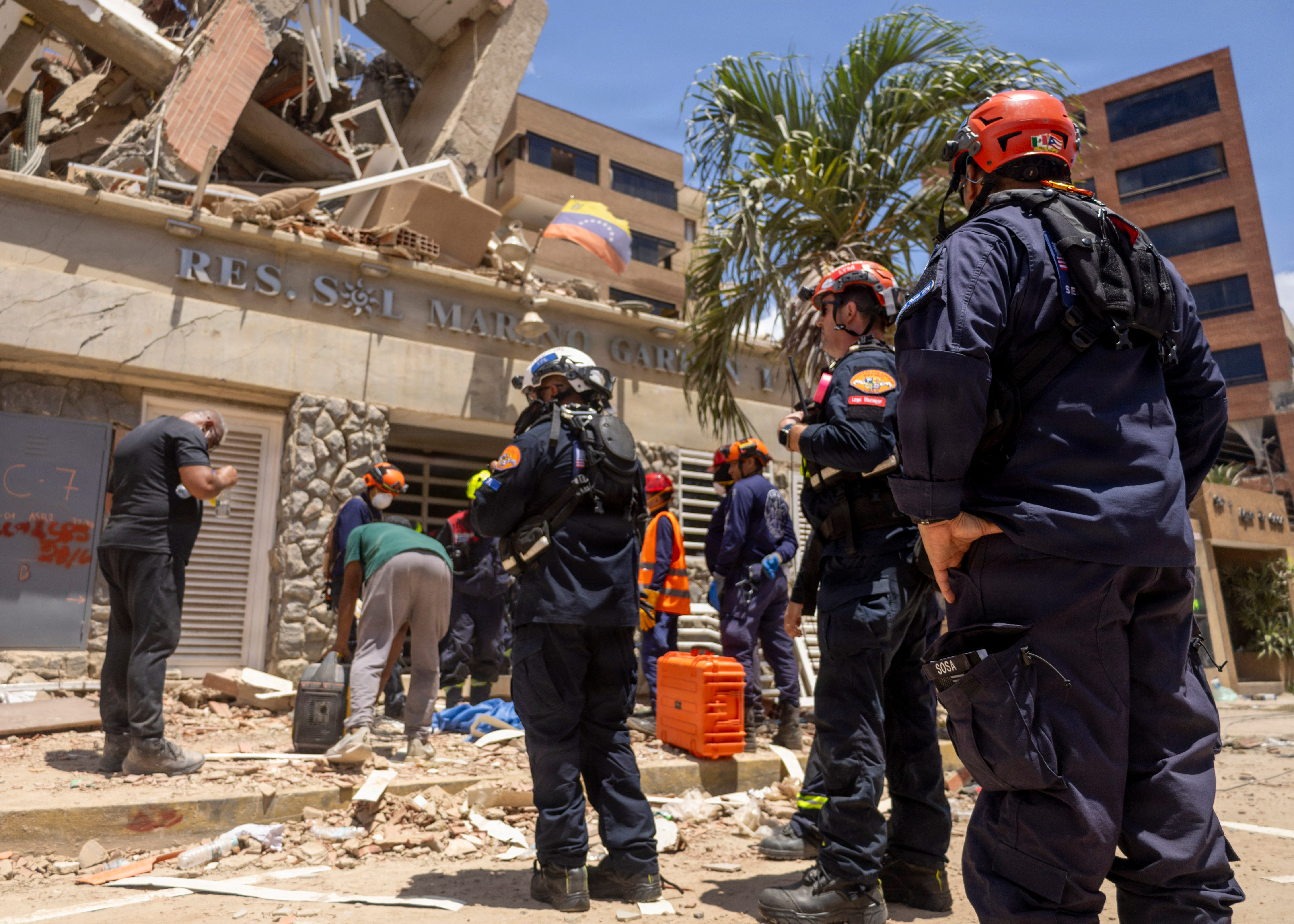
In the wake of the June 24 earthquakes that devastated Venezuela’s coastal regions causing over 6,400 deaths and billions in damage, the importance of U.S. support for the regime has only grown. The country has virtually no chance of recovery in the short-term without U.S. humanitarian assistance, and in the long-term depends on Washington running diplomatic interference to help unfreeze seized regime assets and secure terms with the IMF.
On top of that, the disaster response has brought nearly 1,000 U.S. troops to Venezuela. Their presence was vital to repair quake-damaged runways and get the flow of aid started, but it is easy to see this deployment morphing into a semi-permanent U.S. military outpost in the country. That also gives the United States one more tool with which to intimidate or coerce Delcy and company should push come to shove.
Empires Need Administrators
So, if the United States has such a firm grip on the levers of influence, why has it been seemingly reluctant to use these to their fullest extent, say by forcing a purge of odious figures like Diosdado Cabello or by fast-tracking new elections? In part I think this can be chalked up to risk aversion on Washington’s part, and a recognition that pushing too hard, too fast could trigger a collapse into the very chaos that it hoped to avoid by keeping the regime in power. I also think the United States hasn’t committed the requisite human capital at the lower- and mid-levels to get a full picture of the situation in the country and what needs to be done.
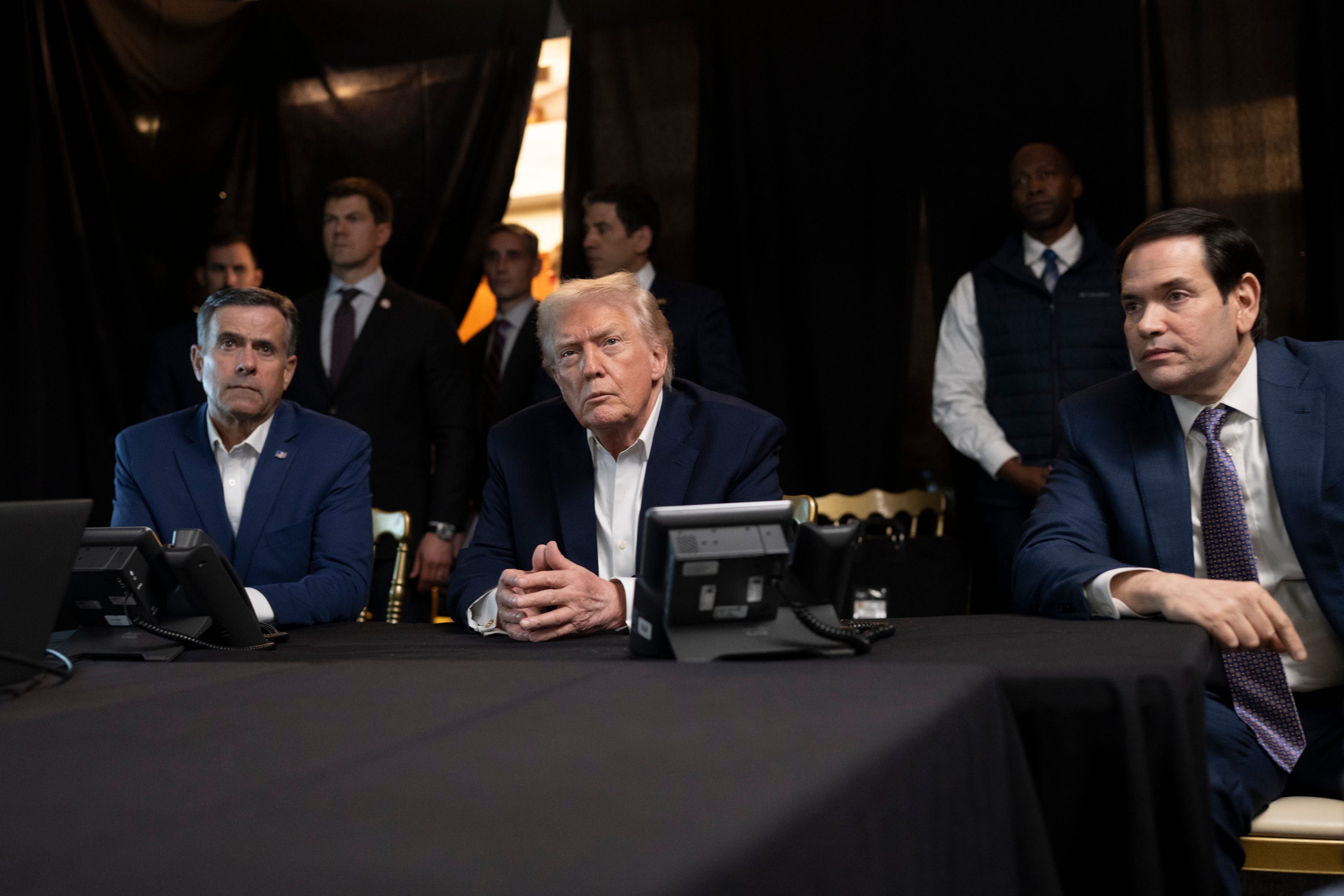
What surprises me most about recent reports of Marco Rubio’s voice memo diplomacy with Caracas is the high level at which most decisions on U.S.-Venezuela relations continue to be made. To an extent this is emblematic of the Trump Administration’s overall approach to policymaking. Rather than the bottom-up way in which policy options slowly rise from regional embassies through the State Department and National Security Council to eventually reach the President’s desk, instead the Oval Office sets its priorities and leaves it to the various agencies and missions to figure out how to implement them.
I see the merits in this approach, it cleaves away at unnecessary bureaucracy and grants the executive greater assurance that their desired policies will actually be implemented. But dealing with something as complex as managing a foreign protectorate, particularly one like Venezuela, riven by so many internal economic, security, and political challenges, is a task that simply cannot be done by remote control.
This is how you end up in embarrassing and counterproductive situations where the regime arrests businessmen working for U.S. firms it needs investment from, or slow-rolls prisoner releases. While the United States has unprecedented leverage over the Rodríguez regime, I suspect it doesn’t have particularly good real-time insight into what’s going on outside of Caracas. Instead, Washington is governing based largely on high-level interactions with Rodríguez and company.
What Washington really needs in Venezuela is a cohort of lower and medium-level professionals who can get out of Caracas and relay information about what is going on in the field. The Trump administration seems to welcome a return to a rougher, ruder style of diplomacy from the age of empires, but has seemingly been slow to recognize the quantity and quality of manpower this demands.
Where is the industrious Marine lieutenant doing ride-alongs with the FANB to hunt narcos along the Colombia-Venezuela border? Where is the enterprising commercial attaché surveying for new mineral deposits in the Orinoco? What has become of the intelligence man-turned-courtier who trades information like currency in the halls of Miraflores Palace? I’ll set aside the dubious moral and legal character of these figures, we’re well beyond the pale of standard operating procedure at this point, but merely point out that running a modern-day colony is a labor-intensive affair.
I’m especially interested by the apparent lack of engagement with the security sector. Venezuela’s dizzyingly corrupt and heavily coup-proofed constellation of internal security agencies is the single greatest barrier to a democratic transition. Indeed, the White House’s reservations over the opposition’s ability to navigate this thicket was one of the main reasons why Absolute Resolve did not seek to install María Corina Machado.
Today, U.S. forces are operating out of the same facilities that were bombed on January 3, the United States even reportedly coordinated the June airstrike that killed Tren de Aragua boss Héctor Rusthenford Guerrero Flores. The Cubans who defended Maduro and ran the military’s feared internal intelligence branch are either dead, fled, or gone to ground.
For her part, Delcy Rodríguez is also cleaning house, moving former Defense Minister Vladimir Padrino López to the relatively toothless Ministry of Agriculture and purging the officer corps of other potential threats. That may be good news for short-term stability, but bad news for political transition as it risks cementing a new praetorian guard whose political futures are tied to Delcy staying in office. But while the United States probably has at least a decent idea of what the FANB units are saying to one another, there appears to be a dearth of engagement with these forces.
Disentangling the web of corruption, patronage, and mutual surveillance is no easy task, but it is arguably the singly most important consideration for Venezuela’s political transition, and by extension economic recovery.
The Mouse that Roared
I recently rewatched the film adaptation of a 1950s serial called The Mouse that Roared. It’s one of my favorite movies, revolving around a hairbrained scheme by the fictitious European Grand Duchy of Fenwick to declare war on the United States, lose, and let the victorious Americans bankroll the country’s postwar economic reconstruction. The premise always made me laugh, but it also contained some grains of truth.
Germany and Japan swiftly rose from the ashes of total war to become global economic powers, all with the explicit encouragement and backing of Washington. Never before had a victor lavished so many resources upon the vanquished.
This approach would come to characterize the U.S. way of war in the subsequent decades, though hardly with the same degree of success. In Iraq and Afghanistan for instance, the United States poured billions into nation building efforts that yielded marginal or even negative returns, and thoroughly spoiled the American public’s appetite for trying to “fix” its defeated adversaries.
Venezuela was meant to be something different, and Trump’s rhetoric dispensed almost entirely with high-minded ideals of democracy in favor of boasts that the United States would “take the oil.” Even skeptics of U.S. interventionism seemed taken aback by the barefaced nature of these statements.
But even in a war for resources the United States couldn’t help but get sucked into trying to solve Venezuela’s internal contradictions too.
To be clear, I don’t think that the Trump administration has suddenly awakened a nation-building streak. Much of this can be chalked up to mission creep as it turns out Venezuela needs a lot more help getting back on its feet before the extractive spree can begin. Still, it seems notable that even the most mercenary U.S. approach to foreign military intervention in recent history hasn’t been able to deliver either economic windfall or democratization on the cheap.
A friend recently quipped to me that “The Pottery Barn Rule sits somewhere around Zeus’ Law in the history of western civilization.” I still like it, but hope you’ll pardon the cliché.