

Note: I’ll be in Miami next week for the Hemispheric Security Conference, drop me a line if you’re around!
World War III is upon us. At least, that’s what a flurry of op eds have been proclaiming since at least 2022. The most recent of these, an excellent New York Times piece from University of Chicago Professor Paul Poast argues we should view the ongoing conflicts in Ukraine and Iran as two interlinked theaters of the same great power clash.
Unlike the first and second World Wars, that involved millions-strong armies marshalled by the globe’s great powers invading one another, the logic of nuclear deterrence has (for now) succeeded in keeping the United States, Russia, and China, from direct confrontation. Whether you believe today’s overlapping crises indeed rise to the level of world war, it does seem as though sharpened great power competition is producing a sort of instability cascade where various regional flashpoints are more likely to become internationalized as major powers take interest in their outcomes.
War is disastrous from an economic standpoint. Today’s wars, or war, if you’d prefer, have already triggered shortages and price hikes that tend to fall disproportionately on small and middle powers, which lack the flexibility or fiscal space to insulate their economies and societies.
But even advanced economies are not perfectly insulated from the consequences of war, especially when the fighting is in their own backyard. The outbreak of full-scale conflict in Ukraine spiked energy prices, especially in Europe, exacerbated food insecurity, and even triggered fears of second-order supply chain risks in the semiconductor industry. After more than four years of conflict, however, the world seems to have mostly adjusted. Now, the closure of the Strait of Hormuz seems to have the makings of a genuine crisis, as it slowly dawns on markets that even successful negotiations cannot avert a prolonged period of economic pain.
Oil and gas production that has been curtailed cannot be restarted immediately. Moreover, confidence in the Gulf states as an island of stability within an otherwise turbulent region seems irreparably shaken, potentially leading investors and governments alike to diversify their investment sources elsewhere.
Meanwhile, the United States is currently wagering more than 2 percent of its GDP (and counting) with a bet on transformative artificial intelligence, a capital and energy-intensive gamble, where even slight discrepancies between projections and reality could be existential for the companies in that sector. One could imagine how another crisis in the Indo-Pacific, say, a Chinese blockade of Taiwan, might give the final push needed to bring the whole house of cards tumbling down.
But there is one region where the storm clouds of war don’t seem to be massing. Latin America and the Caribbean (LAC) sits at a confluence of resource wealth, strategic geography, and relative geopolitical stability that I don’t see many other places else these days. Maybe, but just maybe, these factors could help the region to guide a battered and bruised global economy through the choppy waters of conflict to safer harbor.
How LAC Can Help
LAC’s advantage lies in relative, not absolute, stability. Countries in the region face a raft of challenges that limit their economic competitiveness, from crumbling infrastructure to regulatory red tape, to rampant corruption and the perennial specter of organized crime. Still, if your risk calculations now include “probability of a Shahed blowing up the datacenter you’re building” LAC now seems like a pretty good bet.
The last interstate armed conflict between LAC nations that gripped the region came during the Cenepa War between Ecuador and Peru in 1995. At least one state in the Americas has been at war (an interstate conflict resulting in at least 1,000 battle deaths) for just 73 of the 193 years in the Correlates of War dataset for that region which covers 1822 to 2014, though even this is biased towards the bellicose thanks to the United States’ inclusion that total.
The region seems like especially promising for investments in expensive, energy-hungry, and delicate industries like datacenters and semiconductors. These kinds of things don’t do well operating under missile bombardment, while in places like Brazil, Argentina, and Chile, they can benefit from access to relatively cheap, and often quite green, electricity, as well as existing education and research hubs in the region.
Datacenters in particular are also hardened against intrastate violence, the type of violence that LAC countries are substantially worse at managing. Unlike mines, refineries, or factories, not much of value physically leaves the datacenter, limiting the opportunities for criminal groups to steal or extort. Simply throw up a few 4-meter electrified fences, post some guards, and you’re golden.
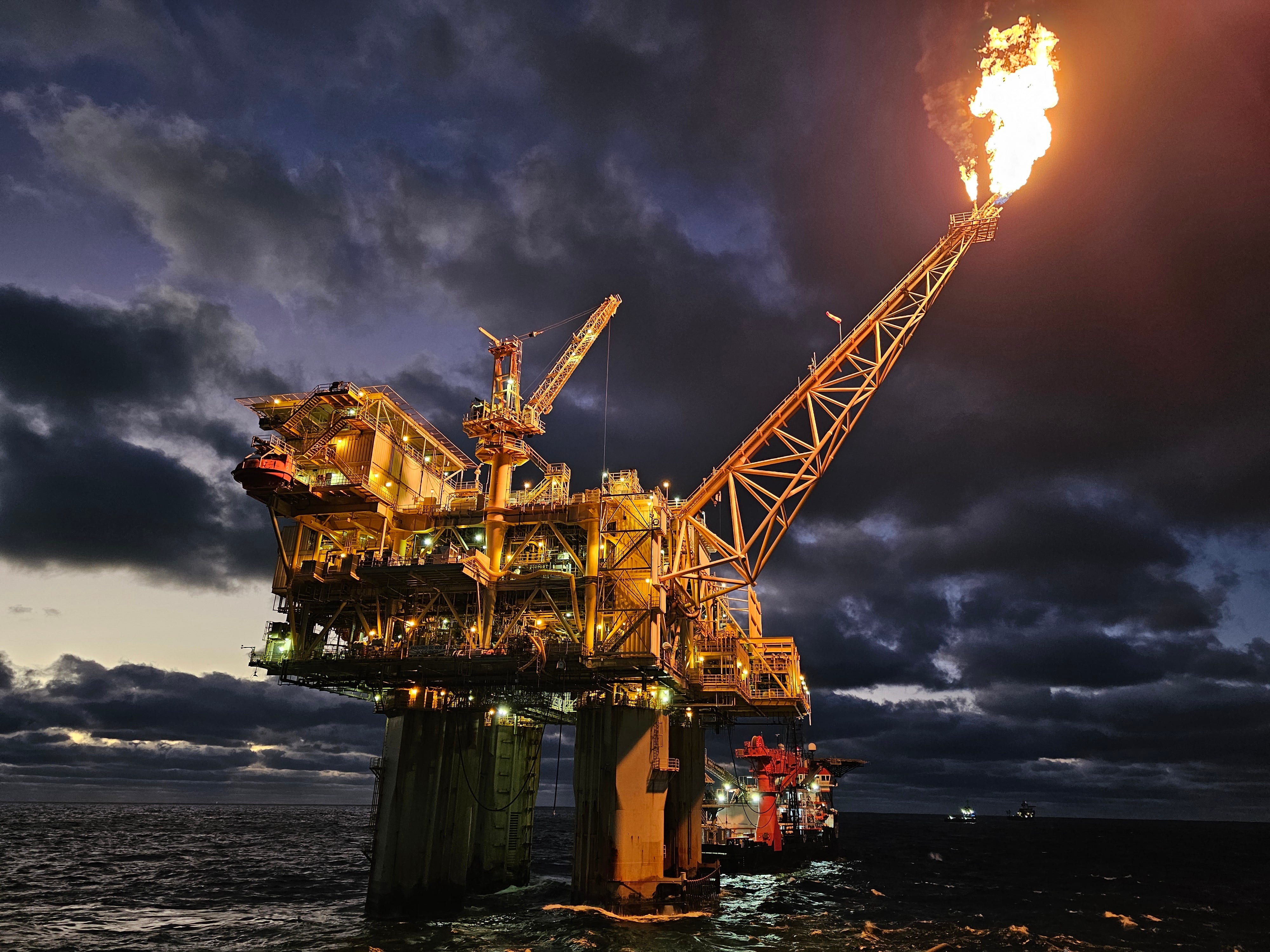
LAC of course has more than just peaceful (interstate) operating conditions to offer prospective investors. The region has been leading non-OPEC oil production growth well before war broke out with Iran and new discoveries suggest that there may still be substantial untapped potential.
To be clear, none of these new finds can substitute for lost Persian Gulf production. Brazil is the only LAC country to rank in the top 10 global oil producers, and even the daily output of Brazil, Mexico, Venezuela, Argentina, Colombia, Guyana, and Ecuador combined doesn’t reach the amount of crude pumped by Saudi Arabia before the war. But LAC does not need to replace the Gulf in order to grow its relevance to global energy markets.
Countries like Guyana are extremely well positioned to benefit from higher global oil prices, while the fact that some two-thirds of Guyanese hydrocarbon exports flow to Europe means the country is probably the EU’s new best bet for diversification away from Russian supplies. Suriname, Guyana’s neighbor and a former Dutch colony also experiencing an oil and gas boom, could play a similar role.
Venezuela, of course, is also making headlines as another likely beneficiary if oil remains north of $100 a barrel. The country is still nowhere close to being an attractive destination for foreign capital of course. Nevertheless, the fact that Middle Eastern investments look more exposed than ever in the past 3 decades, combined with the Trump administration’s willingness to invest its own political capital to promote Delcy Rodríguez and the rump Chavista regime is still having some effect. Venezuela’s current protectorate status also means Washington can, in theory, steer a 1.1 million barrel per day firehose to other countries feeling the pinch from rising fuel prices (provided, of course, the crude is first refined along the U.S. gulf coast).
Argentina is a more minor player when it comes to oil production, but makes up for it in spades with natural gas. With the second largest technically recoverable shale gas reserves in the world, Argentina has been steadily ramping production in the Vaca Muerta formation for years. Now, as natural gas shortages promise knock-on effects for the availability of nitrogen-based fertilizers, Argentina is launching two projects aimed at indigenizing production of urea using gas from Vaca Muerta as feedstock. If successful, Argentina’s transformation into a fertilizer producer could benefit not just its domestic agricultural industry, but also bolster regional food security.
Finally, LAC’s exports are generally not at the mercy of geopolitically charged chokepoints. There is no country in the region today, save the United States itself, that could credibly close the Panama Canal, or Strait of Magellan. To the extent that LAC is underperforming when it comes to global trade integration, it is mainly a function of infrastructure gaps. The region remains behind the curve in many places when it comes to port-hinterland connectivity, its air cargo nodes are in deep need of refurbishment, and road and rail links are decaying or altogether nonexistent in key locations.
True, there is concern that some of these choke points and key transit nodes are being captured by China, and fears persist over the future of the Panama Canal (I share some of them), especially after a recent explosion under one of its bridges. But in the case of Panama, the waterway continues to see record traffic as conflict in the Middle East rewires global shipping routes, increasingly in the direction of the Americas.
Waiting on the World to Change
There are real opportunities for LAC to chase, but the road towards them is littered with pitfalls. Not every country will benefit, and a fair number are at risk of a serious downturn if conflicts in other regions don’t cool off soon, let alone escalate.
While I extolled the benefits of rising oil and gas prices for some countries, only a subset of the region will reap these. For countries that don’t have sizeable domestic energy reserves the Hormuz crisis is potentially disastrous. Chilean President José Antonio Kast has already seen his honeymoon period come to an unceremonious end, as his approval ratings tumbled by double-digit percentage points over cuts to fuel subsidies. Central American countries are heavily dependent on fuel imports for transportation and power. Even Mexico, ostensibly another oil producing country primed to benefit, is merely treading water to control domestic fuel prices.
Setting aside the perhaps uniquely mismanaged case of PEMEX, even countries like Guyana and Brazil that are in much better shape to capitalize on the rewiring of the global energy economy may still get it wrong. Countries could squander their current windfall on a spending spree that does little to address macroeconomic needs, drag their feet on boosting production and get surpassed by competitors, or even overestimate future demand and run headfirst into a price collapse. Running a petrostate is not easy, and the gulf monarchies are the exceptions, not the rule when it comes to governance quality.
With respect to agriculture, another sector where LAC harbors great potential amid disruption, dangers still luck. Soybeans, one of the most important export industries for Argentina, Brazil, and Uruguay, do not require much fertilizer, making them remarkably resilient in the face of ongoing tensions in the gulf. But this may come back to bite the South American agricultural titans as conflict grinds on. Other countries may start substituting fertilizer-dependent crops with soy, resulting in increased competition and driving down already razor thin margins for farmers.
There’s another question of whether the United States is the real winner in a more conflict-prone world. The United States is similarly far from global hot spots, with pacific (albeit increasingly frustrated) neighbors to the north and south. The United States is also now the world’s largest oil producer, has a surfeit of natural resources, and is home to the world’s leading AI and advanced tech companies. Why should the United States care about bolstering supply chain security in LAC, when it can do everything at home?
In some sense it’s not the United States that benefits most from closer ties to LAC, it’s everybody else. Europe and Southeast Asia in particular should be seriously considering how they can strengthen trade ties with the region. Washington should still care, if not for itself, then for its allies who are more exposed to conflict-related disruptions in the Middle East, Indo-Pacific, Africa, and, well, everywhere but the Americas.
Could the increased tendency for United States intervention in LAC be damper on investment?
While it seems unlikely for bombs to fall on data centers in Argentina, the likelihood for inter-state conflict in the region seems to have gone up rather than down since 2025