

In the days that followed the United States’ capture of Venezuelan dictator Nicolás Maduro, President Trump warned Cuba to make a deal “before it is too late.” For nearly seven months now, U.S. rhetoric has featured some variation on this theme, including a deliberately vague prognostication that, “a lot of things are going to happen in Cuba in the next, perhaps, two months” as well as a controversial new State Department report that purports to trace Havana’s hand in virtually every leftist agitation in U.S. history since the 1960s.
To be perfectly honest, it’s been somewhat infuriating trying to predict what might happen in Cuba. On the surface it looks like the United States is attempting to run the Venezuela playbook back, but dig a bit deeper and several countervailing forces have kept me second-guessing my predictions.
On the one hand, the disastrous one-again off-again war with Iran has poisoned public opinion against foreign military interventions. On the other, as I’ve argued previously, the need for a quick foreign policy success elevates the Western Hemisphere as a region where the cost of U.S. power projection is comparatively low. A swift, decisive intervention to depose another one of the Western Hemisphere’s anti-U.S. authoritarian regimes could be just what the doctor ordered to repair Trump’s foreign policy reputation ahead of the midterms. But this is all contingent on military intervention being able to produce political outcomes roughly on the level of Operation Absolute Resolve, and in Cuba, that appears to be an uncertain bet.
The United States seems to have gotten itself into something of a pickle when it comes to Cuba. Washington has more or less cemented an ironclad grip over the supply of fuel to the island and enjoys an overwhelming conventional military advantage above and beyond that which it exercised against Venezuela. At the same time, the White House remains deathly afraid of a complete humanitarian collapse that could trigger a mass exodus from the island, while its search for an equivalent to Delcy Rodríguez seems to be running into some dead ends. The Cuban Communist Party seems sufficiently well-institutionalized for Washington to be convinced that there’s no pro-U.S. leader within the organization who would be able to swoop in should Miguel Díaz-Canel find himself in handcuffs and a tracksuit.
But Cuba is not the only anti-U.S. authoritarian country in the Americas. In Nicaragua, the dictatorship of Daniel Ortega and Rosario Murillo has been trying, with mixed success, to fly under Washington’s radar by cooperating on migration and drug issues while simultaneously expanding ties to Russia and China. Compared to Cuba, the regime in Managua is more brittle and personalistic, potentially making it a closer analogue to Venezuela. Finally, at least on paper, its armed forces are the weakest among the Latin American “Troika of Tyranny” while U.S. military facilities in Honduras, El Salvador, and Panama could allow for effective prepositioning of assets.
For today’s post I want to tug on a hypothetical a little, and postulate whether the United States, facing an impasse in Cuba, might turn its attentions to Nicaragua in the coming months.
Why Nicaragua Might Be Next
Whole books have been written on the abuses perpetrated by the Ortega-Murillo regime. Just this week, Nicaragua’s aged co-dictator Daniel Ortega announced that the country would no longer hold elections where seditious elements could “try to take over the government.” While the move doesn’t change much in practice, whatever institutional guardrails there were in Nicaragua had been eviscerated long before, it is a particularly brazen statement in an era where even tin pot dictatorships at least go through the motions of letting their citizenry cast ballots.
If Ortega’s theory of survival involves avoiding U.S. attention, the move has done him no favors, earning international opprobrium and fueling renewed interest in the idiosyncratic dictatorship.
But beyond a concern for democracy and human rights, there is a strong realpolitik argument for U.S. action against Nicaragua. The country has become a beachhead for China and Russia in the Americas. Especially with the fall of Maduro, both Beijing and Moscow have been doubling down on their cooperation with Managua.
According to a report by Fundación del Río, Chinese mining companies have been granted concessions totaling 1.2 million hectares or approximately 10 percent of Nicaraguan territory. Recently Nicaragua also announced plans to host Chinese military personnel for joint trainings in the fall of 2026, a move which would bring PRC troops to the country for the first time since it dropped diplomatic recognition of Taiwan in 2021.
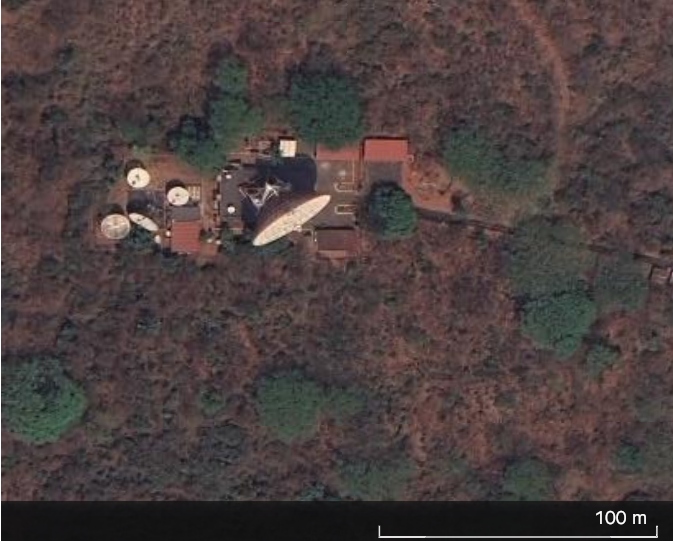
Nicaragua has also signed agreements authorizing the presence of Russian military personnel for trainings, law enforcement, and humanitarian assistance. Since 2017 Russia has operated a GLONASS satellite ground station in Managua, a facility which periodically makes the rounds in Washington as a possible signals intelligence site. Russia has also helped build a shadowy “training center” in Nicaragua reportedly run by the Kremlin’s Ministry of Interior Affairs. From the perspective of the new U.S. National Security and National Defense Strategies, Nicaragua is crossing virtually every red line imaginable when it comes to adversarial influence.
On the leadership side, Ortega is 80 and hardly the picture of health. Rosario Murillo, 75, is deeply unpopular within the regime itself, and there is reason to believe she would struggle to retain control over the security forces in the event of Ortega’s death. To this end, Murillo has initiated a series of purges targeting judges, ministers, and members of the military, including influential veteran Sandinistas. These moves are blatant attempts to centralize power not just around Murillo, but the couple’s children as well to forge a dynastic dictatorship.
This personalistic approach however means that the Nicaraguan regime is more brittle than, say, Cuba’s Communist Party. Remove Ortega and Murillo and the whole system suddenly looks wobbly, potentially opening the field to install a new Delcy Rodríguez expy. One name I’ve heard floated in a couple conversations is Laureano Facundo Ortega Murillo, son and special advisor for investment, trade, and international cooperation. He has been acting as one of the regime’s main international operators, signing new agreements with both Russia and China in recent months, but that same role that could make him well-suited to backchannel negotiations with Washington.
In terms of coercive tools, the United States has a broad and deep set of resources at its disposal. 30 percent of Nicaragua’s GDP is comprised of remittances sent from individuals living abroad, a majority of those living in the United States. The United States is also Nicaragua’s largest trading partner by far, with bilateral trade between the two countries accounting for nearly $9 billion in 2024 thanks to the CAFTA-DR free trade agreement. While Venezuela and Cuba are susceptible to economic pressure in the form of blockades and secondary sanctions, Nicaragua is deeply dependent on access to the U.S. market, and as a result comparatively less experienced with the kinds of sanctions evasion networks that have sustained its fellow authoritarian regimes.
Operationally, Nicaragua probably sits somewhere between Venezuela and Cuba in terms of how feasibly the United States could project power. Managua is comfortably within the combat radius of U.S. fighters and drones that could be launched from Soto Cano Air Base in Honduras or CSL Comalapa in El Salvador. To the south, U.S. Southern Command has been beefing up its operations in Panama following a series of agreements to bolster Canal security. All three countries have U.S.-aligned governments and would be unlikely to raise serious objections with Washington over a buildup. This constellation of bases could reduce the need for U.S. aircraft carrier in theater, and allow for something resembling Operation Just Cause in 1989 when the United States was able to preposition assets directly in the Panama Canal Zone ahead of its overthrow of Noriega.
Why Nicaragua Might Not Be Next
Despite the reasons I’ve given above, I still think it’s unlikely that Nicaragua comes to the fore before a decision is reached inside the White House on Cuba. One reason for this is that the domestic salience of the two issues is lopsided in favor of Cuba.
Far more Americans are aware of U.S.-Cuba tensions than the situation in Nicaragua. In terms of diaspora, Cuban Americans outstrip Nicaraguan Americans by a factor of five and remain a highly mobilized constituency when it comes to questions over Washington’s approach to Havana.
While Cuba has been a U.S. boogeyman for decades, Nicaragua, despite its current links to China, Russia, and Iran, hasn’t reached the same status. Although the Ortega-Murillo regime has its hands in all manner of illicit activity, the country has birthed no criminal groups that rival the memetic status acquired by the Tren de Aragua or Cartel de los Soles. In terms of migration, while hundreds of thousands have fled the Ortega-Murillo tyranny, these refugees have largely settled in other Central American countries like Costa Rica, and have yet make up a significant fraction of U.S. border arrivals compared to northern Central American states.
This all means the argument that a regime reshuffling would serve an “America First” foreign policy agenda currently seems to be weaker when it comes to Nicaragua. Ultimately, the potential benefits of intervention may not prove worth the potential costs.
Not only that, but at this point I do genuinely believe Trump when he says he’s going to do something. Anticipating what precisely that “something” involves is the real challenge, but the White House needs it to be decisive enough to credibly be presented as a victory. Maybe that means a limited airstrike campaign, or maybe Cuba can eke by with a “deal” that both sides know the other doesn’t plan on adhering to.
If the sequencing ends up being “Cuba first, Nicaragua next,” the latter’s fate will depend heavily on how the former turns out. A Caribbean expedition that’s viewed as successful will almost certainly embolden the United States to seek out another monster within its hemisphere to slay. Meanwhile, a military intervention that ends in U.S. casualties, or a deal with Havana that is met with condemnation in Miami, could chasten the United States and embolden more isolationist elements within the Trump administration.
Cuba isn’t the only determinant either, the Iran War seems to be back on, and less popular than ever. So long as Washington remains preoccupied with conflict in the Middle East, it is unlikely to be willing to mass the forces required for a simultaneous intervention in Latin America. We should remember that, despite the tactical success of Operation Absolute resolve, it still required about a quarter of the U.S. deployed surface fleet and more than 150 aircraft. It seems unlikely the U.S. will attempt a military operation in either Cuba or Nicaragua without similarly overwhelming force.
I think the regime understands these factors on some level. Their best strategy is to play for time and hope that winds will shift in the United States to make a maximum pressure campaign impractical. To this end, while Ortega’s recent remarks on elections may have ignited an uproar, the news cycle and Washington’s attentions already seem to be moving on.
Careful What You Wish For
Let’s assume, for a second, that Nicaragua at some point in the future the United States does sanction a pressure campaign up to and including military action to remove Daniel Ortega and Rosario Murillo. What can we expect to come in the aftermath of this?
First, I think the United States clearly prioritizes leader-level relations above all else. Trump in particular wants people he can talk to and that he likes talking to. His solution to leaders who won’t play ball is to try and get rid of them, a strategy that worked well in Venezuela, and poorly in Iran. This means any scenario in which the removal or Ortega and Murillo leads to a rapid transfer of power can be safely discarded.
Like María Corina Machado, much of the Nicaraguan democratic opposition remains out of the country, exiled and stripped of their citizenship by the regime. I’ve had the honor to meet several members of the opposition personally, and have a deep admiration for their courage, nevertheless, it seems likely to me that the United States will want to keep this status quo in the wake of a successful decapitation operation as it works to manage whoever its handpicked interlocutor is within the regime.
Economically, the prognosis is muddled. After Haiti, Nicaragua is the poorest country in the Western Hemisphere, with a GDP per capita of around $3,173 in 2025. Most of the private sector that remains now exists mainly to enrich the regime. And yet the bottom hasn’t fallen out of the Nicaraguan economy in the same it has in Cuba or Venezuela. The country also faces the softest sanctions regime of the three, making it considerably easier for the United States to prime the pump for businesses to reenter.
But it’s unclear whether there will be any enthusiasm on the part of the U.S. or international private sector to move in. The country’s economy is based heavily around remittances and agriculture, not particularly appealing areas for foreign capital. Nicaragua’s most tantalizing asset is likely its mineral reserves, especially gold, but China has already scooped up the rights to most of these. Of course, part of the United States’ deal with the new Nicaraguan leadership might be to kick China out of the mining sector, but that is a more risky proposition that it might at first appear. China was willing to cut its losses in Venezuela, in Nicaragua Beijing has more skin in the game.
Politically speaking, it’s tempting to try a one-for-one comparison with Venezuela. But those kinds of analogies make for poor predictions. Instead, I think it’s worth reiterating a call for humility among analysts.
A U.S. decapitation operation could give rise to a successor who appears compliant initially, but quickly goes back on his or her word. Alternatively, the U.S. could succeed in bringing a Delcy figure to power, only for them to be swiftly dispensed with by an internal power struggle. Mass unrest in the wake of U.S. strikes could plunge the country into chaos and allow criminal elements which once skirted around the edges to expand their tentacles. Nicaragua is a difficult media environment even as authoritarian countries go, and up-to-date information on the country’s political and security elites is hard to come by.
The Ortega-Murillo regime is one of the most odious governments in existence today, and I will shed no tears for either of the dictatorial co-presidents nor their cronies. Still, any analysis of what it means for Nicaragua to be next on the United States’ checklist of interventions should be clear about what this truly means and what we aren’t able to know for certain. I’ve tried to do that in this post, but I’m sure there are plenty of factors I’ve left out still, my hope is for this to be more of a jumping-off point than the final word, something tells me there could be plenty of headlines involving Nicaragua to come.
From Nicaragua to India: When Students Become the Vanguard of Political Change
When I stood before a mural in León, Nicaragua, honouring four students killed during a peaceful protest in 1959, I thought I was looking at history. I wasn't. I was looking at a warning.
Daniel Ortega's decision to end elections in Nicaragua is more than just another international news story. It is the latest chapter in a cycle that has repeated itself throughout history: revolutions promising freedom, only to become fearful of dissent.
What role do students play when democracy is tested? And why have governments, across ideologies and continents, always been wary of young people asking uncomfortable questions?
My latest piece connects a forgotten episode from Nicaragua's past with questions that resonate far beyond Latin America—including in India today.
Read the full article and let me know where you think history is heading.
https://akhilbakshi.substack.com/p/from-nicaragua-to-india-when-students