

Happy April Fool’s Day, Caballeros readers. In the spirit of that celebration, today’s post focuses on what I believe to be one of the most foolish ideas in the Latin America security space: Letters of Marque.
For those of you uninitiated into this discourse (lucky you), the idea rests upon Section 8 of the U.S. Constitution, which grants Congress the power to “grant Letters of Marque and Reprisal, and make Rules concerning Captures on Land and Water.” In the early years of the United States, Letters of Marque and Reprisal were issued primarily to seafaring raiders to plunder the ships of enemies of Washington, in essence making them legal pirates.
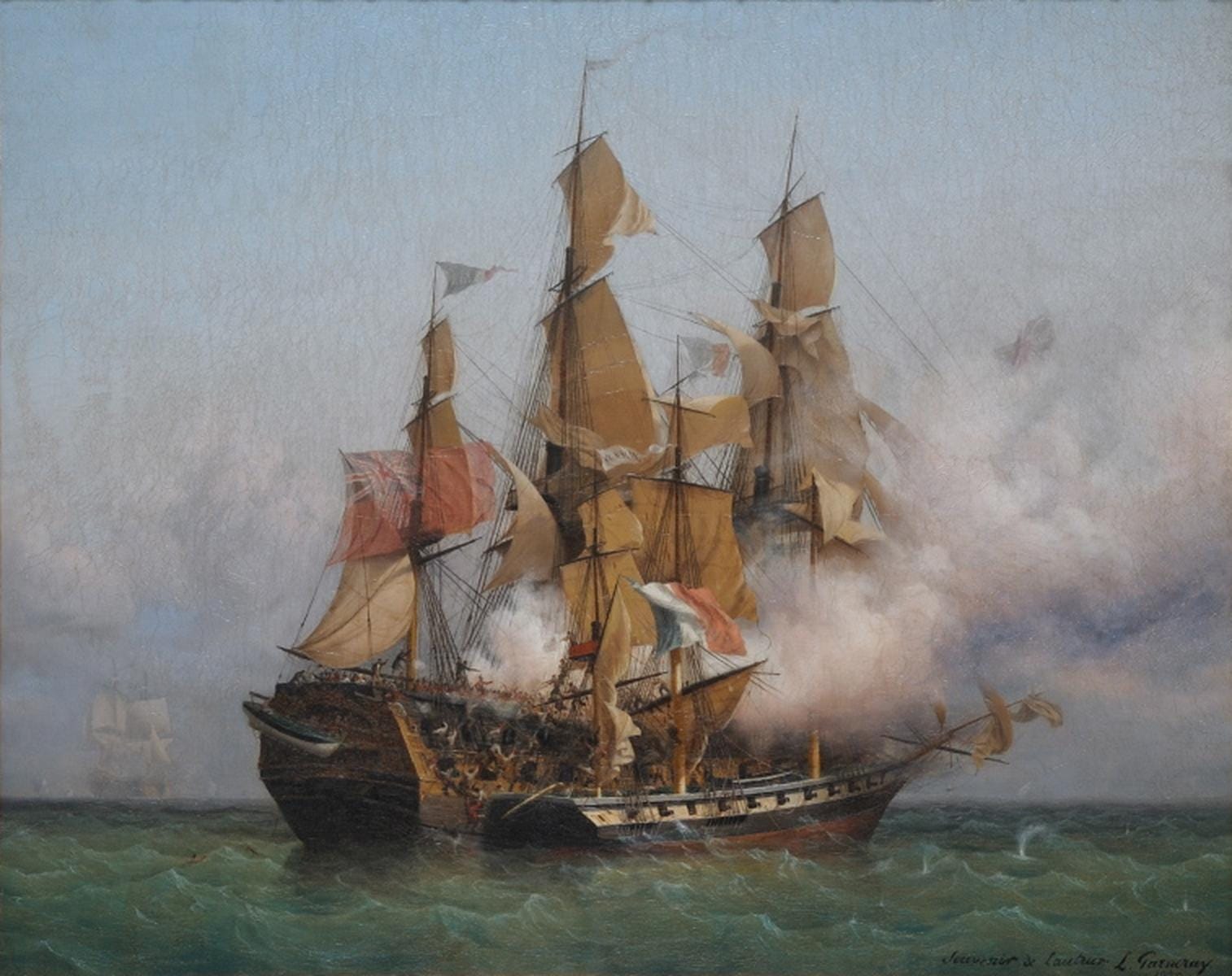
Recently, the concept has come back into vogue as the United States looks to wage war against an expansive host of criminal actors now designated as foreign terrorist organizations. One notable proponent is U.S. Senator Mike Lee who introduced the Cartel Marque and Reprisal Authorization Act last December aiming to authorize the President to issue letters of marque against “any individual who the President determines is a member of a cartel, a member of a cartel-linked organization, or a conspirator associated with a cartel or a cartel-linked organization.”
In theory, issuing Letters of Marque would be a cheap force multiplier for counter-cartel efforts in the Western Hemisphere at a time when runaway escalation in the Middle East is straining military resources. Elite bands of formalized privateers could deploy to the region to interdict drug boats, liberate trafficked persons, and dismantle fentanyl labs. The system would in theory pay for itself, by allowing participants to self-finance by seizing the ill-gotten booty of the cartels for their own enrichment.
Now to be clear, I don’t think any of the current policy proposals for Letters of Marque are going anywhere, but I’ve yet to see a clear rebuttal of the idea from an operational perspective. Today, I hope to provide a quick take on why Letters of Marque are more trouble than they’re worth when it comes to the fight against organized crime.
I should give credit where it is due, this is a creative idea. Other proposals to modernize Letters of Marque for cyber operations or sanctions enforcement could have some utility so I do think we should encourage more out-of-the-box thinking. But at some point we need to also ground that in reality. The impression I get is that the most vocal proponents of Letters of Marque for cartels started off with the assumption that this is a genius hack for getting after organized crime and never looked back.
My central gripe with the way Letters of Marque are presented from a policy standpoint is that the juice doesn’t seem worth the squeeze. Proponents seem to think there is a legion of expert operators champing at the bit to sink their teeth into the cartels were it not for our pesky laws against private citizens crossing international borders to kill people. And why not? Americans are the most heavily armed citizenry on the planet, and we have ample Special Forces veterans sitting around waiting for the call of duty (at least, that’s what they tell me on their podcasts).
But my suspicion is that the vast majority of people with both the desire and capability to fight the cartels are either (a) already serving in the U.S. military and law enforcement, or (b) working for private security contractors which can do this work under existing legal frameworks without the need for Letters of Marque.
The first argument against Letters of Marque for cartels is that private U.S. actors don’t actually have a good track record employing violence on foreign soil without hefty assistance from Washington.
In May 2020, a group of Venezuelan expatriates and military contractors organized by private security firm Silvercorp USA launched an abortive invasion of Venezuela. Known as “Operation Gideon” the attempt at toppling Maduro’s regime proved short-lived, and most of its participants were either killed or captured by Venezuelan forces. Overall the operation was a bizarre boondoggle and furnished Maduro with U.S. hostages to use as bargaining chips in future negotiations with Washington.
Last month, the Cuban coast guard engaged in a firefight with a boat full of armed individuals that sailed from Florida with the goal of sparking an uprising on the oil-starved island. While the Cuban government accused the group, which included at least two U.S. citizens, of being agents provocateurs, the fact that Trump Administration officials seemed quick to downplay the incident suggests that it was probably not part of a wider conspiracy.
Erik Prince’s intervention in Haiti is likely the best example of a private U.S. entity taking the fight to foreign criminal organizations. But it is telling that Prince and his organization were able to set up shop in Haiti without a Letter of Marque. Instead, reports indicate that Prince and his company entered into a somewhat ingenious arrangement with the Haitian government to get a cut of the country’s customs and tax revenue in exchange for their services. While there is much to criticize about this arrangement, and Prince’s use of unrestricted drone warfare in Port-au-Prince, clearly the absence of Letters of Marque isn’t preventing U.S. security entrepreneurs from expanding abroad.
Another success story, Operation Golden Dynamite which exfiltrated Venezuelan opposition leader María Corina Machado ahead of her planned receipt of the Nobel Peace Prize, demonstrates a nonlethal use-case for private sector actors in the security space. Led by Grey Bull Rescue, a private firm comprised of Special Forces veterans specializing in high-value extractions, the operation still required coordination with U.S. forces, and indeed may have benefitted from simultaneous air patrols in the southern Caribbean which may have distracted Venezuelan military units while the Nobel laureate slipped through.
In general, I’m willing to accept that private entities can play a role alongside U.S. uniformed services, but just not in the way advocates of Letters of Marque think. Indeed, the more you dig into the kinds of requirements for the fight against organized crime, the more it looks like what the U.S. really needs is contractors, not freebooters.
This doesn’t just apply to kinetic operations, the intelligence, surveillance, and reconnaissance stack that is needed for effective counter-cartel ops is more significant than most people think. In the Caribbean and Eastern Pacific for instance, the United States has access to powerful surveillance aircraft, satellites, and naval platforms to look for small drug trafficking boats. While President Trump’s claims of a 95 percent reduction in maritime trafficking are doubtless exaggerated, lethal strikes on drug boats have most likely caused criminals to pivot towards more covert methods, which means finding illicit activity in the Caribbean and Eastern Pacific is even harder for less well-resourced private actors. Of course, the U.S. military could set up new partnerships with some of these entities to bolster their manpower and maybe allow for more seizures of smuggling vessels in lieu of airstrikes. But that looks a little different from the dream of privateers on the open seas.
This is not to mention the moral hazard questions Letters of Marque introduce. Let’s say, for instance, that one of our enterprising lawful pirates gets himself captured while poking around Culiacán. Does the United States fly in Delta Force to rescue them? Alternatively, what if some freebooters patrolling the southern Caribbean decide to seize a fishing boat and get rounded up themselves by the Colombian navy? Even for a White House that is increasingly willing to throw its weight around against Latin American governments, this seems like a recipe for headaches. Far from being a force multiplier, opening the door to private counter-cartel operations could therefore end up being a drain on U.S. military and diplomatic resources if the privateers bite off more than they can chew.
Another part of the problem is that the stuff cartels traffic in, illicit drugs, is illegal to sell in the United States. It’s not like our hypothetical privateers will be able to turn around and sell their captured booty for its market value. Of course, proponents argue, that’s what prize courts are for, to adjudicate the value of the loot and dole out their just rewards. That however puts the U.S. government in the somewhat odd position of setting prices for illegal narcotics.
At first blush it seems like this kind of arrangement is ripe for unintended consequences, set the reward too far below the street price, and privateers might be incentivized to get into the drug game themselves for greater rewards, set the price too high and the cartels might be able to use that to justify jacking up their own prices, increasing criminal profits. Now it is true that the cartels don’t only traffic in drugs, these days cartel portfolios are remarkably diversified, and include illicit gold, timber, wildlife, and more. But that probably also creates even more headaches. How should a prize court adjudicate the seizure of people being trafficked, for instance?
I’m not saying you couldn’t figure all this out, and there have been efforts to sketch a legal architecture for modernized prize courts, but it sure seems like an awful big headache to resuscitate a jurisprudence that’s been comatose for two centuries in the pursuit of nebulous gains. This is the fundamental problem with Letters of Marque as a policy, the United States already has much better tools to fight the drug cartels without them.
Maybe some readers will accuse me of being insufficiently agentic, or having a so-called “cheems mindset” by making this argument. Before you rush to the comments section, know that I have identified my own ingenious alternative for any sensitive young men or women looking for another way to fight back against the cartels. You can read more about that idea here.