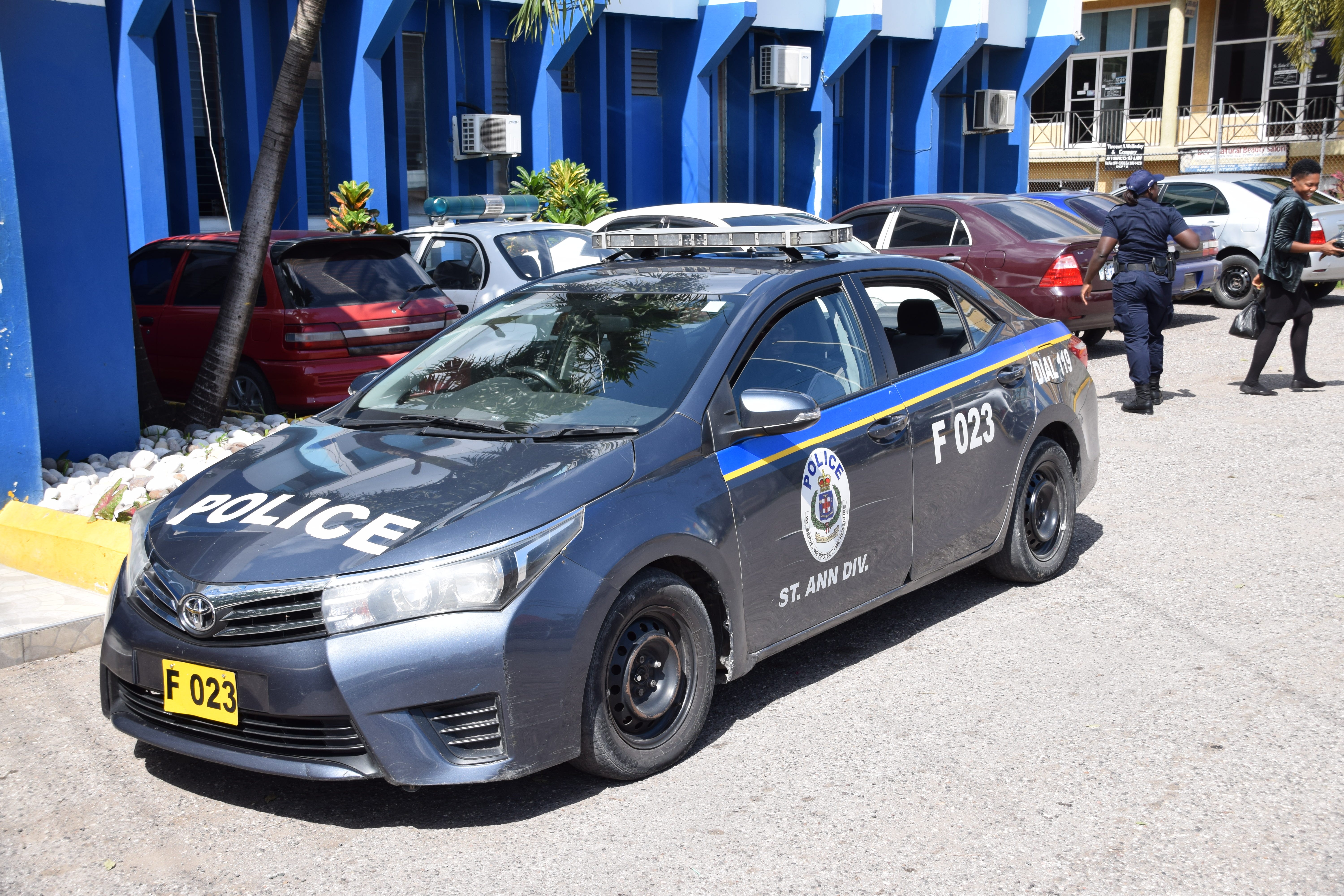
The Western Hemisphere appears to be enmeshed in a great debate on the nature of public security. At the moment, momentum seems to rest with the hardliners, as voters in election after election have opted to endorse candidates proposing iron-fisted security policies. Last week for instance, Keiko Fujimori took the opportunity in her inaugural address to announce a greater role for the Peruvian military in fighting organized crime.
Talking tough on crime can help politicians get elected, but once in office the pressure mounts to deliver on these lofty promises. As I’ve written ad nauseum here and elsewhere, reducing violence and insecurity is tougher than it looks, especially when criminal groups are prepared to fight back. Although violence may fluctuate from year to year, cases of countries successfully dismantling entrenched criminal networks are few and far between.
With this in mind, I’ve been pleasantly surprised recently with some of the news coming out of the Caribbean on homicide rates. More specifically, Jamaica and Trinidad and Tobago appear to have both made major progress on curbing murders within the past year. Both countries consistently rank close to the top of the list of Latin American and Caribbean homicide rates, but both saw murders decline by around 41 percent between 2024 and 2025.
Both countries have attributed their wins in part to extraordinary security measures, especially states of exception. Last fall, ACLED released a great study noting that these politics may yield short term gains, but often end up displacing violence to other areas as well as increasing the incidence of human rights abuse by security forces.
While neither country is out of the woods yet, at this point both seem to have successfully kept violence down for longer than we should expect. In Jamaica’s case, murders are down a further 20 percent for January-July 2026 compared to that same period in 2025, suggesting durable improvements.
As governments and electorates in the Americas continue to look for answers to organized crime, today’s post hopes to look Jamaica and Trinidad and Tobago as two possible success stories, and whether there might be any lessons from either country for the rest of the hemisphere.
Jamaica: Slowly, Then All at Once
In 2017, Jamaica’s homicide rate stood at 106.5 murders per 100,000 inhabitants. At the time only El Salvador and Venezuela rivaled that level of violence in the Americas. While this was an extraordinarily bloody year, Jamaica remained near the top of regional homicide rankings and by 2022 the island was the most violent country in the Western Hemisphere with a homicide rate that was a little over 53 per 100,000.
The spike in Jamaican homicides is a textbook case of Kingpin strategy gone wrong. In May 2010, Jamaican security forces stormed the Tivoli Gardens neighborhood in Kingston to arrest organized crime boss Christopher “Dudus” Coke. Gang members fought back fiercely, resulting in a death toll of more than 70 killed in a single week of violence but Dudus was eventually captured and extradited to the United States.
While the operation seemed to suppress gang activity for a time, like elsewhere, the decapitation of a major criminal outfit did not result in disintegration but rather fragmentation as multiple new gangs sprung up to contest the leadership vacuum. In addition, Jamaica’s diminishing role in the international drug trade forced criminals to seek out new revenue streams, including extortion and scamming that required territorial control to maximize profits fueling a wave of bloody turf wars.
In response, Jamaica resorted to the periodic use of states of exception to clamp down on criminal activity following particularly egregious periods of violence. Like most states of exception, these had diminishing returns the more the state used them, fueling a vicious cycle of crises and crackdowns that trapped many Jamaicans in a perpetual state of siege.
In 2017, the year Jamaica’s homicide rate reached record highs, the government also established its first Zones of Special Operations (ZOSOs), targeting hotspots with increased police and military presence, curfews, expanded search authorities, as well as social programming. The programs got off to an embarrassing start when Mount Salem was designated as the first ZOSO due to a data error making the neighborhood out to be more violent than it was. The community remains under the ZOSO regime to this day.
The ZOSO regime has proven controversial, especially as it continues to be extended seemingly with no end in sight. Episodic outbursts of violence within designated zones also undermine public confidence in their efficacy. Still, the ZOSOs do appear to have created breathing room to advance security objectives in conjunction with broader states of emergency.
Alongside these measures, Prime Minister Andrew Holness’ government more than tripled national security spending between 2016 and 2024, expanding the Jamaica Defense Force (JDF) and Jamaica Constabulary Force (JCF). This has included increased training for JCF officers including on human rights and community relations, bringing officer-involved shootings down by 30 percent in 2025. The country has also invested in its correctional system, which has grown in recent years as a consequence of more aggressive policing efforts. These initiatives seem to be bearing fruit as Jamaica’s recidivism rate in 2025 declined from 41 to 27 percent.
In 2025 Jamaica recorded 673 murders, making that year the first in over three decades where the homicide total fell below 700. Looking at some of the ACLED data also shows that political violence overall has trended downwards since a recent peak in July 2023. There is no obvious discontinuity in either Jamaica’s security strategy or the composition of criminal groups on the island, instead, it appears that progress has been the hard-won consequence of sustained investment in bolstering public safety.
But could it be that the ZOSOs and states of emergency are simply displacing violence to other regions? It doesn’t seem like it. Between 2024 and 2025 the number of incidents of political violence fell or remained the same in all but two of Jamaica’s parishes. In Saint Catherine violence against civilians fell, but the number of battles increased while in the less populated Saint Elizabeth parish incidents spiked from 2 in 2024 to 7 in 2025. Still, these are outweighed by significant reductions in events in places like Kingston, Westmoreland, Hanover, and Clarendon.
A similar story is present when examining official homicide statistics for the January to July 25 period in 2025 and 2026. Murders have declined in eight of Jamaica’s 14 parishes, with notable reductions in Saint Andrew, which recorded the highest number of homicides of any parish during the January-July 2025 period, and has slashed this total by more than a third so far in 2026. Saint Elizabeth is again an outlier, experiencing a 137.5 percent jump from 8 murders to 19. This change is small in absolute terms, but does bear watching as a potential sign of gang diffusion.
Overall, Jamaica appears to be an example of incremental investments in security adding up to substantial gains over time. Channeling resources into training and capacity building for security forces while using states and zones of exception to surgically target the most violent gangs seems like it should be an effective strategy for countries willing to stay the course.
However, continued progress is not guaranteed. Communities subject to ZOSOs are beginning to chafe after years of tight surveillance, while the failure to roll back some of these restrictions is also a drain on government resources that could be better spend policing hotspots elsewhere. The recent killing of a 45-year-old woman by a police officer in Granville triggered mass protests and suggests that relations between security forces and civilians are far from ideal.
Trinidad and Tobago: Eternal Emergencies
Compared to Jamaica, Trinidad and Tobago has had more qualified success in reducing homicides. To be sure, the country achieved an impressive 41 percent reduction in its homicide rate between 2024 and 2025, but the country’s murder rate has fluctuated more significantly in recent years. As of July there have been 222 murders so far in 2026, down ever so slightly from 232 killings over the same period in 2025, suggesting that the reduction in violence may have staying power, but gains may not be accumulating as quickly.
Trinidad and Tobago has leaned heavily on states of exception to curb gang violence. The country has declared three such emergencies since 2024 and in June voted to extend the current one for a further three months. Such measures have not been ineffective when it comes to reducing violence. Looking at ACLED data for 2024-2025 shows a decrease in political violence in 12 of the country’s 15 regions, with major decreases in Port of Spain and San Juan-Laventille.
Rhetorically, Prime Minister Kamla Persad-Bissessar has been an enthusiastic supporter of the United States’ militarized approach to drug trafficking. Shortly after the first lethal airstrike on an alleged drug boat in September 2025, Persad-Bissessar called for the United States to “kill them [traffickers] all violently.” The prime minister would go on to authorize the deployment of U.S. radars ahead of Operation Absolute Resolve, as well as attend the inaugural Shield of the Americas Summit in Doral, Florida in 2026 and sign on to the Americas Counter Cartel Coalition.
Trinidad and Tobago is also aiming to establish some 30 joint military-police checkpoints at major intersections and thoroughfares throughout the country to further beef up security and increase security force presence. Meanwhile, Attorney General John Jeremie has called for lawmakers to take a page from Jamaica’s playbook and pass legislation that would allow the country to establish its own ZOSOs at known organized crime hotspots.
However, the Persad-Bissessar is seemingly at risk of winding up on the horns of a dilemma. Its success at curbing homicides is based on a near-perpetual state of exception, but has drawn fierce criticism from the opposition in Parliament who may mount a constitutional challenge to the regime if it continues to be extended. But relaxing some of the security measures would risk seeing organized criminal activity return to 2024 levels, undermining the government’s mandate as well.
This pattern is consistent with the experience from countries like Ecuador and Honduras that have also used states of emergency or exception in response to criminal provocations, only to see violence rebound as soon as these periods lapsed. Unlike Jamaica, which has been able to use the ZOSOs to apply consistent pressure on a smaller geographic area, Trinidad and Tobago’s longer and more sweeping states of exception are more like public safety strategic bombing campaigns, useful for shock and awe, but limited in their ability to produce lasting gains.
This is not to say governments cannot use states of exception effectively, El Salvador of course proves the contrary having extended its current regime more than 50 times now, but the remarkable durability of Bukele’s program is largely due to the sheer magnitude of the drop in violence it has created. If murders in Trinidad and Tobago were down a further 40 percent from 2025 to 2026, perhaps the state of emergency would enjoy similar levels of approval. As it stands, the current 4.5 percent reduction does not seem like it warrants the continued deprivation of liberty.
Still, the fact that violence has not yet rebounded is a positive sign. Trinidad and Tobago’s efforts to cozy up to the White House may also pay future dividends as the United States looks to expand its partnerships in the counter-crime space. An especially relevant issue should be enlisting U.S. military and law enforcement assets to clamp down on the flow of illicit firearms to the Caribbean to cut gangs in places like Trinidad and Tobago off from their ability to contest the state and clash with one another.
Who Gets the Credit?
Jamaica’s Minister of National Security and Peace Dr. Horace Chang recently announced that the country should expect a “peace dividend” soon from reduced crime rates. It’s still probably too early for that, and wins in the security space don’t always translate easily into economic opportunities. Nevertheless, Jamaica and Trinidad and Tobago ought to receive more attention in discussions of regional trends in crime and violence.
If the two can seize the current moment to keep applying pressure on gangs, potentially with U.S. assistance, we could soon see once merely good news were transform into durable trends towards greater safety, security, and prosperity in both countries.
From this perspective, both governments’ statements about plummeting crime rates are likely premature, but they also raise an important secondary question: When do politicians deserve credit for reducing crime from their electorates?
This has been a topic of lively debate with respect to Mexico, where President Claudia Sheibmaum’s administration has reported a dramatic reduction in homicides. Overall levels of violence in Mexico show a clear decline, though the magnitude of the drop, as well as how much of it can be attributed to Sheinbaum’s polices, remain live issues.
Closer to my home of Washington, DC, it has been close to a year since U.S. President Donald Trump surged the National Guard into the city in response to an alleged crime wave. At the time, Trump’s characterization of DC as an out-of-control crime hub needing a militarized solution prompted articles highlighting how murders were actually trending down in the city. I never found those arguments particularly convincing even though they were true.
Even at historic lows, DC’s homicide rate was still too high, surpassing that of other American capital cities like Bogotá, Lima, Brasília, and Mexico City in 2024.
The reality is that people don’t just want their lives to get safer in relative terms year after year; they want to live somewhere that is safe in absolute terms. This, in my opinion, is also what gets overlooked oftentimes in discussions about El Salvador, where the real story isn’t just that murders went down, but that a country that used to be unsafe became a place that now feels objectively safe.
When it comes to a country like Mexico, while I think Claudia Sheinbaum deserves more credit than she’s gotten for reducing homicides, the country’s homicide rate in 2025 was still quadruple the United States’, and more than thirteen times higher than El Salvador’s. Similarly, big wins in violence reduction in the Caribbean are encouraging, but there’s a long way to go, and there’s a world of difference between a country with 23 murders per 100,000 inhabitants and one with 2.3 per 100,000.