

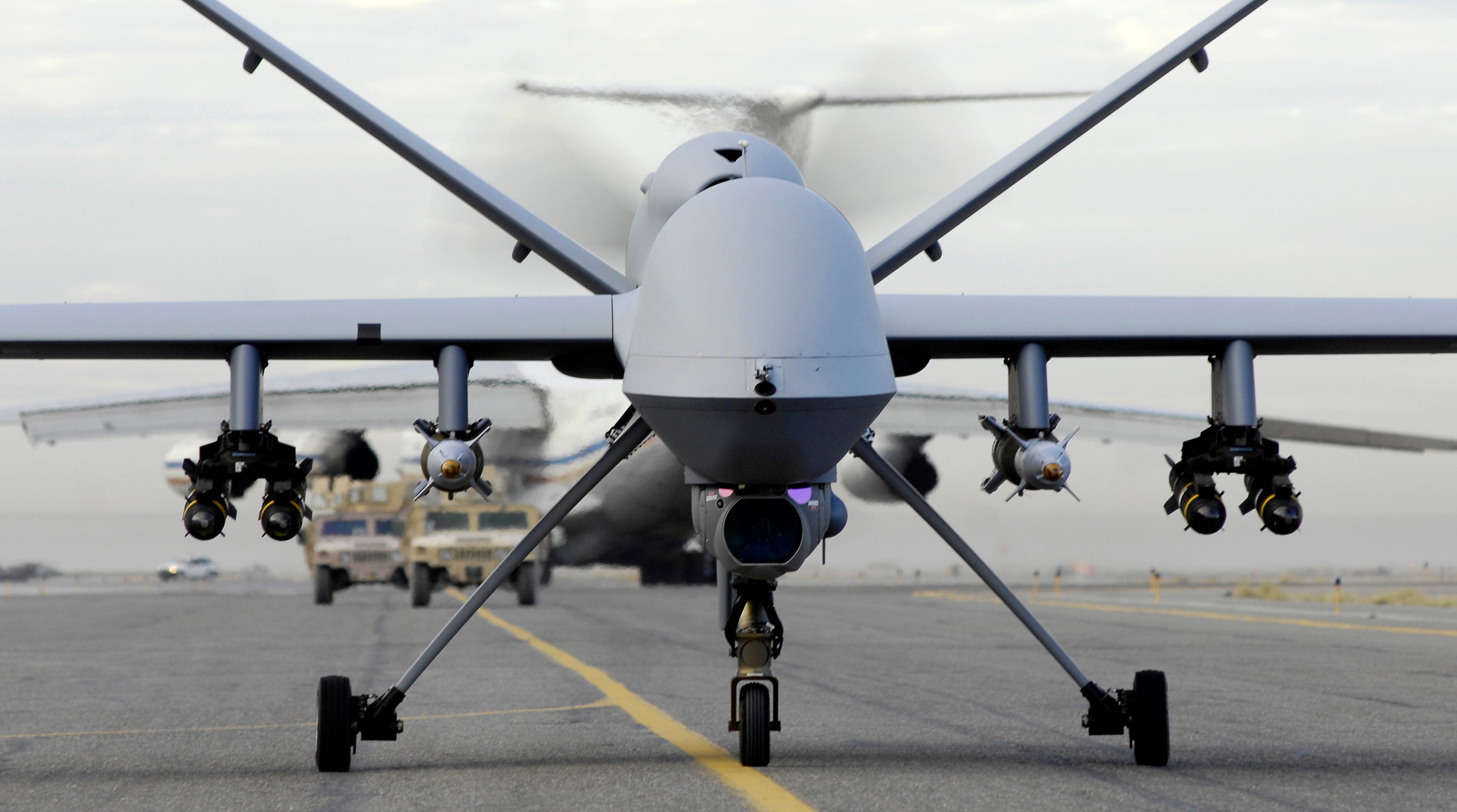
Last week, the United States announced plans to transfer three MQ-9A Reaper drones to Colombia, with the option for the newest Shield of the Americas member to purchase a fourth. This week, SOUTHCOM announced two new lethal airstrikes against alleged drug trafficking boats in the Caribbean and Eastern Pacific after two months without incident. The message behind these was clear, don’t for a moment think the United States has lost its appetite for boat strikes.
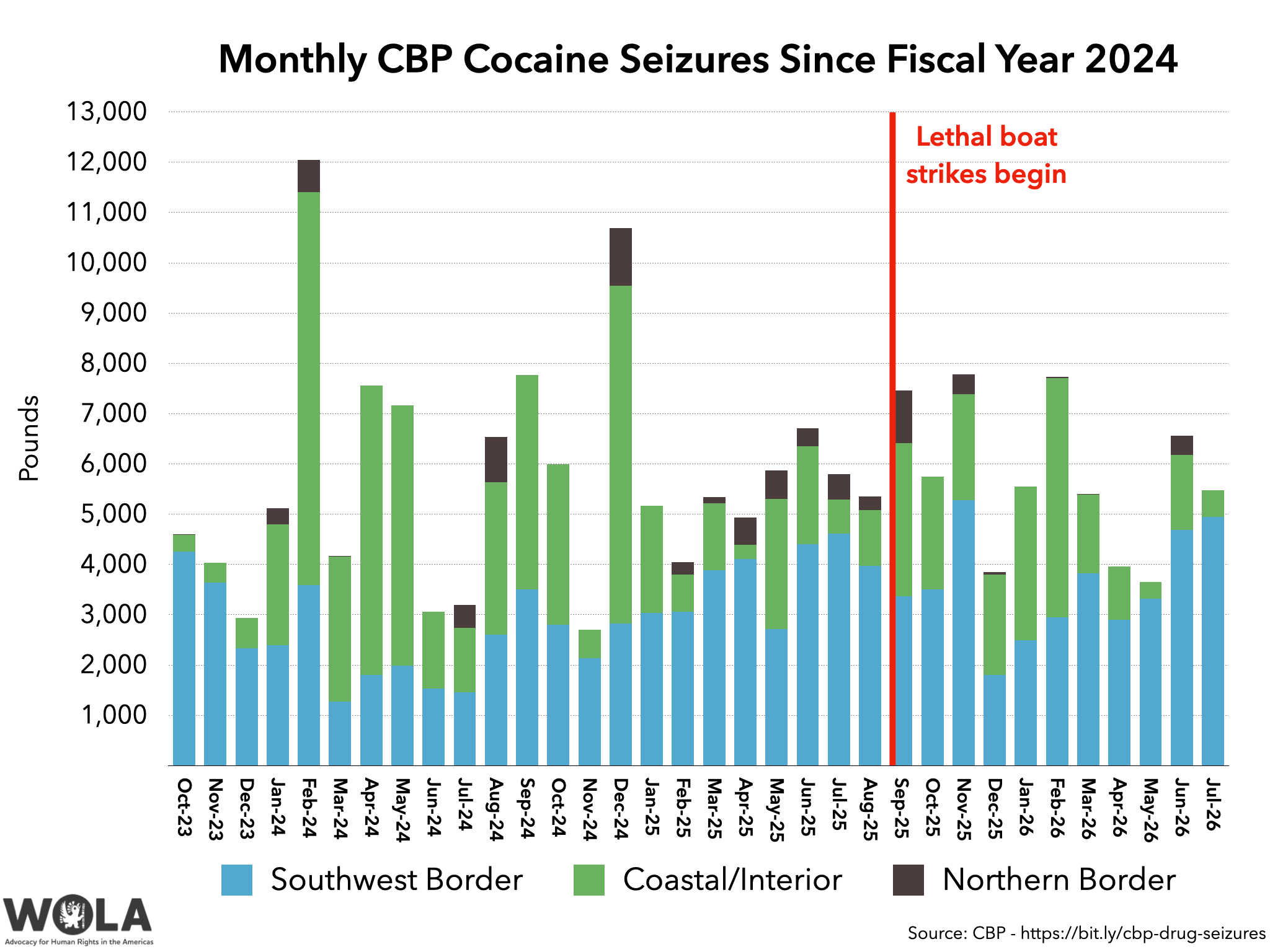
At the same time, as we approach one year since the first alleged drug-running boat was blown up in the Caribbean, all signs suggest these operations are having a negligible effect on criminal profits. While it’s challenging to say the least to get a good handle on illicit markets, cocaine prices have remained relatively stable, and may have even fallen in some markets thanks to a glut from booming production in Colombia.
SOUTHCOM’s messaging around counter-cartel operations has also shifted to now emphasize “Total Systemic Friction” a concept laid out by its commander, General Francis L. Donovan intended to capture the breadth of activities that go into countering modern transnational criminal organizations.
At the same time, a spate of pro-U.S. governments facing significant criminal threats have been eager to embrace artillery and airpower, increasingly with U.S. backing. Ecuador bombarded alleged drug smuggling camps along its border with Colombia earlier this year, while President Abelardo de la Espriella of Colombia pledged a full-scale offensive against criminal groups. The addition of armed drones will certainly give the new Colombian leader a boost to his ability to surveil and strike nonstate armed groups, and I expect it may spur demand from other regional governments for the same capabilities.
But if the United States’ own experience at sea is any guide, these explosive pronouncements from allies will prove underwhelming. Still, it’s worth interrogating why the greater use of lethal force, and airpower in particular, has seemingly been so ineffective thus far.
In today’s post, I want to dive into the logic behind bombing the cartels, and why that hasn’t held up in practice. Fair warning, this post will gloss over the many, many, legal, ethical, and moral concerns that have been raised by critics of the airstrikes. I’m not interested in reprising these critiques, but instead want to examine these strikes on the same terms as their defenders.
Punishment or Denial
One of the hottest Substacks right now is the Escalation Trap by Dr. Robert Pape. Like many other political science undergrads, I read Pape’s book Bombing to Win and have been a convert ever since.1 In very broad terms the book views air campaigns as seeking to coerce an enemy via four mechanisms, punishment, risk, denial, or decapitation.
Punishment campaigns aim to coerce an adversary to some action by inflicting pain, either by terror-bombing population centers or assassinating key leaders. Risk relies on a similar logic but progressively targets bigger and juicier targets as a negotiating strategy. Denial campaigns target the military capabilities an adversary relies upon to achieve their political objectives. These include bombing defense industry sites, supply depots, or tactical air support to enhance ground offensives. Decapitation campaigns, enabled significantly by the advent of precision-guided munitions, seek to surgically remove enemy leadership until a willing partner can be found or the adversary’s command and control collapses.
In Pape’s empirical study, punishment campaigns never work, while denial campaigns can be highly effective.
In practice, virtually no air campaign is falls perfectly into one of these categories. In World War II the Allies orchestrated massive strategic bombing campaigns that decimated German and Japanese cities, but many of these operations specifically targeted the factories and industrial sites clustered in these cities while tactical airpower was also employed extensively.
More recently in Iran, U.S. bombing objectives ostensibly included eliminating Iranian missile capabilities in order to deny the Islamic Republic’s greatest military asset. But it has become clear by now the air campaign began as a decapitation effort aimed at installing a pliant regime through precision strikes on Iranian leadership, and morphed into a risk strategy as Trump threatened increasingly ominous strikes if Tehran did not come to the table.2 As Bombing to Win readers would predict, this effort has failed to produce the desired effects for the United States.
Looking to the Americas, most Mano Dura security policies focus on deterrence by punishment and the belief that looking tough enough on crime is sufficient to convince other criminals that a life of vice is not worthwhile.
Based on this alone, we might predict that these campaigns would fall flat, but there are reasons why governments keep returning to the same well and legitimately expecting results.
Unlike rival governments or terrorist organizations, criminals are first and foremost motivated by profit. Traffickers don’t rally around the flag when one of their shipments gets blown up in the same way that citizens of a country do in the wake of an enemy bombing. In theory, these groups should be uniquely susceptible to coercion by punishment because although they may be willing to price in the risk of going to prison for their actions, nobody wants to lay down their life just to get a few more kilos of coke across the border.
Indeed, this has been the strategic logic for the United States’ air campaign. Officials like Joseph Humire have framed the boat strikes as an effort to close part of the “four-lane cocaine superhighway” that runs through the easter Pacific, western, eastern, and central Caribbean.
In theory, U.S. strikes slow or shut down one of these “lanes,” thereby freeing up U.S. and partner forces to increase interdiction in other areas.
That theory, of course, rests on two assumptions that have since proved questionable. First, that a relatively small number of lethal strikes can exert a large deterrent effect on drug trafficking in a given area, and second, that U.S. and partner countries will be able to shift resources as traffickers shift supply routes. This latter point is especially key as it seemed like the boat strikes did indeed reduce the number of fast boat launches, but also led to more smuggling via containerized cargo. However, it seems that Latin American port and customs authorities may not have had the resources to scan and inspect an increased quantity suspicious shipments, leaving overall drug supply unimpacted.
Another argument for bombing the cartels could be that true coercion by denial has simply never been tried with organized crime.
Under this framing, the U.S. air campaign has not achieved its stated objectives because it hasn’t gone far enough. The United States should not just be bombing a subset of suspicious vessels, but instead should be striking every single suspected drug trafficking boat at sea anywhere in the Western Hemisphere. Meanwhile, countries like Colombia should follow suit, and begin systematically blowing up illegal mines, spraying herbicide over every coca field, and cratering every clandestine runway in the region.
With modern satellite imagery, long-endurance UAVs, and U.S. assistance, it shouldn’t be terribly difficult for countries to build a rich target set. Coca fields, for instance, are remarkably easy to spot from above, so much so that for years numerous unclassified reports have clearly delineated coca growing regions in South America.
Illegal gold mining operations might be a bit easier to conceal, and can occupy considerably less territory than coca plantations. Still, AI-enabled imagery analysis and canopy-penetrating synthetic aperture radars should make quick work of what limited concealment criminals can muster. From this perspective, some types of organized crime ought to be solved problems, it’s just that we’re too squeamish to accept the brutality of the solution required.
Making Peace of a Wasteland
I suspect that the above argument is an oversimplification for three reasons. First, the availability of substitute revenue sources and supply chains that are more resistant to kinetic disruption makes modern criminal networks highly resilient. Second, achieving and maintaining the operational tempo needed for a true airpower-led denial campaign is far more taxing than it would appear, and finally, endemic corruption means many governments face internal checks on their ability to persecute a comprehensive denial campaign.
Precisely because TCOs value little besides profit, they are free to adopt highly asymmetric Fabian strategies in the face of state pressure. Destroy one illegal mine or fumigate a coca field and two more pop up down the road.
Even in extreme scenarios, where an entire illicit industry becomes foreclosed to a criminal group, the diversification of modern criminal revenue streams means that the organization is likely to continue to persist in one way or another. If coca cultivation becomes too vulnerable to aerial eradication, TCOs may shift their production towards synthetic drugs like methamphetamine or fentanyl that require less territory and can be concealed by complex urban terrain.
This brings us to another challenge. Maintaining the operational tempo required to successfully put criminal groups on the back foot is often more resource intensive and expensive than we initially assume.
Aerial fumigation is a good example of this problem. At the height of Colombia’s aerial eradication program in 2006, 172,000 hectares were sprayed with glyphosate. Meanwhile, in 2024 the UN Office on Drugs and Crime estimated 261,000 hectares were under coca cultivation in Colombia. Colombia could return to mass crop eradication tomorrow and still find itself with more cocaine in its hands than it did at the height of the Medellín Cartel.
In a similar fashion, an air campaign aimed at destroying the hundreds of illegal mines scattered throughout the Andres would consume thousands of munitions across several months and likely tax many of the region’s airframes to the brink. This is to say nothing of the monetary cost that such operations demand or the human rights concerns associated with a bombing campaign of such scale.
Finally, even in a world where the proliferation of sensors has rendered it easier than ever to detect illicit activity, endemic corruption undermines the ability of Latin American security forces to act on their intelligence.
In Ecuador 1,654 complaints pertaining to illegal mining were filed with the Prosecutor’s Office between 2021 and 2025, yet just 34 of these resulted in convictions. In Mexico, several high-ranking security officials have fallen from grace after their ties to powerful criminal organizations were uncovered. Organized crime devours institutions from within, rendering them ineffective by design when it comes to implementing security policy.
Total Systemic Friction Must be Totalizing
It’s probably a good thing that deadly, extrajudicial airstrikes carried out under opaque conditions with little to no accountability also don’t work from a practical standpoint. But criticizing a bad policy is easy, and can be of limited help when we want to identify what a good policy should look like.
I’m reminded of the fact that we’ve been here before. In the 1990s the United States launched the Air Bridge Denial (ABD) Program aimed at intercepting and forcing down suspicious planes trafficking cocaine north from production centers in Peru and Colombia. In 2001, the program drew condemnation after a plan in Peru was shot down, killing two U.S. citizens.
Added safeguards when the initiative was re-introduced in Colombia helped to ensure this incident was not repeated, yet the ABD’s overall effectiveness was questionable when the Government Accountability Office examined the program in 2005. According to the GAO report, the program reduced the number of suspicious aircraft tracks, but noted a lack of “clear performance measures that can be used to help assess the ABD program’s progress toward eliminating aerial drug trafficking in Colombia.”
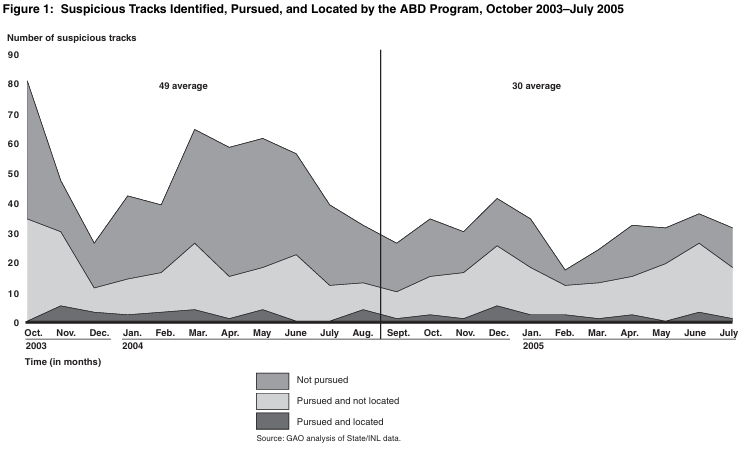
Additional reforms were implemented and the ABD program lives on today as a partnership between the Colombian Air Force and the United States’ Joint Interagency Task Force-South. According to the former, it has successfully reduced the number of identified illegal flights through Colombian airspace from 639 in 2003 to just seven in 2024.
Of course, just because Colombian airspace is no longer a safe haven for traffickers hardly means the fight against drug smuggling is won. Colombian armed groups pivoted to pushing their product overland through Ecuador and Venezuela, or doubled down on maritime routes.
However, the modern ABD Program shows how sustained cooperation over long time horizons can work to shape the conditions criminals must operate under to avoid detection. That is what a true strategy of denial should look like.
In this vein, I believe that Total Systemic Friction can work if we take a careful look at what those three words seem to imply.
Total means a recognition that there is no silver bullet to the problems organized crime presents, and that an array of political, military, and economic tools are necessary to fight these organizations.
Systemic requires viewing organized crime as an ecosystem containing a multiplicity of actors engaged in a wide variety of activities that nevertheless feed into the same challenge.
Friction is perhaps my favorite aspect of this, because it does not promise a decisive victory. Instead, the United States must realize that it wins by imposing costs up and down the illicit supply chain that over time weaken the ability of illicit networks to sustain themselves and victimize the peoples of the Americas.
In a recent conversation about Pape, a friend joked that it seems like the Trump Administration is on a mission to boost the n for coercive airpower campaigns as much as possible.
Trump’s “A whole civilization will die tonight” comments are particularly illustrative.
Nice piece! I think this quote about why this campaign might theoretically be effective is especially illustrative:
"nobody wants to lay down their life just to get a few more kilos of coke across the border."
This is pretty empirically not true, narcos are killed in their hundreds and thousands every year in fights over territory and smuggling routes! Street gangs in the US kill over corners or cell phone numbers that customers call