

I spent last week in Asunción, Paraguay on a research trip for work. While you’ll have to wait for the official findings from that, I thought I’d put together some quick impressions from my time there.
For a small country with a reputation for being overlooked and underappreciated, there’s a surprisingly robust community of Paraguay analysts within the broader Latin America space. I’d be remiss not to give a special shout-out to the Paraguay Post as a go-to source of coverage on the country by journalists who have been living and working there for years. The occasion of Paraguayan President Santiago Peña’s visit to Taiwan also generated a substantial amount of buzz on this platform.1
Meanwhile, investors are taking note of the country’s low taxes, strong economic growth, and alignment with the Trump administration to feel out potential plays in the country. Immigration to has also spiked, with residency applications reaching nearly 50,000 in 2025 and on track to hit 90,000 this year, big numbers for a country of just about 7 million inhabitants. In the weeks before my trip, I saw videos of throngs of Brazilians, many Bolsonaro supporters lined up at the border with Paraguay to flee the perceived tyranny of the Lula government for the warm embrace of their neighbor.
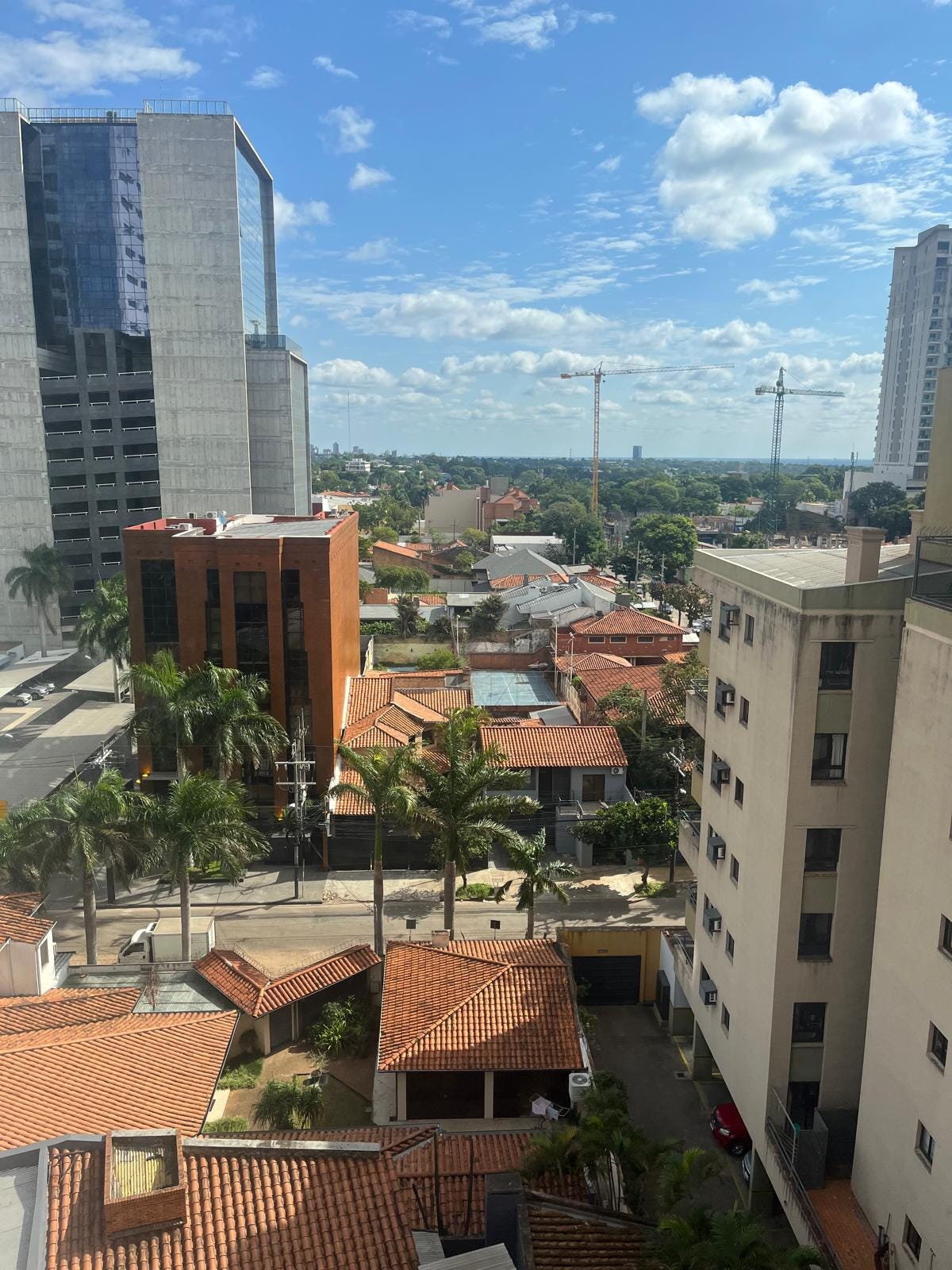
Taken together, South America’s best-kept secret doesn’t seem so secret anymore. This isn’t empty hype either, everywhere in Asunción, there’s new construction popping up, work sites wrapped in artful renders of gleaming modern glass towers. Hype around artificial intelligence (AI) infrastructure has dominated recent news as President Peña signed a memorandum of understanding with Taiwan on May 10 to co-develop datacenters, while the AI infrastructure firm X8 Cloud announced a reportedly $50 billion investment in Paraguay late last year.
But the headlines at times mask a more profound sense of anxiety. Paraguay has plentiful, cheap, and green electricity, but on my first day there the swanky new mall next door to my hotel had no power for half the day. Brand-new buildings are rising from streets in desperate need of repaving (or paving) and snarls of interminable traffic. The country is campaigning to become a tourist hub and expat paradise, but flight routes are convoluted and Asunción’s airport is in serious need of expansion.
The next 2 to 3 years will be critical in determining whether Paraguay’s current moment will turn out to be a flash in the pan or a genuine takeoff.
The Forgotten War(s)
Don’t let the subtropical calm of Asunción fool you, Paraguay is perhaps the most war-torn country in all Latin America. The so-called War of the Triple Alliance, or Guerra Guasú as it is known in Guaraní, which raged from 1864 to 1870 was the deadliest interstate conflict between the Napoleonic Wars and First World War. On a per capita basis, it was one of the most devastating wars ever fought, estimates suggesting around 311,000 battle deaths, while between 70 and 90 percent of all Paraguayan adult males perished during the six-year inferno and its aftermath.2
The destructiveness of this 19th-century war may also explain why Paraguay’s developmental path seems to diverge from its neighbors in the southern cone. Paraguay’s GDP per capita in 2024 was about $6,400, less than half that of Argentina and Chile, and about 3.7 times less than Uruguay’s. A similar story appears to play out in Brazil’s South region, encompassing the states of Paraná, Rio Grande do Sul, and Santa Catarina, which had a GDP per capita of around $12,000 in 2023.
On paper, Paraguay shouldn’t be lagging this far behind its neighbors. It has strong endowments, fertile agricultural land, and while landlocked, a plethora of navigable internal rivers allow for relatively easy access to markets.
In fact, before the War of the Triple Alliance, Paraguay seemed like a standout favorite to build the most modern state in South America. The country made impressive strides towards universal public education, laid kilometers of railroad, and secured preferential access to international credit. When hostilities broke out, Marshal Francisco Solano López, the legendary and infamous figure who led Paraguay throughout the war, commanded the largest and most capable army south of the equator.
Unfortunately, as Luis L. Schenoni points out in his excellent book Bringing War Back In: Victory, Defeat, and the State in Nineteenth-Century Latin America which I read while in Asunción (more on that in a future post), Paraguay’s disastrous defeat at the hands of Argentina, Brazil, and Uruguay undid many of its prewar state-building efforts. Not only did the loss of entire generations severely impair Paraguay’s economic potential, Marshal Solano López’s death left a power vacuum swiftly divvied up between regional power brokers who had a vested interest in kneecapping the power of central government.
In the decades following the war, Paraguay laid less track, collected less revenue, and invested less in public goods than it had before 1864. At the same time, the victorious trio of allies saw their own central governments supercharged, empowering state-building forces and likely helping set the rest of the southern cone on a more positive developmental path.
Paraguay would march off to war once more in 1932, this time against its western neighbor Bolivia for control over purportedly oil-rich territory in the northern Chaco region. The little-studied war was a final bloodletting before the long quiet of interstate peace settled over Latin America. It featured both sides wielding modern weapons of war, including airplanes, machine guns, and riverine gunboats sold to both sides by a burgeoning international arms industry. This time, Paraguay would fare better, emerging as the victor, though the triumph would prove a hollow one as the promised oil deposits turned out to be illusory.3
There is a palpable difference in how Paraguay’s two great wars are remembered today. The Chaco War is clearly a source of national pride and celebration. Our hotel was located along Avenida Aviadores del Chaco, a major thoroughfare honoring the early Paraguayan air force pilots who fought during the Chaco War. Other streets where we took meeting bore names like “Reservista de la Guerra del Chaco” while national parks are named in celebration of the “Defenders of the Chaco.”
By contrast, at the National Pantheon of Heroes I visited my first day in Asunción, seemed to present the War of the Triple Alliance in relatively neutral terms, though with a pointed jab at the “dark commercial interests” that underpinned the Argentine-Brazilian-Uruguayan coalition. Of the Marshal Solano López himself, historical memory seems to be split between acknowledging him as a great man in the history of Paraguay, and the undeniable reality that his defeat doomed the country to demographic ruination and lost decades.
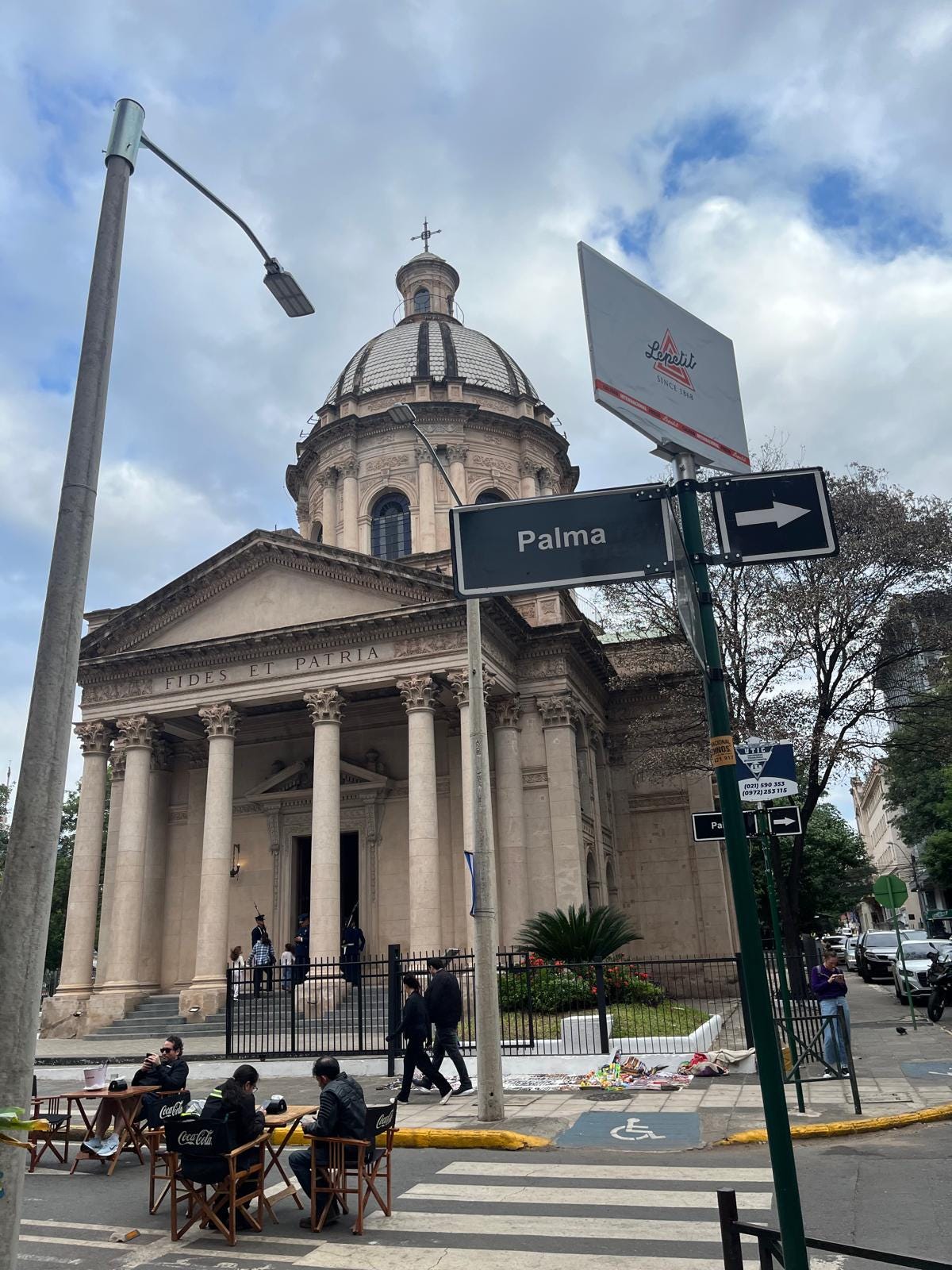
This left me wondering to what extent the Chaco War may have salvaged the Paraguayan state building project. The process of mobilizing for conflict, even if the stakes were less existential than they were during the 1864-1870 period, reignited centralizing and modernizing forces, while victory, even hack-cocked, helped lock those impulses in. While we don’t think much about these 19th and early 20th century conflicts, Paraguay’s history was a visceral reminder to me of the deep scars war can leave on a country decades and even centuries later.
The Problem With Hydro
Today, fortunately, the drums of war have receded so far into the background in South America as to be virtually silent, leaving Paraguay to confront new state-building and development challenges, especially in the energy sector. Two things are true of Paraguay’s energy sector today, the country produces a tremendous excess of cheap, clean energy, and the country is running out of power, and fast.
The vast majority of Paraguay’s energy matrix is comprised of hydropower, much of this coming from the Itaipu and Yacyretá dams on the country’s borders with Brazil and Argentina respectively. Itaipu in particular is an engineering marvel. Located along the Paraná River, the dam is controlled jointly by Brazil and Paraguay, with each party laying claim to half of the energy produced. The dam boasts an installed generation capacity of 14,000 gigawatts, making it the third largest hydroelectric project in the world and regularly rivals China’s Three Gorges hydropower plant in real electricity generation.
Since its inception, Paraguay has sold a good chunk of its share of Itaipu’s output back to Brazil. In 2018, for instance, Paraguay consumed just 15 percent of Itaipu’s production, enough to meet almost 90 percent of the country’s energy consumption that year, while Brazil used up the remaining 85 percent. By reclaiming even a fraction of this, Paraguay can make available large amounts of energy for new prospective industries.
The country has already experienced a first wave of interest in this power potential from cryptocurrency investors. Now, the crypto entrepreneurs are being displaced by even more energy-intensive apex predators, AI datacenters.
But while Paraguay’s hydroelectric plants are impressive, it is hard to wring more power out of the same river without potentially triggering navigability issues or environmental blowback. The fact that Itaipu and Yacyretá are both bi-national projects, whose operations are governed by both Paraguay and Brazil/Argentina further complicates matters, requiring Asunción to get Brasília and/or Buenos Aires on board with any planed expansion of capacity.
Accordingly, there’s only so many datacenters Paraguay can sustain at current production levels alone. According to some estimates, the country’s energy surplus may run dry by 2030 or sooner, seriously limiting its investment attractiveness and creating friction between power-hungry datacenters and citizens facing the prospect of rolling blackouts.
Now there’s still some relatively low-hanging fruit that can extend this lead for longer. I heard from one interviewee that as much as 40 percent of electricity is lost in transmission, modernizing and upgrading the Paraguayan grid could go a long way towards unlocking greater energy flows.
Itaipu is also evaluating the possibility of adding of new turbines, potentially unlocking 1,400 more megawatts of power. Still, that probably isn’t enough to keep pace with rapidly rising energy demand, and ultimately, the dam will hit its ceiling in terms of productivity.
I heard about a lot of options for Paraguay to future-proof its energy security during my time in the country. Some officials mentioned studies looking into building smaller dams along Paraguay’s internal rivers. Last year Paraguay also announced a national nuclear strategy seeking to develop small modular reactors by 2035.
One of the more promising initiatives I head involved a planned natural gas pipeline from Argentina’s Vaca Muerta shale oil field into Brazil via the Paraguayan Chaco. Ideally, this project would also allow Paraguay to tap into the flow of gas to help it diversify energy options for datacenter titans and more traditional industry alike.
The most scalable and green option by far is solar. The Chaco region, with its vast, arid, and sparsely-populated tracts of land, would be an ideal location for solar farms. The government is moving forward already in this area with a tender for a 140-megawatt photovoltaic plant in Loma Plata. However, transmission is likely going to be a problem here, as building the requisite infrastructure, including batteries, to get power from the remote Chaco environs to end users in eastern and central Paraguay probably requires significant public and private sector investment.
In another promising sign, this month Paraguay passed a new regulation easing the requirements for private sector actors to develop their own non-hydro renewable projects without the need for direct supervision from the state electrical authority ANDE.
Getting to Texas
Paraguay is sometimes referred to as the Texas of South America. I’m fond of the comparison as partly true, and partly aspirational. Like Texas, Paraguay cultivates something of a reputation for rugged individualism and personal liberty. A history of ranching, and low 10 percent flat tax (and no tax on income earned abroad) make it a libertarian darling. Modern Texas may even be looking more like Paraguay in the energy sector as the Lone Star State’s grid becomes more and more renewable not out of any particular concern for the environment but rather thanks to permissive permitting and continually decreasing cost curves for solar.
But Paraguay is still a long ways off from Texas, especially when it comes to the country’s efforts to transition from an export-oriented economy rooted in agricultural products to a modern, diversified, and technologically advanced ecosystem. Texas has captured this, it is home to a growing number of world-renowned engineering firms lured in by the state’s ultra-business-friendly environment.
Paraguay is trying a version of this, most notably with its play to become the datacenter hub of Latin America. But hosting datacenters is not a particularly sustainable or practical pathway to broad-based development. Building them creates a lot of jobs in construction, and scaling energy certainly has knock-on effects for Paraguay’s attractiveness to other industries. Over the long run, however, the physical datacenter isn’t the thing creating value.
I did hear some arguments while in country that hosting datacenters could help Paraguay eventually make a play to capture some of the semiconductor value chain, because the demand for chips will allow the country to make the case for manufacturing those in-country. I’m not saying it’s impossible, but this argument strikes me as somewhat wishful thinking, or at the very least a long-term project that depends on building a robust crop of home-grown engineering talent over the course of a couple decades. And that’s assuming Paraguay will remain competitive as a datacenter hub for years to come.
That being said, there is also absolutely a play for the United States (and potentially Taiwan) here given the enormous capital expenditure going into AI at the moment. Beyond just opening new datacenters, part of the cooperation package should include investment by U.S. and allied firms in grid modernization, solar, batteries, and transmission lines. From Paraguay’s end, the country should be putting serious thought into what kinds of bottlenecks are keeping energy projects from being added and set out to correct these.
Beyond building out and building up the grid, Paraguay needs to plough its revenues from datacenter hosting, and any assistance the United States and company can provide, into the education system. Human capital was probably the second-most covered issue I heard from civil society and government officials alike during my visit. Indeed, it won’t matter if Paraguay succeeds in attracting big tech investment if there are no Paraguayans with the skills and know-how to fill local jobs.
I returned from Asunción feeling optimistic. Paraguay, has plenty going for it, domestic political stability and relative safety, insulation from geopolitical flashpoints, and a strong business environment. It doesn’t hurt that the current administration has been adept at cozying up to the Trump administration at a time of unprecedented focus on the Americas. Whether that bid will translate into more tangible investments, especially in the kinds of hard infrastructure that enable true regional development, remains to be seen.
As a final note, I’d like to say I’m truly grateful to the dozens of people I spoke with, both formally and informally, who were willing to volunteer their time and analysis. Paraguayans are some of the most welcoming people I’ve met, and the asado is top-notch. I would highly encourage you the reader to think about visiting South America’s increasingly less hidden gem for yourself should you have the chance.
I encourage you to read the excellent analyses Henry Large and Ethan Knecht have put out on this visit.
Total death toll estimates vary significantly, I relay mostly on those provided by Luis L. Schenoni in Bringing War Back In: Victory, Defeat, and the State in Nineteenth-Century Latin America (Cambridge University Press, 14 November 2024), pp. 64-65 and 169-171.
For a good synopsis of the Chaco War, its origins, and poisoned conclusion, I suggest that found in Greg Grandin’s America, América: A New History of the New World (Penguin Press, 22 April 2025), pp. 409-414.
Sounds like a productive trip, Henry! Thanks for the shout-out to the Paraguay Post.