On Monday, Gustavo Petro claimed that bombs dropped by neighboring Ecuador had fallen on Colombian soil. Shortly thereafter The New York Times shared an image taken by one of their photographers of an unexploded Mark 82 500-pound bomb lying near the Colombia-Ecuador border while Petro broadened his accusations claiming Colombian authorities found “27 charred bodies” allegedly the product of other Ecuadorian strikes along the border.
This comes as Ecuador has reportedly mobilized as many as 75,000 troops in a reinvigorated campaign against organized crime. Since the country declared war on crime for the first time in 2023, violence has remained stubbornly high, homicide levels even increased between 2024 and 2025. This time, however, Quito has the backing of the United States, where the Trump administration is urging countries to use military force against criminals.
Ecuadorian President Daniel Noboa has frequently clashed with Petro over security policy. Earlier this year, Noboa announced 30 percent (later raised to 50 percent) tariffs on Colombian imports, a Trumpian policy meant to punish Colombia for failing to curb the drug flows that are fueling Ecuador’s violence crisis.
Latin America is no stranger to disputes between neighbors, last year for instance Peru and Colombia got into a diplomatic spat over the latter’s claims to Isla Chinería on the Amazon River. But these latest conflicts seem to carry a sharper edge as the United States advances its own more interventionist foreign policy in the region.
U.S. President Donald Trump along with key advisors have called for a military coalition to fight organized crime explicitly modeled on U.S.-led efforts to dismantle ISIS. Washington also says it is willing to intervene in the region unilaterally if need be to go after criminal groups.
The implication here is not only that the United States could launch more military operations against uncooperative countries, but that U.S. allies in Latin America should also be willing to shoot first and ask questions later in the service of a new war on crime. That’s troubling for countries like Brazil, Colombia, and Mexico who are less on board with the White House’s approach.
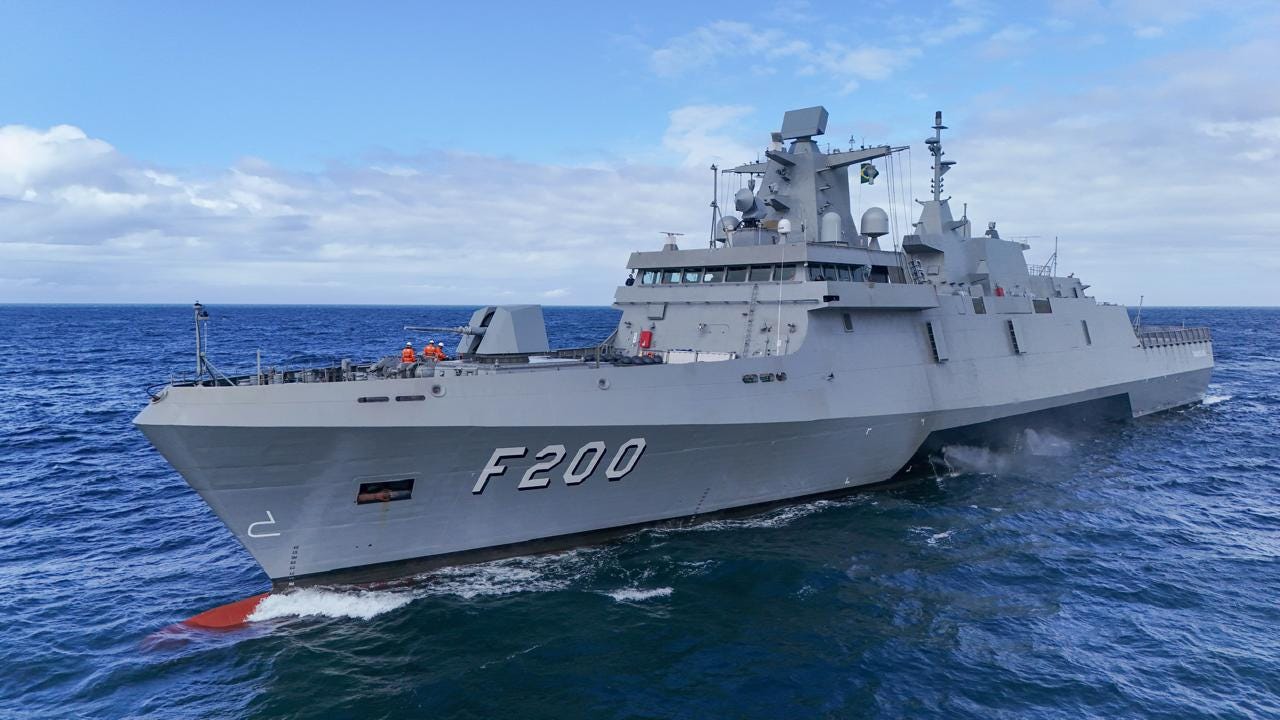
Last week, Brazilian President Luiz Inácio Lula da Silva held a press conference to announce strengthened defense industrial cooperation between Brazil and South Africa. With the specter of the Iran war hanging over geopolitics, and concerns over U.S. military adventures closer to home, Lula raised a few eyebrows with his statement that: “Here in South America, we present ourselves as a region of peace. No one here has nuclear bombs. But if we don’t prepare ourselves defensively, one day someone will invade us.”
Commentators on social media have drawn attention (not always in good faith) to recent defense agreements between the United States and Paraguay meaning that Brazil is at risk of “encirclement” by a growing host of pro-U.S. countries. Russian outlets like Sputnik Mundo have fanned the flames claiming Lula’s fears of receiving the “Maduro treatment” are behind recent arms purchases.
Some Brazilian lawmakers have gone even further, tabling proposals for Brazil to withdraw from Latin America’s arms control regime and resurrect its nuclear weapons program. I’ll be upfront and say that I don’t think these efforts are going anywhere. Even recent defense budget increases for weapons procurement are gap-filling measures, not seismic shifts.
That being said, in today’s post I hope to take a bit of a broader look at whether we’re heading towards an arms race, how likely the Americas are to remain a zone of peace, and why some increased defense spending could still be good for the region.
(Re)armament Dynamics
Latin America has more or less resisted being drawn into the global rearmament race. Still, according to the Stockholm International Peace Research Institute, South America increased its arms imports by 31 percent between the 2016-2020 and 2021-2025 periods. Total arms imports nevertheless remain lower than they were from 2005-2015, owing largely to macroeconomic headwinds and the collapse of Venezuela’s weapon imports.
However, there are three dynamics to watch for that could drive greater arms imports by Latin American countries in the next couple of years.
The first, and perhaps most interesting dynamic is hedging. In a previous post, I detailed the overall meager state of Latin American air defenses, countries wishing to buy a bit of insurance against U.S. military adventurism would do well to strengthen their air and missile defenses, expand stocks of fighter jets, and modernize their navies.
The goal of hedging is not so much to militarily deny the United States, but rather make one’s country a thornier target that Washington would not be able to lean on without sacrificing capabilities in other, more strategic regions.
Brazil is the most likely candidate to be affected by hedging dynamics, the country has long sought to position itself as a global power, ambitions which may be challenged by U.S. efforts to assert itself as master of the Western Hemisphere. Unlike Mexico, which would come under intense U.S. scrutiny were it to engage in a major military buildup, Brazil has the advantage of geographic distance from Washington. Still, the level of resources needed to successfully hedge against U.S. military might is likely to remain cost-prohibitive even for the Latin America’s largest economy.
Meanwhile, with a more trigger-happy administration in the White House, the mere appearance of an anti-U.S. military buildup could be sufficient to trigger a preemptive strike. Nevertheless, countries could play a longer game, building up under the radar now, but with the goal of eventually being in a position to resist the United States 15 or 20 years down the line.
The second dynamic involves the United States actively applying pressure on regional governments to spend more on their militaries. In the wake of the Shield of the Americas conference, and with war in the Middle East escalating, the United States is likely looking to shift some of the burden for the global war on crime to its partners.
The White House’s new “America First Arms Transfer Strategy” makes explicit the U.S. desire for overseas weapons sales to serve as an engine for the domestic defense industrial base. High up on the list are likely to be drones, counter-drone equipment, as well as updated ISR aircraft and maritime patrol boats.
Ecuador could be an example of this dynamic at play. The country has been a peripheral player in the regional arms market, but Quito’s renewed offensive against organized crime could drive the need for new kit.
The final dynamic is modernization, and is probably both the most banal, but also the most important one for understanding recent trends in defense procurement. Simply put, militaries periodically need to update their equipment as it ages out of relevance. In the case of Latin America, which has historically bought much of its gear secondhand, many systems are reaching the end of their serviceable lifespans.
Indeed, some of the biggest-ticket arms purchases in the region are fighter jet modernization programs. Brazil is replacing its F-5Ms, which it kept in service for a whopping six decades, with the JAS 39 Gripen. Colombia is also moving forward with the Gripen to replace its ageing Kfir fighters, while in 2024 Argentina inked a deal to acquire F-16s from Denmark to phase out its F-5AMs. Peru is expected to join this trend when it selects a modern fighter that will take the place of an increasingly unreliable fleet of MiG-29s and Mirage 2000s.
These are not so much indicative of an aerial arms race as they are the product of multiple countries arriving at the same capability requirements independently of one another. Still, even routine modernization efforts can trigger accidental arms race dynamics. Chile, which once boasted the most modern air force in South America, now finds itself flying in increasingly competitive skies.
At worst, all three dynamics combined could potentially produce a security dilemma for Latin American states, wherein efforts by one country to increase its military power fuel insecurity in its neighbors, prompting them to rearm and fueling a vicious cycle of militarization.
Running Faster, Still Falling Behind
Thinking about rearmament dynamics in the Americas today, I’m reminded of the short-lived, but dramatic naval arms race that gripped South America in the early 20th century. Buoyed by high commodity prices and eager to assert itself on the global stage, Brazil purchased two dreadnoughts from British shipyards in 1907. The first of these ships, Minas Gerais, would (very briefly) have the honor of being the most powerful warship in the world, boasting a dozen 12-inch guns.
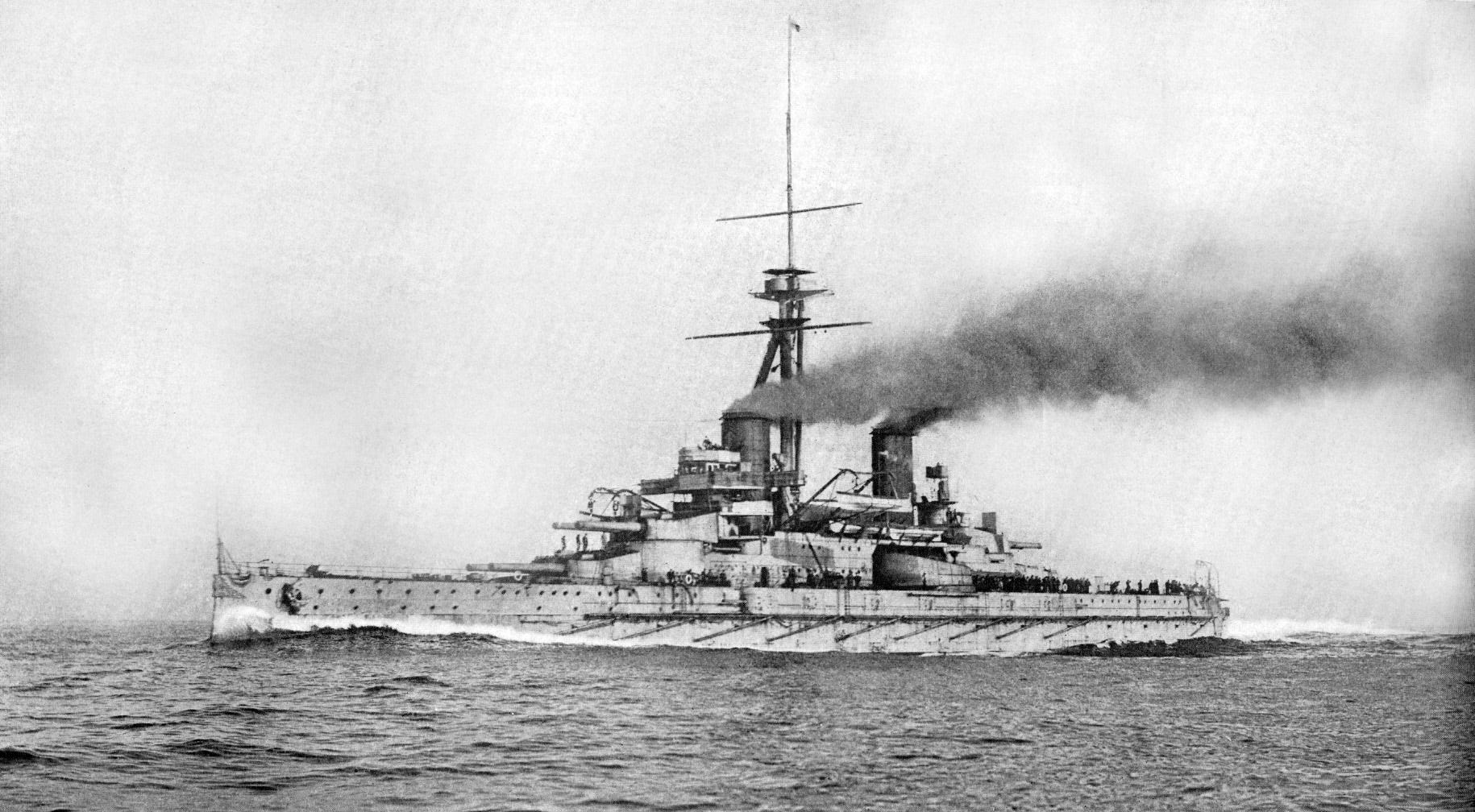
In response, Argentina and Chile each ordered a pair of dreadnoughts of their own, with Buenos Aires notably opting to buy its ships from the U.S. yards. But the arms race cooled off before it truly began. A 1910 mutiny by Brazilian sailors against corporal punishment and demeaning conditions known as the “Revolt of the Lash,” along with economic slowdowns in all three countries dampened enthusiasm for runaway naval buildup. In Chile’s case, the outbreak of World War I offered a convenient opportunity to offload a costly investment, and Santiago allowed the British to purchase both of its dreadnoughts for service in the Royal Navy.
Argentina also tried to sell back its warships to the United States, but both were considered obsolete designs. Brazil offered the Minas Gerais and her sister ship Sao Paulo for service in the British cause in 1917, but the offer was rebuffed as the two lacked modern fire control systems. The real naval arms race taking place in the north Atlantic had left South America in the dust.
Even in the event that U.S. provocations and local tensions trigger a wave of defense spending by Latin American countries, it seems likely that the region as a whole will remain behind the cutting edge of defense technology. Under Hugo Chávez and Nicolás Maduro, Venezuela spent billions building up its armed forces. But the systems it acquired, like the Russian S-300VM air defenses, probably the best anti-air systems in all of Latin America, were not one, but two generations behind Russia’s state of the art by January 3, 2026.
In addition, we shouldn’t forget that militaries, at their core, are comprised of people and are constrained most critically by the trainings and values instilled into their members. All the fancy kit in the world will make little difference if the soldiers responsible for operating it don’t know how to use it effectively, as was the case in Venezuela this year, or if inhumane disciplinary conditions cause them to revolt, as was the case in Brazil in 1910.
For Latin American militaries looking to meet the defense challenges of the 21st century, relying on flashy, expensive arms purchases is almost never an effective strategy. Governments looking to truly advance their military capabilities should focus on practical reforms to their procurement processes, alongside training and doctrinal reform to ensure that the money they spend on their armed forces can go further than it does today.
The Illusion of Interstate Peace
To be clear, I still regard the possibility of a major arms race kicking off in Latin America as a remote one. Its governments face significant fiscal constraints that limit their abilities to make significant investments in military buildups. The region also has strong norms around peaceful resolution of disputes that offer plenty of off-ramps for interstate tensions.
Still, we should not take on faith alone that the Americas will be spared interstate conflict. Peace is in constant need of maintenance, all the more so when the clouds of war seem to be gathering around the world.
There are also structural factors that may be tilting the correlation of military forces towards instability. The ascendancy of one-way attack drones and other cheap precision munitions is tilting the offense-defense balance in favor of the attacker, while allowing bad actors to hold at risk infrastructure and populations deep inside other countries’ territories. Criminal groups seem to have recognized this fact, and are expanding their use of weaponized drones in a crude imitation of the tactics used by Russia and Iran.
Even on a comparatively shoestring military budget it seems likely that a malicious state actors could acquire the means to threaten their neighbors.
Indeed, Venezuela’s saber rattling towards Guyana between 2023 and 2025 had some of the makings of such a conflict. While the ability of the Venezuelan armed forces to actually invade and occupy the Essequibo was always fanciful, Maduro’s use of missile-toting fast attack boats and hybrid criminal-political actors along the border allowed Venezuela to threaten significant costs for Guyana’s economy and political stability at relatively little expense for Caracas.
Getting to a full-scale regional conflagration will still require a lot of things to go wrong, but I could see the possibility of militarized border disputes potentially spiraling into something resembling the Cenepa War between Ecuador and Peru that raged for about a month in early 1995. I could imagine a world in which one country ends up stealing a march on its rivals in the domain of cheap precision strike, and could be tempted by dreams of quick, decisive war.
In a more dangerous world, preserving Latin America as a zone of peace will require more active engagement and maintenance.