

Following the January 3 raid that captured Maduro, El Salvador’s President Nayib Bukele took to Twitter to commend the operation and dismiss its critics as carrying water for “thugs” in the Americas. U.S. Senator Ruben Gallego responded: “So if the next president of the United States executes a warrant to extradite you to the United States using Delta force you would be OK with that?”
I’ll admit that made me laugh, in part because if the United States wanted to execute a smash-and-grab operation against the president of El Salvador, it would probably be quite a bit easier than Operation Absolute Resolve. And that’s saying something, because as we saw, Venezuela’s own military turned in an utterly dismal performance against the U.S. strike force.
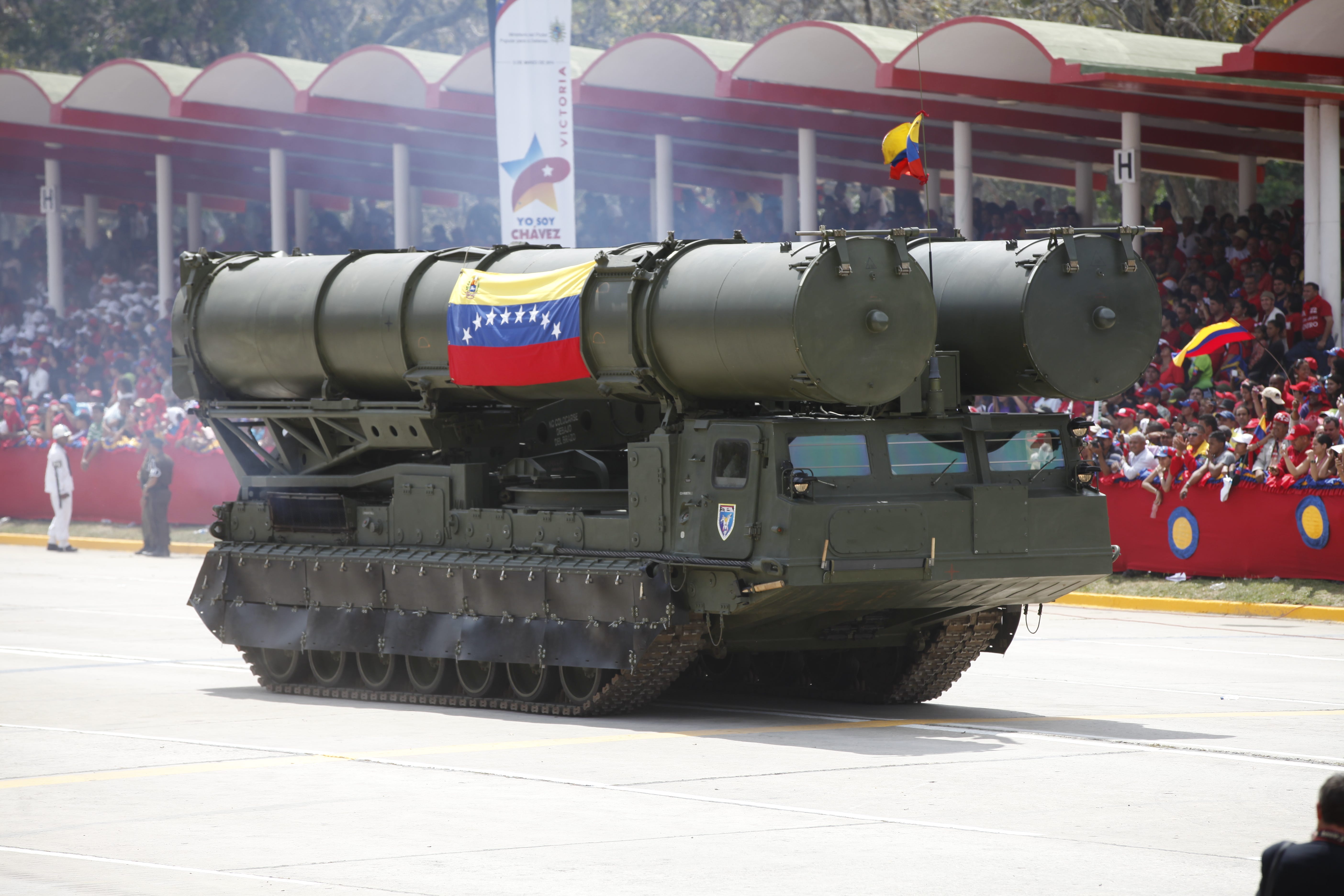
While the U.S. military buildup in the Caribbean was ongoing, several analyses (some better-researched than others) painted an intimidating picture of Venezuela’s air defenses on paper. Look at the S-300s, they said, look at the Buks, the Su-30s, the F-16s. Maduro himself boasted of Venezuela’s “thousands” of anti-air missiles (mostly Igla-S MANPADS) while one commentator on social media highlighted the S-125 Pechora and its VHF radar as potential kryptonite for U.S. stealth fighters.
I wrote earlier this week about the many reasons for Venezuela’s poor battlefield performance on January 3. In short, while the country’s air defense systems were outclassed at every turn by U.S. capabilities, the real story is one of a coup-proofed and horrendously corrupt military force failing to use what they had been given effectively. Institutions, not hardware, tend to decide wars.
But that being said, it is also true that, by the standards of the region, Venezuela actually had one of the best integrated air and missile defense systems. Overwhelmingly, Latin American militaries lack surface-to-air missiles, relying instead on gun-based and man-portable anti-air systems. Some countries are able to supplement these with relatively modern air forces, though without sufficient numbers to make much of an impact against a major power adversary.
This has major implications for the region as the United States continues to espouse the “Donroe Doctrine” and a hard power-first approach to the Western Hemisphere which has left many Latin American governments have been asking “could the U.S. do the same thing here?” The answer, in most cases, is basically yes.
Air Defenses of the Americas
When I say that Venezuela still has some of the best air defenses in Latin America, I’m not exaggerating. No other country in the region has the same combination or depth of short- and long-range missile systems, MANPADS, and gun-based defenses that the National Bolivarian Armed Forces (FANB) possessed, and indeed continue to possess. Even if you write off Venezuela’s S-300 anti-air systems completely (which seems to be the case) and subtract the various Buk M2E medium-range anti-air launchers that were destroyed by U.S. forces in Operation Absolute Resolve, only Cuba, and perhaps Chile and Peru seem to be in the same conversation equipment-wise.
It makes sense that Venezuela would possess some of the best kit in the region. As an anti-U.S. dictatorship, the Maduro regime faced a clear external military threat it had to be prepared to confront. Furthermore, the importance of the FANB for regime security meant that the armed forces had significant leverage in budgetary negotiations to demand flashy toys. In comparison, most other Latin American governments face no such external adversaries and still harbor suspicions when it comes to perceived self-aggrandizement by their militaries.
I said institutions win wars, but technology undoubtedly shapes the way wars are fought. In the case of air defenses, the systems at your disposal limit the types of threats you are able to deal with in the first place. The maximum range of an Igla-S MANPAD is 6,000 meters. The maximum range of a ZU-23-2 anti-air gun system is about 2,500 meters. Meanwhile, an MQ-9 Reaper drone can operate at altitudes up to 15,000 meters, to say nothing of more advanced fighters and strike platforms that fly even higher. If all your country has are MANPADs and guns, that imposes a hard ceiling on the types of aerial targets you can credibly threaten. No level of training or preparedness can change this, if your doctrine calls for taking down enemy aircraft, you will simply need to get better equipment.
For this reason, the best air defenses most Latin American militaries have at their disposal are their air forces. These have seen considerable upgrading in recent years. Argentina just acquired F-16s, Brazil and Colombia are getting Gripens, and Peru is moving forward with its own fourth-generation fighter procurement process. But despite qualitative improvements, most air forces in the region are small, generally boasting at most a couple dozen fighters. Argentina’s agreement for instance secured 24 F-16s, while Colombia is spending $3.6 billion on a total of 17 Gripen E and F fighters, to be delivered between 2026 and 2032.
Maintenance and refueling requirements mean not all of these planes can always be in the air, leaving them vulnerable to being destroyed while on the ground. As we saw in Operation Absolute Resolve, Venezuela’s air force was nowhere to be found as helicopters streamed into Caracas. A recently released DOJ memo on Operation Absolute Resolve shows that the United States had been prepared to strike at air bases if necessary, but seemingly the sluggish and confused reaction of the FANB on January 3 elided the need for such measures.
There is also the matter of sea-based anti-air systems. On this front, the region performs somewhat better. The Chilean navy operates a pair of dedicated anti-air frigates, while the new Brazilian Tamandaré-class has twelve vertical launch cells for Sea Ceptor anti-air missiles. Even Venezuela’s lone operational frigate, the Almirante Brión carries a launcher for Sea Sparrow anti-air missiles.
But as with air forces, naval air defenses face readiness concerns that mean they may not be available on short notice. Like its air force, the Venezuelan navy played virtually no role during Operation Absolute Resolve. Furthermore, such systems understandably are limited in their ability to protect inland targets, meaning that if an enemy can slip past them at sea, they can enjoy free rein on land.
By contrast, ground-based air defense systems can at least in theory provide more of a persistent deterrent. Crews are able to rotate and perform necessary maintenance on-site, allowing for round-the-clock protection where they are deployed. However, they tend to be less mobile than planes in the air or ships at sea, and are often deployed to protect fixed targets which renders them vulnerable to being precisely located and targeted for suppression or destruction by attackers.
Of course, even with the above limitations, the United States may not be able to pull of an identical operation in other countries. MANPADs and guns cannot threaten high-flying jets, but they certainly can put up fierce resistance against helicopters and planes coming in to land. This is especially true when the operators of said air defenses are professional armies not riven by corruption and mismanagement like the FANB. Operation Absolute Resolve further benefitted from geographic features like Caracas’ placement along a coastal mountain range. A helicopter-borne raid into Bogotá or Brasília would likely flounder for the same or similar reasons that Operation Eagle Claw failed in 1980.
The broader point, however, is whether a sufficiently advanced military force could project airpower into a given Latin American country with minimal risk to itself. This is why integrated air and missile defenses are so important. An enemy can use high-flying systems to suppress or destroy point defenses while they bring in their low-flying rotor and fixed wing assets.
Mexico underscores just how far behind much of the region is on air defense compared to Venezuela. MANPADs excepted, Mexico has no surface-to-air missile systems to speak of, while the rest of its land-based anti-air is filled out by gun-based systems. Even its fighter complement consists of just a handful of legacy F-5Es and Fs.
Consider the following scenario: Claudia Sheinbaum is woken in the middle of the night by a call from the White House. Trump informs her that the United States has located CJNG boss El Mencho and is ready to take him out with an air strike. Sheinbaum can either walk back her opposition to U.S. military action in Mexico and claim that this was a joint operation to save face, or denounce the U.S. strike and suffer whatever fallout may come. With Mexico’s current capabilities however, she cannot stop the United States from taking the shot.
To be clear, I sincerely hope this scenario will not come to pass, and that the United States and Mexico can figure out a genuinely cooperative way to fight the cartels. But I think this possibility is worth highlighting as an example of how mismatched military capabilities shapes the universe of possible policy outcomes. While most analysts and commentators have a general impression that U.S. capabilities outstrip those of its hemispheric neighbors, these often lack clear technical analysis.
What are Militaries For?
Clausewitz teaches us that you don’t always need to decisively defeat an enemy on the field of battle to convince him that his political objectives are not worth the cost of achieving them. Venezuela’s problem is that its military effectively imposed no cost on the United States. This also matters for the country’s ability to deter future action. Again, in Venezuela’s case, it has virtually no capability to deter the United States striking Venezuelan soil again, it retains much of its air defense capacity in theory, but has already been exposed as a paper tiger.
The main lesson, in my opinion, for other Latin American countries of Operation Absolute Resolve is that they can no longer afford to neglect their armed forces. The Americas have long been considered a zone of interstate peace. The United States excepted, the Western Hemisphere spends strikingly little on defense.
I am generally of the opinion that this needs to change, and not just as insurance against a more trigger-happy individual in the White House. Having a competent, professional, and decently modern armed force not only helps deter incursions by outside powers, it enables faster disaster response, drives domestic technological innovation, and provides an important tool to counter organized crime.
There could also be risks to the United States over the long term. The United States enjoys a preponderance of force right now, but the more it threatens countries within the Western Hemisphere, the more these countries could be incentivized to increase arms spending. To be sure, some countries will likely throw themselves at the mercy of the White House, but it seems reasonable to expect that with the right incentives the hemisphere’s medium powers might be able to at least begin to shore up their defenses against gunboat diplomacy from the north. Justifications of the “Trump Corollary” to the Monroe doctrine are often couched in the need for U.S. freedom of maneuver at home, but if military adventurism turns the region into an armed camp, that could have serious consequences for Washington’s ability to project power going forward.
Today this still seems like an improbable outcome, I am not sure the region has the political will or financial resources to dramatically boost defense spending to the levels needed, but it still seems a worthwhile exercise to consider the kinds of incentives the United States is giving Latin America. Relationships forged by coercion alone often prove brittle when push comes to shove.
There are signs that the region was already advancing much-needed military modernization priorities well before Operation Absolute Resolve. The fighter modernization programs mentioned above are good examples of this, as is the recent decision by the Brazilian army to procure Enhanced Modular Air Defence Solution from Italian arms manufacturer Leonardo. This purchase will give Brazil the medium-range surface-to-air capability it currently sorely lacks. I also have no doubts that the Brazilian armed forces will be able to employ their new air defenses more competently than the FANB.
That is a step in the right direction, but it is not enough. Ultimately, the point of a national military is to defend your sovereignty, lose sight of that purpose, or the material requirements that mission demands, and you may wake up one day to find your sovereignty vanished in the night, maybe along with your president.
I've heard reports that the choppers were accompanied by formations of drones, perhaps they were used to take out guns and Manpads in its path. Both of those would require radar for targeting meaning they can be located and killed with the right equipment or decoyed.
Of all the problems that LatAm faces this is very, very low on the list.
The reason Latin America spends little on their militaries is that:
1. Borders are mostly stable so risk of invasion is low.
2. Competent, well armed armies are more likely to be used against their own citizens than in defense, so the budgets have been hollowed out. It's no wonder a military dictatorship is the most modern army around.
3. Our unstable economies can't afford modern systems.
Long range missiles would be a huge waste of time and money for most LatAm countries.