

On August 25 and 26, the Joint Task Force – Southern Border, acting in support of U.S. Customs and Border Protection, successfully shot down three drones using a high energy laser along the U.S.-Mexico border. In their writeup of the operation, the Laser Wars Substack noted that this marked the first publicly announced laser ““kills” on actual adversary drones in a real-world operational environment.”
Other noteworthy features of the operation include the fact that the shootdowns occurred without any apparent airspace closures or restrictions at the border, and that they targeted real drones. Given embarrassing failures on both of those counts earlier this year, that’s no mean feat.
While we ought to celebrate the real progress that continues to happen in the counter-drone space, the United States is still playing catch-up when it comes to the scale and sophistication of the border drone threat. In particular, we should not be so enchanted by advancements in interdiction capabilities that we forget the border is a sensors game. You can’t shoot down what you don’t know is there, and you shouldn’t try to shoot down what you can’t identify.
Today’s post aims to take stock of the recent history of drone and counter-drone operations along the border, what we’ve learned and what we need to do better, as well as what the United States can learn from Latin America’s current struggle against illicit uncrewed aerial vehicles (UASs).
A Brief History of Drones at the Border
Immediately upon taking office in January 2025, U.S. President Donald Trump declared a national emergency along the southwest border and surging 1,500 troops to the area. Over the subsequent months, roughly 7,500 additional troops in total joined 2,500 military personnel at the border left over from the Biden administration, bringing for a time the total force deployed along the U.S.-Mexico border to 10,000.
In March, U.S. Northern Command (NORTHCOM) established a new Joint Task Force – Southern Border, helmed by the Army’s 10th Mountain Division to oversee the drastically expanded military presence. Meanwhile subsequent Executive Orders designated hundreds of miles of border as “National Defense Areas” where the U.S. military would be authorized to detain migrants.
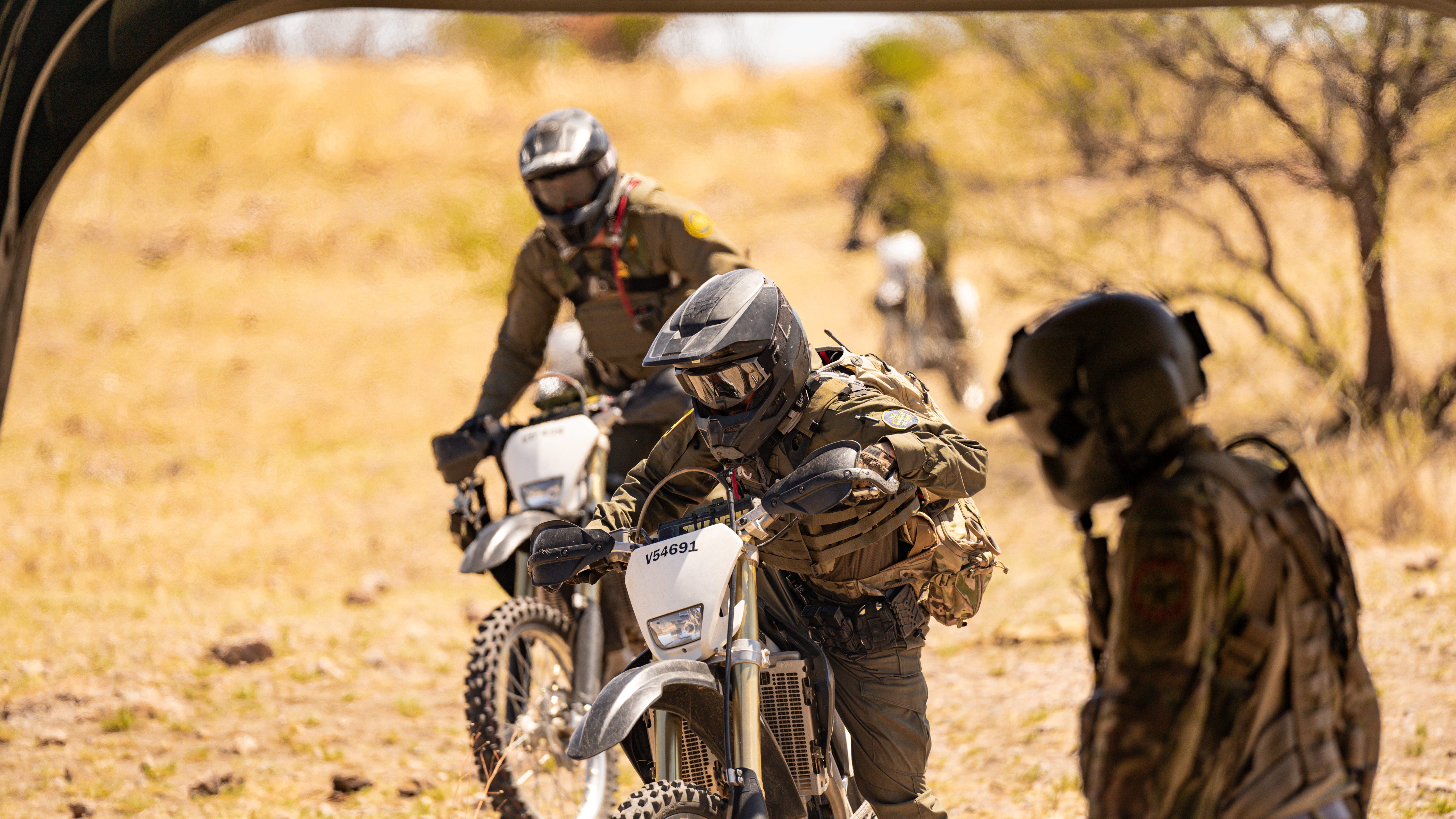
While the militarization of the southern border attracted fierce criticism, judicial challenges, and pushback at the local and national level, border encounters dropped precipitously during the first six months of the second Trump administration and have hovered around 10,000 a month since.
However, this created other problems. Criminals who made their money from human smuggling now had to contend with reduced demand for their services and a more challenging operating environment. Illicit actors had been employing drones for surveillance along the border since at least 2019, but increased attention along the border elevated the cartels’ relative need for drones.
First and foremost UASs offer an easy way to surveil U.S. border patrols and spot potential gaps in enforcement coverage. In March 2025 CBP officers in El Paso reported drones monitoring their activity “every day” from the Mexico side of the border, while according to one CBP official, during the 2025 fiscal year nearly 35,000 drones were detected within 500 meters of the border.
Surveillance drones typically stay on the Mexican side of the border if they can help it, but drug cartels are increasingly experimenting with drone-dropped narcotics shipments.
Again, these are not particularly new tactics, but with interest in land encounters along the border on the decline, UASs offer a convenient way for criminals to move their product more covertly, or at least without risking any of their own members who might rat on the rest of the organization.
While most small commercial UASs are probably still not as economical as other methods for trafficking high-volume drugs like cocaine, the rise of ultra-potent synthetic drugs is a natural fit for airborne narcotrafficking. Cartels have also acquired larger systems like the DJI Flycart capable of carrying heavier payloads that may allow them to move even greater quantities of narcotics without putting members at risk.
In response, the U.S. military began pushing more air defense and cUAS capabilities to the border. The 10th Mountain Division moved additional radars to help develop a “pattern of life” for the unidentified drones they spotted along the border, while in September 2025 Joint Interagency Task Force – 401 (JIATF-401), the Pentagon’s newly-minted counter drone team reportedly began to experiment with the potential for laser-based interdiction.
In December 2025, I argued for CSIS that these steps were encouraging, but the United States still needed to take border cUAS more seriously. In the article at the time I noted “the high level of economic integration between the United States and Mexico means that drone countermeasures could be highly disruptive or even dangerous if they make a mistake.”
Those concerns seemed to have been vitiated on February 10, 2026 when the Federal Aviation Administration (FAA) announced a sudden and complete 10 day airspace closure around El Paso. The restriction was lifted a few hours later to conflicting reports including an initial official statement that the U.S. government had interdicted several cartel drones which had incurred into U.S. airspace.
Subsequent reporting revealed that the FAA has issued the airspace closure in response to CBP’s use of a military anti-drone laser. One particularly damning report from The New York Times stated that the border agency had used the laser without coordinating with the FAA against what they suspected to be a cartel drone that later turned out to be a party balloon.
Not to be outdone, on February 26 the FAA issued another airspace closure east of El Paso around Fort Hancock, part of one of the new National Defense Areas. This time, soldiers at the base reportedly used a laser to shoot down a nearby drone that was being operated by CBP.
In May an even darker event may have transpired when a civilian medevac plan travelling from Albuquerque to Ruidoso, New Mexico crashed into the side of a mountain. Recent reporting from Wired suggests that the crash may have the consequence of a GPS jamming test conducted at the White Sands Missile range that denied the airplane access to critical navigational data in the dead of night. This tragic episode was not directly a consequence of border cUAS operations, but nevertheless underscores the real danger that counter-drone systems of all varieties can pose when they are active in close proximity to civilian activity.
The border is not a no-man’s land, it is a hub that billions of dollars in commerce and thousands of people lawfully pass through each day. Just as we cannot afford to neglect the drone threat, a myopic focus on interdiction without precision puts lives at risk.
Have We (Finally) Got it Right?
The El Paso and Fort Hancock incidents were essentially worst-case scenarios from a public relations standpoint. They disrupted (however briefly) peoples’ daily lives for seemingly no purpose, and revealed deep fissures in coordination between the U.S. military, CBP, and FAA, among other agencies.
The good news is that the actors involved in these debacles seem to have taken these failures seriously. In April the FAA and Pentagon signed a “landmark” safety agreement after an investigation into the high energy laser system being piloted at the southern border identified key safeguards for protecting civil aviation.
Building on the recent successful triple shoot-down, NORTHCOM and JIATF-401 also began the fourth iteration of the Falcon Peak exercise in Yuma, Arizona. The experiment, which will run through September 25 is designed to “address the unique challenges of C-sUAS at the Southern Border” with an eye to industry and interagency coordination.
These are all important developments to be sure, but we still have a long way to go. Laser Wars again points out with regards to the April safety agreement:
“First, the agreement doesn’t appear to clarify who has final say in authorizing a laser engagement when US military, CBP, and FAA jurisdictions overlap — the precise ambiguity that yielded February’s airspace closures and, until resolved, will complicate future engagements during a fast-moving crisis. Second, the US military’s arsenal of operational laser weapons is currently limited despite a stated goal of rapidly fielding new systems at scale within three years.”
On top of this, discussion around cUAS initiatives can over emphasize the interdiction piece of the puzzle and ignore the foundational question of sensing. While this may make sense when it comes to questions of military base defense or even critical infrastructure broadly where one can be reasonably sure that a site will have sufficient organic sensors to spot an incoming threat, it begins to fall apart when applied to a place like the southwest border.
At nearly 2,000 miles long, it is next to impossible for the United States to monitor the air littorals of the entire U.S.-Mexico border with current capabilities. Criminal groups deliberately avoid areas where state presence is strong and seek out blind spots to become new nodes in their illicit supply chains.
Thus, even if lasers begin striking down cartel drones for pennies on the dollar around El Paso, cartel operators will merely relocate to areas where U.S. ISR capabilities are more limited.
The issue how the United States should take down a suspicious drone along the border is downstream of a number of other questions. How do we know when and where unidentified aerial systems are flying? How do we distinguish between a drone, a bird, and a birthday balloon? And who gets to make the call when our sensors disagree with one another?
There are, again, promising signs that JTF-Southern Border and other agencies are thinking critically about these questions. The deployment of additional radars by the 10th Mountain is one such example, while Anduril and CBP have worked together to construct a network consisting of hundreds of autonomous surveillance towers providing critical passive intelligence collection capabilities. In theory, the latter can form the foundation for a network of electro-optical sensors using artificial intelligence to scan for suspicious UASs, with radars and acoustic sensors supplying additional verification and targeting data.
Still, rolling out the requisite number of sensors is will likely take some time, to say nothing of the effort required to scale up the number of interceptors be they jammers, lasers, or otherwise. Europe’s own experiences trying to construct an eastward “drone wall” should be instructive of the difficulties associated with building a distributed UAS shield.
Whatever you believe when it comes to border policy writ large, countering illicit drones should be an area with some common ground. There are few reasons to allow unknown drones to flit back and forth across the border. Drones cannot claim asylum, while even the most benign cases involving careless hobbyists may still present a threat to nearby infrastructure and aviation security.
Meanwhile the proliferation of weaponized drone use in Latin America underscores the real security concerns associated with this technology.
Look South
Another major area for the United States, and more specifically agencies like JIATF-401, should be engagement with other Western Hemisphere militaries to share counter-drone technologies and tactical experience.
Thus far, Mexico has been slower to focus on drone use around the border for a couple of reasons. First, the border has been a perennial sore spot in U.S.-Mexico relations and from the perspective of the Sheinbaum administration the less it comes up the better. Second and more importantly, from Mexico’s perspective the greatest drone threat isn’t from quadcopters running drugs into the U.S., instead it is weaponized drone attacks that are killing and displacing Mexican citizens at frightening rates.
Fighting has been fiercest in Mexico’s southeast, where the Jalisco New Generation Cartel and its rivals have entered into a UAS arms race, aided by the recruitment of mercenaries who have served in drone units on the battlefields of Ukraine.
Despite sensationalist reporting to the contrary, I believe it is vanishingly unlikely that Mexican criminal outfits would seek to employ weaponized drones on U.S. soil. However, it’s not unthinkable to suggest that a peer or near-peer adversary might seek to take advantage of the same vulnerabilities along the border the cartels exploit to target U.S. bases (Naval Base San Diego comes to mind) on the eve of a major conflict.
But while the United States is gearing up to fend off such potential attacks on its own territory, our neighbors in Latin America are already facing a wave of drone attacks.
Mexico and Colombia are by far the hubs today, but drone knowledge is proliferating throughout Latin America at a frightening pace. This year alone Colombian armed groups have pulled off their first documented attacks using fiber-optic UASs as well as with drone swarms. Ecuador meanwhile is reportedly facing an epidemic of drone incursions into prisons, with 600 such attempts reported at a single facility.
Countries like Colombia and Ecuador are scrambling to develop effective countermeasures in response to a surge in illicit drone use.
But just like at the U.S.-Mexico border, increasing interdiction capabilities alone does not necessarily mean these countries will have the necessary interagency coordination mechanisms to minimize risk to civilians when using these tools. It is easy to see overreliance on GPS jamming for instance sowing chaos for regional civil aviation.
For the United States, working with Latin American partners also offers an opportunity to test new cUAS tools and tactics under real-world conditions. Accordingly, while security border airspace should remain a priority, stopping drones before they reach the border may hold more promise still.
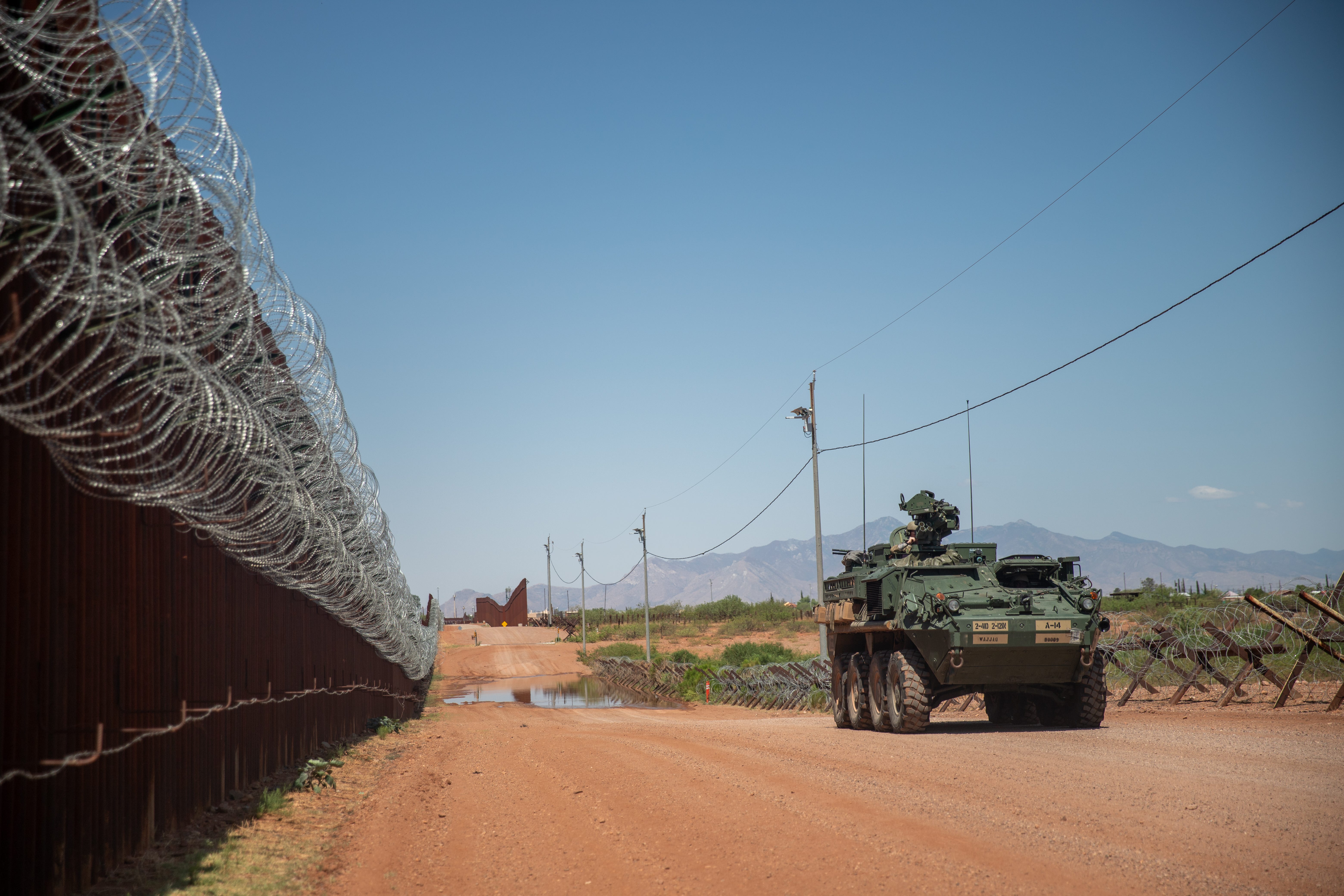
I think hopefully one silver lining of the problem of counter-uas at the border is that developing even a partial set solutions should have really positive secondary effects for our ability to deal with drone threats in other situations, especially peer conflict.
The border offers essentially a low threat environment where we already have some developed infrastructure to iteratively test c-UAS technologies and tactics.
Great piece! As someone who lives not too far from the U.S.-Mexico border, I wasn't aware of these incidents. I really liked how this piece sits at the cross-section of so many issues: border control, technology, and geopolitics. And I think I get the reference in the title :)