

On Sunday, Mexican army special forces raided a safehouse in the town of Tapalpa, Jalisco belonging to the notorious Jalisco Cartel New Generation (CJNG). Four CJNG fighters were slain in the firefight that ensued, while three more were injured and, according to the Mexican government, succumbed to their wounds while en route to Mexico City. Among the latter group was Nemesio Osguera Cervantes, also known as “El Mencho,” leader of the CJNG

In response, CJNG members erected more than 250 roadblocks in at least 20 states, and engaged in targeted attacks on security forces, reportedly slaying 25 members of the National Guard in the state of Jalisco alone. Nevertheless, for now, the violence seems to have been a temporary eruption, rather than a sustained challenge to the Mexican state. The question now is whether a successor can be found, or if the CJNG will disintegrate into brutal civil war like the rival Sinaloa Cartel.
The operation has also reinvigorated debates around the so-called “kingpin strategy” referring to the security policy championed by former President Felipe Calderón that focused on capturing or killing high-profile crime bosses. There is a robust body of evidence suggesting that the elimination of criminal leadership does not meaningfully reduce violence. If anything, kingpin strategies could increase conflict, as would-be successors vie for control, and use brutal tactics to signal their credibility and resolve.
If those trendlines hold, insecurity in Mexico could spike in the coming months, and the Sheinbaum administration, along with the U.S. administration that cheered the operation on, will seemingly have taken one step forward, only to move two steps back.
But in today’s post I argue that, at least from a U.S. perspective, violence may not be the key metric. Instead, borrowing a bit from the evolution of U.S. strategy during the Global War on Terror (GWoT), I think Washington’s primary goal is to degrade the capabilities of Mexican armed groups, especially when it comes to their ability to move drugs, people, and potentially gunmen across the border, as well as their ability to mount a large-scale challenge to the Mexican state.
Under this framework, a more fragmented criminal landscape comprised of local bosses fighting over neighborhoods rather than multinational smuggling networks could still be a win in the eyes of this White House.
The Kingpin Strategy and High-Value Targeting
“If you kill enough of them, they stop fighting” – Gen. Curtis LeMay
Over the GWoT’s 25-year history, the United States has gradually transitioned from pursuing stabilization as the solution to transnational terrorism, to optimizing for threat reduction. If you care about stabilization, the war on terror seems to have manifestly failed. ISIS still exists, and is spreading its tentacles far and wide, Al Qaeda still exists, and the Taliban have come to control Afghanistan again to boot. The territories the United States hoped to bring democracy and prosperity to remain fragile and conflict-prone.
However, if you care about threat reduction, the ability of terror cells to pull off mass-casualty attacks in the west on the scale of 9/11 seems to be greatly diminished. Indeed, this September the United States will have gone 25 years without a single terrorist attack even scratching the scale of September 11, 2001. It seems like the United States has, in this regard, made good on its pledge of “never again” (on U.S. soil, that is).
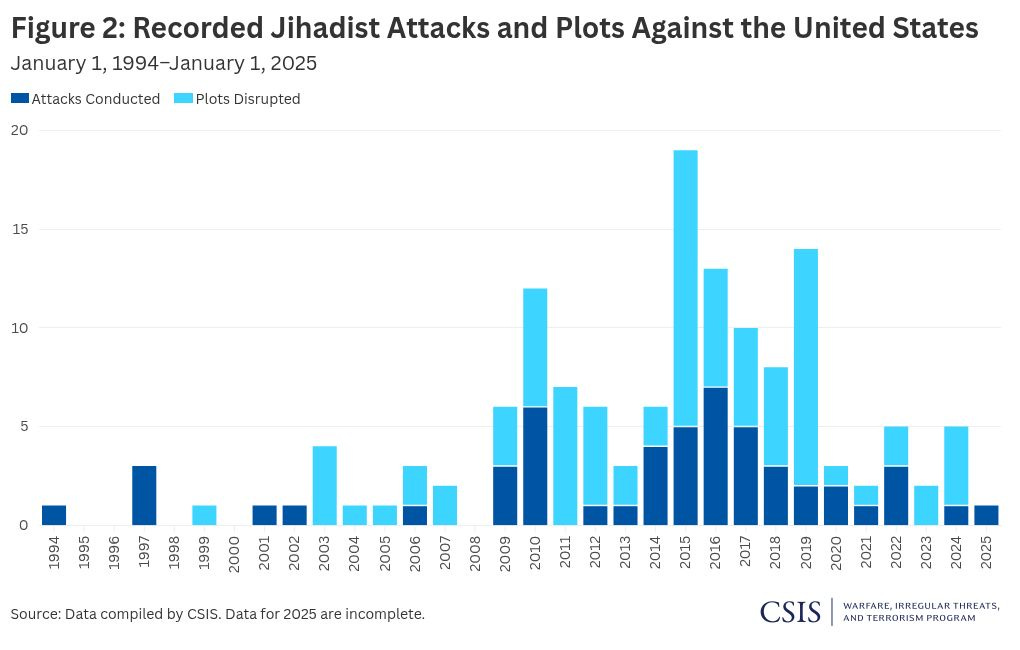
For the most part, the United States has achieved this by pivoting from full-scale invasion and occupation to remote violence, emphasizing in particular high-value terrorist leaders. Today, most non-specialists would be hard-pressed to name the current leader of ISIS. Since the 2019 killing of the group’s first leader, Abu Bakr Al-Baghdadi, the organization is now on its fifth caliph in about seven years. Of course, ISIS remains a potent threat, and its franchisees in places like Afghanistan and the Maghreb are gaining ground, but the core group itself is a shadow of the force that seemed on the verge of overrunning Iraq in 2015.
Other countries have also had success pursuing leadership decapitation strategies for counterterror. Look for instance to the Basque separatist Euskadi Ta Askatasuna (ETA) terror cell. Over the course of its nearly six-decade history, ETA was reportedly responsible for more than 850 deaths, with the heyday of its operations in the 1980s. In the early 2000s, the group declared, and subsequently broke, numerous ceasefires with the Spanish government.
However, Spain’s domestic counter-terror capabilities had grown substantially thanks to international assistance and the heightened securitization of domestic terrorism in the GWoT era. By 2009, 277 alleged members of ETA had been arrested, including the group’s entire leadership council and several successor commanders. By 2011, the group was estimated to have just 50 members. By 2018, ETA announced it would unilaterally demobilize, formally admitting what had already been known for years at that point.
There were other factors at play in ETA’s dissolution, but perpetual leadership churn was undoubtedly a major component. This case also demonstrates how leadership targeting can grind down a group’s cohesion and will to fight over time.
There are, of course, key differences between organized crime and terror cells. The latter are explicitly politically motivated, and can accordingly be convinced or compelled to abandon their political goals through negotiation or force. Criminal groups are primarily profit-motivated, and will continue looking for sources of illicit revenue for as long as they are able. This makes organized crime more adaptable to leadership decapitation as these groups have a broader set of strategies they can pursue in the face of state pressure.
Still, the basic logic of high-value targeting should apply for the simple fact that running a transnational criminal syndicate is hard work. Navigating internal power struggles, keeping track of illicit financial flows, and evading detection by the state all at once is no mean feat, and most people who try to break into the game end up in prison or worse. While there may be a near-infinite supply of people who would like to run a cartel of their own, the bench of talent that can run a cartel well is likely relatively shallow.
As a result, I don’t think it’s fair to say that any strategy that focuses on high-value targeting is doomed to fail. Rather, I think that it is a question of what metrics you are using to measure success. Leadership decapitation might cause groups to splinter into rival factions rather than disband altogether, but it also follows that smaller groups focused on fighting with one another are less capable than a single large criminal network.
I will freely admit that this probably isn’t as effective at decreasing violence at the local level, and without a more comprehensive security strategy it never will be. However, it probably is effective at reducing cartels’ ability to orchestrate major attacks like we saw on Sunday. Other key elements of cartel power, like their ability to manufacture improvised armored fighting vehicles, secure access to high-powered weaponry, and recruit foreign mercenaries are also probably degraded as the ranks of senior leadership thin out.
But even these gains require sustained pressure to bear fruit. Mexico’s problem for the past two decades seems to be that the government has applied just enough pressure on the cartels to foment leadership struggles and a Darwinian race among cartels to become as violent as possible to outcompete one another, but never managing to sustain the pace of operations needed to actually disorient criminal command and control.
Maintaining Operational Tempo
The death of El Mencho is likely to increase, rather than decrease, pressure on Mexico from the United States to take out more cartel leaders in the coming months. Indeed, Trump explicitly claimed credit for the operation in his State of the Union address on Tuesday. Meanwhile, the possibility of unilateral U.S. military intervention continues to hang over Mexico’s head.
Mexico could still turn this situation to its advantage if it is able to apply sustained pressure against CJNG leadership.
The most important missing piece of the puzzle for Mexico’s fight against the cartels is tempo. Currently, analysts point to two scenarios for the post-Mencho CJNG, either a relatively smooth succession, in which case the group returns largely to the previous status quo, or descent into a bloody civil war. Experts with more insight into internal CJNG dynamics than myself have speculated on who the key power brokers could be in either scenario.
But think for a minute if, instead of just killing El Mencho, the government was able to arrest or kill key lieutenants like Juan Carlos González Valencia, El Jardinero, and R2 within a 72-hour period. Suddenly, command and control becomes much harder, the arm of the state seems longer, and individual bosses start to fear they could be next.
There are signs this could be happening, albeit at a slower pace than my hypothetical. The CJNG lieutenant known as “El Tuli” who was reportedly charged with orchestrating the February 22 attacks was killed in a confrontation with Mexican security forces.
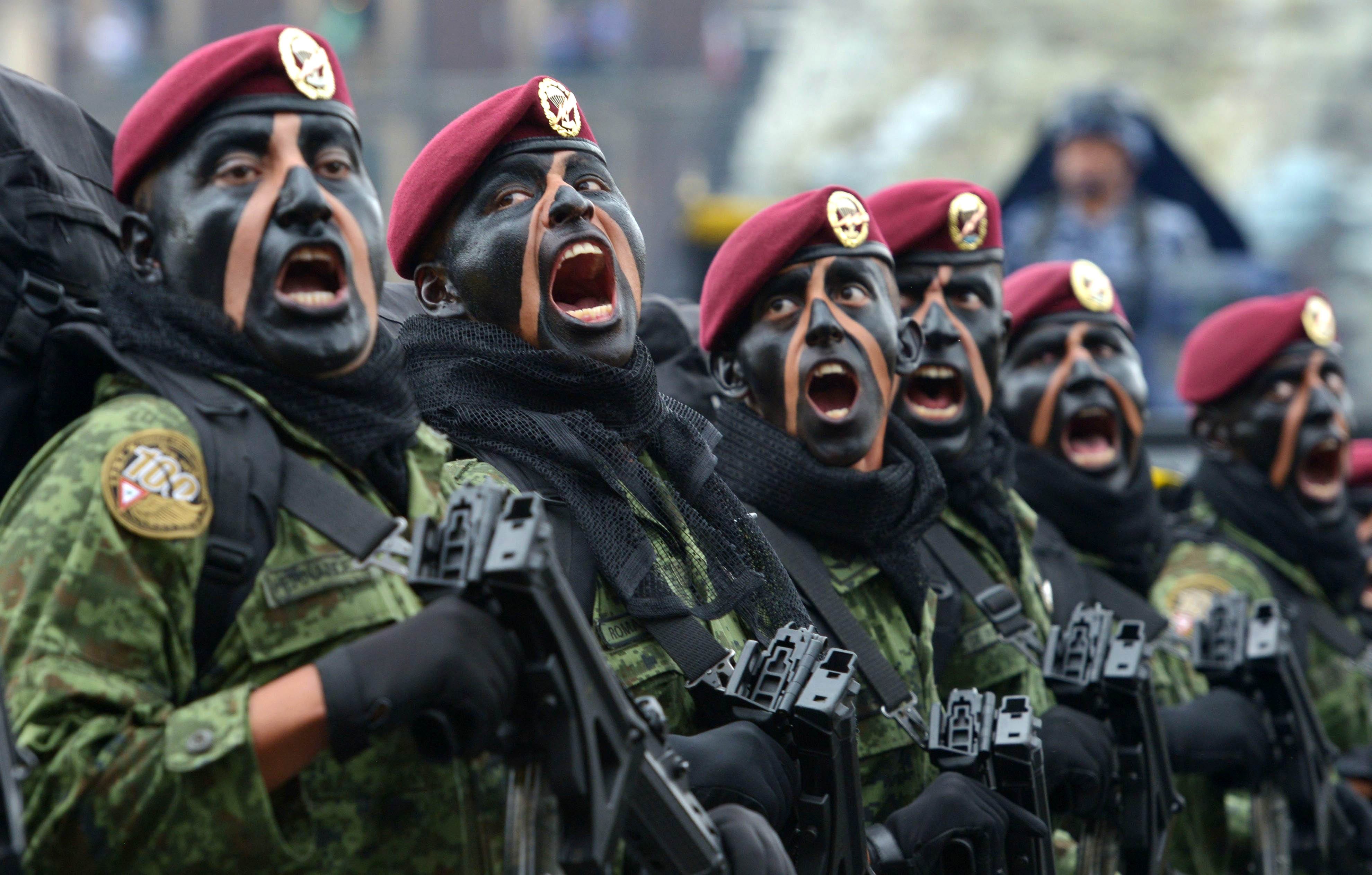
My hunch however is that Mexican Special Operations Forces (SOF) are the most important bottleneck to the country’s ability to maintain high-intensity operations (more on that in a future piece). While Mexico’s elite troops clearly showcased their capabilities with the Mencho operation, there are only so many units that can go after the most brutal, and heavily protected, cartel bosses.
The total number of special forces in Mexico is likely in the low single-digit thousands, but the real the number of personnel who can be entrusted with kicking down doors and taking the fight to the most well-protected criminal leaders is almost certainly less than that. Every casualty incurred as part of a counter-cartel raid therefore represents a loss that is costly and time-consuming to replace. Meanwhile, Mexico’s small air force means that other methods of precision strike are unavailable to the government, the only solution for now at least is boots on the ground.
Orchestrating these raids is time-consuming and inherently risky. In 2023 the units that captured Sinaloa Cartel leader Ovidio Guzmán suffered a total of 10 killed in action, representing about 5 percent of the force. Current reports maintain that no military personnel were injured during the attack on El Mencho, but in 2015 a previous effort to capture the CJNG leader saw cartel members down a military helicopter with shoulder-fired rockets, killing several more security forces.
An article in yesterday’s Los Angeles Times also described in depth how the CJNG had built concentric layers of defense around El Mencho’s hideout, employing landmines and hundreds of heavily armed guards. Had operational security been compromised, it could have easily become a grinding firefight.
Another potential limitation is intelligence, I think it’s plausible that the Mexican armed forces don’t actually know where many cartel bosses are, or at least not with the degree of precision to plan a major strike operation around.
Here I hope the United States is beginning to play a much greater role. We’ve seen Pentagon, DHS, and intelligence community all step up their collection on cartels since 2025, and I would expect by this point the United States has built a fairly substantive picture of the major players and their bases of operations at this point. The best-case scenario would be for the United States to continue providing enabling intelligence and training, while Mexico remains the tactical lead.
Takedowns of figures like El Mencho can also help generate a self-reinforcing intelligence cycle. High-profile raids on senior leadership cause lower echelons to scramble, and start communicating with one another. If those communications can be intercepted, they could reveal the locations of other nodes in the chain of command. But being able to successfully, intercept, exploit, and execute on this intelligence a rapid clip is immensely challenging.
Building this kind of infrastructure was vital to the success of Plan Colombia. With U.S. assistance, Colombian forces over time became adept at raiding one insurgent camp, collecting intelligence from the materials they seized, and feeding them into their military intelligence system to identify subsequent targets, a self-propagating cycle that decisively shifted initiative to the state.
The final hurdle is what I’ll term broadly as “political will.” Mexico’s ruling Morena party faces numerous allegations of being in bed with organized crime, and although I am highly skeptical of allegations (including those made by President Trump) that Sheinbaum herself is bought and paid for by organized crime, her control over security policy at the local level is far from absolute. Add to this the difficulty of waging war against dozens of independent, increasingly decentralized, criminal networks at once and it seems increasingly unlikely that Mexico has crossed some internal Rubicon when it comes to counter-cartel strategy.
I am also conscious that I’ve framed things in this piece in fairly simplistic “government vs. cartels” terms. Criminal power and political power tend to overlap, clash, and recombine in unpredictable ways. It’s hard to tease out the full implications of this in a blog post, so I will suffice it to say that clashes between the Mexican central government and one cartel do not necessarily imply a similar approach will be taken towards other criminal networks.
Security Snake Oil
I remain optimistic about Claudia Sheinbaum’s ability to get security policy right. She enjoys strong approval ratings, ironclad majorities in the legislature, and judiciary (whether you like it or not), giving her broad remit when it comes to determining counter-cartel strategy.
The Mexican public wants to see the power of organized crime broken, and even the supporters of her predecessor’s conciliatory approach to cartel violence have conducted an about-face to applaud the killing of El Mencho. Meanwhile the United States is eagerly cheering on a more muscular approach to organized crime, as long as the White House can take some of the credit from time to time.
But political will has to be paired with strategy. I’ve written before about how it seems frustratingly difficult to actually curb criminal violence once nonstate groups have reached a certain level of power and influence. The fact that most of the unrest following El Mencho’s death seems to have petered out within 48 hours risks lulling both Mexico and the United States into a false sense of security. The goal should not be for violence to simply return to the status quo ante, the goal should be to meaningfully curb CJNG’s power and influence.
The core issue with Mexico’s historical use of the kingpin strategy was that it tried to end-run the hard work of increasing state security capacity and territorial control. The hope was that with a few well-placed leadership decapitations, the main body of the cartels would disintegrate. That approach has clearly failed, but it remains appealing to policymakers willing to accept flashy headlines as an acceptable substitute for strategy.