In my last post, I argued that the September 2 U.S. airstrike on a Venezuelan drug trafficking boat “was not the end of the U.S. experiment in military action against criminal groups, it was the opening salvo.” As of yesterday, the United States has carried out at least four more strikes, with a total death toll of 27.
One strike sends a message, five becomes a pattern, and all signs point to the United States intensifying its air campaign against drug trafficking boats or even broadening it to strike at targets within Venezuela. Vice President J.D. Vance’s claim that targeting drug traffickers is “the highest and best use of our military” further suggests that the United States views kinetic action against criminal groups in the Western Hemisphere to be a national security priority moving forward.
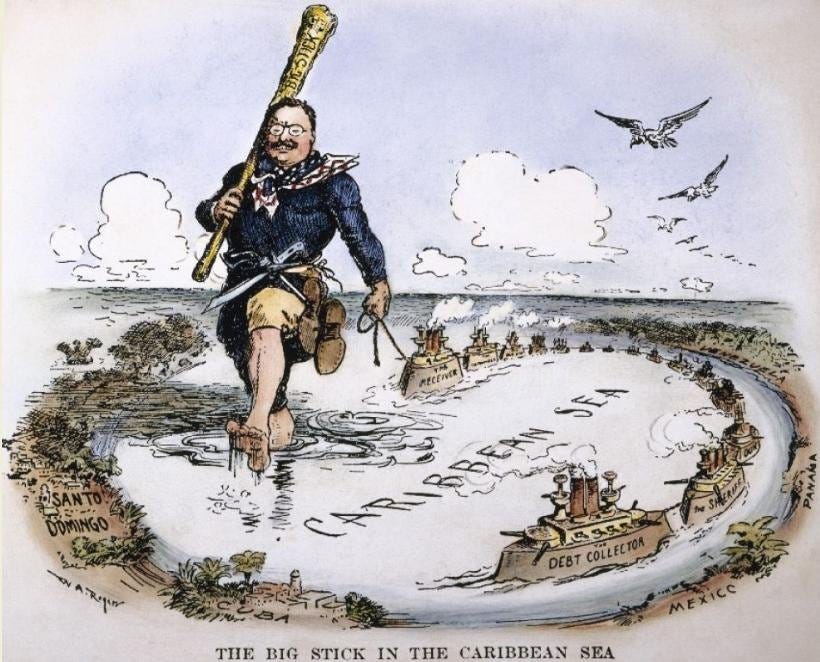
The conventional wisdom is that such a unilateralist approach will be disastrous for the United States. The region rankles at the mention of the Monroe Doctrine and the scars from previous interventions are still fresh in many countries. I think there is some truth in this reading, but what concerns me even more is the possibility that this approach could be remarkably popular in the region.
Initial evidence points to this being the case. In the wake of the September 2 strike, Prime Minister Kamla Persad-Bissessar of Trinidad and Tobago stated: “The pain and suffering the cartels have inflicted on our nation is immense. I have no sympathy for traffickers; the US military should kill them all violently.” Guyana, facing persistent saber-rattling from Venezuela over the disputed Essequibo territory, welcomed the deployment of U.S. warships in Caribbean waters. Meanwhile in Ecuador, Marco Rubio arrived with much fanfare to discuss elevating security ties with President Daniel Noboa. Pushback from the usual suspects, Brazil, Colombia, and Mexico, has been muted, with 13 countries refusing to sign a statement condemning the strikes sponsored by Gustavo Petro at the Community of Latin American and Caribbean States. Now after weeks of continued strikes in international waters, the Trump administration now seems confident in potentially escalating to attacks inside sovereign territory.
Somewhat paradoxically, support for U.S. interventionism is in part the product of historical U.S. neglect for threats within its own hemisphere. For years the United States has deprioritized the threat of organized crime in the Western Hemisphere, allowing criminal groups to metastasize into genuine threats to regional stability. In the span of three years, Ecuador went from one of the most peaceful countries in South America, to one of the most violent. In cities like Quito and Guayaquil, people have seen streets they used to tread safely become no-go zones practically overnight. Similarly, Mexico has seen its homicide rate more than triple since 2006, with drug cartels growing and growing in wealth, tactical sophistication, and brutality. The list of examples can go on and on, but it seems to point to a region where many could be willing to trade a bit of their country’s sovereignty for greater security.
Take Haiti for example where U.S. mercenaries have begun a campaign of effectively unrestricted drone warfare against gangs in the cramped urban confines of Port-au-Prince. According to a July piece from The Guardian noted that, “Perhaps surprisingly, Haitian human rights activists have backed the use of drone warfare to target criminal groups who have forced more than 1 million people to flee their homes and killed thousands.” The article cites Haitian civilians and even human rights activists who endorse the drone campaign even as U.S.-based analysts speculate about potential human rights implications. The lesson is, when the security situation reaches a breaking point, people would much prefer something to nothing.
This is borne out historically as well. Colombia became one of the most pro-U.S. countries not just in the Latin America, but globally, as a result of over a decade of close security cooperation under Plan Colombia which saw one of the world’s longest-running internal armed conflicts come to a close. People saw genuine improvements in the country’s security situation as a direct result of U.S. assistance. But when the peace agreement with the FARC was signed, and support for implementation proved sorely lacking, the country has experienced a renewed deterioration in public safety.
Of course some countries, particularly regional heavyweights like Mexico and Brazil, will undoubtedly oppose U.S. interventions even in the face of major internal security challenges. But elsewhere the United States could find unexpected support. Ecuador would likely be thrilled if the fine-tuned machine that is the U.S. high-value targeting program could be used to systematically eliminate the leadership of the Choneros and Lobos. While these countries likely still can’t publicly endorse handing over sovereignty to the Yankees, there is good reason to believe the United States might face little backlash for being overzealous in the security domain.
U.S. interventionism also absolves regional governments of responsibility. The United States is so big, so implacable, when it turns its eye to a small country in the Western Hemisphere it may be no different than a natural disaster. Except this disaster has the added effect of only (or mostly) targeting drug traffickers. You can’t fight the United States, certainly not the implacable Trump administration, so why bother? Instead, governments can rail performatively against Washington’s boorish behavior, pocket the security gains, and wave goodbye as the hurricane rolls onwards. Any excesses committed by the government itself can be waved aside as necessary evils to prevent the United States from cracking down further.
Take for instance Mexico’s February extradition of 29 cartel leaders to the United States, and follow-up August extradition of 26 more. The transfers very likely violated several of the defendants’ constitutional rights, but these concerns were brushed aside as necessary to elide more forceful tariffs or potentially even use of force by the United States. Governments wanting to adopt even more aggressive security postures are likely to use this as an opportunity to crack down harder, throwing up U.S. actions as a smoke screen against abuses by domestic police and military action.
The above may paint a rosy picture for the U.S. policymaker. If killing drug traffickers helps deter illicit activity and countries in the region won’t fight back, surely the United States should go full steam ahead with a global war on crime? Here I believe that the true consequences of the current U.S. strategy will not be felt until it is too late.
TCOs are nothing if not adaptable. If smuggling contraband in go-fast boats now carries a death sentence, they may elect to adulterate legitimate cargo shipments, increase production of remotely-piloted drug boats, or turn more to synthetic drugs whose increased potency means smaller quantities can still turn respectable profits. And even if the current crop of TCOs can’t manage this pivot, the Hobbesian world of organized crime will all but ensure another group will figure it out in the future. A hemisphere-wide U.S. military campaign against drug traffickers may therefore appear successful until it isn’t, and leave a vast human toll in its wake.
Returning to Haiti for a moment, for the first several months the drone campaign against gangs appeared an unequivocal success, at least militarily. Then, on September 20, an armed drone targeting a gang leader in Port-au-Prince missed its target and exploded, killing 11 including eight children and a pregnant woman. Such a tragedy surely warrants a reckoning within the force responsible, and the victims’ loved ones left behind are surely owed transparency and justice. The heinous actions of Haiti’s gangs to not excuse abuses committed in the name of fighting them. But the United States risks replicating this same tragedy a hundredfold if it continues down the current path to war against drug traffickers.
I’ve been open about my belief that there is a right way to use military assets to combat narcotrafficking, but I fear that isn’t in the cards currently. The Trump administration’s desire to show quick wins with minimal U.S. exposure means that we risk becoming addicted to videos of alleged drug traffickers getting blown up and thinking that substitutes for strategy. The results will be short-term gain, and likely a good measure of catharsis, but long-term pain as collateral damage mounts and the United States remains more interested in shattering what it perceives to be threats than helping pick up the pieces.