

This week, ministers of mining, energy, and economy descended on Washington for the White House’s inaugural Critical Minerals Ministerial. Hosted by the State Department, the objective of the convening was to further U.S.-efforts to break China’s dominance over key mineral supply chains, especially rare earth elements (REEs). Represented at the ministerial were several delegates from Latin America including Argentina, Mexico, Peru and more who were eager to sign agreements boosting cooperation with the U.S. on minerals.
Like other resource-rich nations, Latin American countries also have a troubled history with their mining sectors. From Spanish colonial exploitation of silver and gold resources to more recent corruption scandals and environmental disasters, to the ongoing scourge of illegal mining by criminal actors, the industry does not necessarily have a sterling reputation. At the same time, many governments in the region continue to view their mineral wealth as a key to economic development.
As the technologies that power the modern world demand a more diverse array of elemental inputs, countries are looking to position themselves as new players in niche markets. It seems everyone these days is announcing new REE finds for example, while mineral reserves in the Venezuela’s Orinoco region have emerged as an important subplot in discussions that country’s economic future.
Critical minerals is one of the policy sectors where the gulf between hype and reality is at its widest. Articles often breathlessly recycle figures about trillion-dollar mineral deposits buried beneath Greenland’s ice, or at the bottom of the sea. Governments can be incentivized to repeat these claims in the interest of attracting new investment, but the economics will out in most cases.
For every headline about Latin America’s minerals potential, the expected windfall has been slow to materialize. Countries have been more eager to erect regulatory walls than to get shovels into the ground. In the meantime, growth projections have been revised downwards as prices fluctuate, and new reserves are discovered. In countries like Panama, existing mining operations have also been shuttered amid growing environmental unrest. Given the long timelines associated with the mining sector, the region is currently at risk of being left behind in the scramble for critical minerals.
Killing the Goose that Laid the Golden Egg
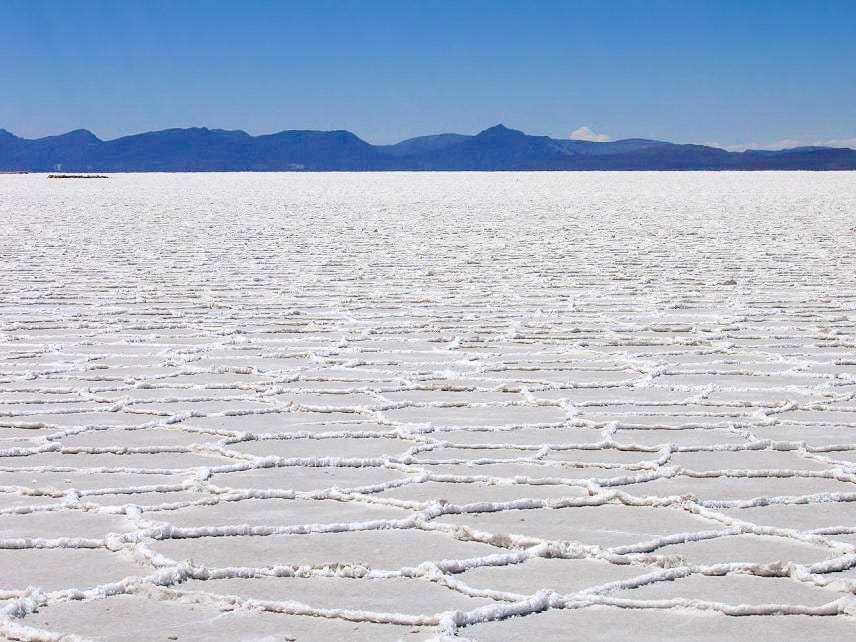
If you’ve been following the critical minerals space since, say, 2022, you’ve probably heard about the Lithium Triangle. Referring to a region of lithium-rich salt flats between Argentina, Bolivia, and Chile, the triangle harbors more than half of the world’s lithium reserves. As the electric vehicle revolution kicked off, attention on the region skyrocketed as a key source for the materials that made EV batteries possible.
Between 2022 and 2023 lithium was trading at historic highs, prompting many to dub “white gold” the new oil, and the Lithium Triangle the next frontier in great power competition. In Bolivia, then-president Luis Arce championed the cause of an “OPEC for Lithium” to ensure that the riches to come would benefit the people, not foreign multinationals. He was joined in this initiative by Andrés Manuel López Obrador in Mexico, who in 2022 issued a presidential decree nationalizing Mexican lithium reserves (estimated at about 1.7 million tons) and creating a new state-owned enterprise Litio para México (LitioMX) to develop these.
Ironically, the two biggest proponents of a lithium OPEC were those countries that produced the least amount of lithium. Despite harboring 23 million tons in estimated reserves, Bolivia accounts for less than 1 percent of global lithium production. The lithium-rich Salar de Uyuni salt flats are protected by the constitution, which states that only the government can develop these reserves. The Bolivian government has accordingly sought to partner with a rotating cast of companies, from U.S.-based startup EnergyX, to the Chinese and Russian firms CBC and Uranium One. While newly-elected President Rodrigo Paz has signaled an openness to greater foreign participation and investment, he still faces a steep uphill climb.
In the case of Mexico, at the time that AMLO announced lithium’s nationalization, the country had no producing mines, and just one project with any level of viability. Since then, the establishment of LitioMX has been a procedural boondoggle buffeted by macroeconomic headwinds. Four years after nationalizing its lithium, Mexico is nowhere closer to seeing any benefits.
Globally, lithium is increasingly looking less and less like the new oil. Since 2022 prices have dropped significantly amid conditions of oversupply and flagging demand from China. While the long-term forecast still shows growing demand, and prices have started to rally again this year, additional minerals exploration has uncovered major lithium deposits in the United States like a reportedly 40 million ton deposit below the McDermitt Caldera along the Oregon-Nevada border. To be sure, it will take years, if not decades, for these new discoveries to turn into production, but the industry seems to be moving more towards a buyer's market for lithium.
Argentina and Chile by contrast have done much better for themselves at making the most of the attention around lithium. Chile, home to one of South America’s most advanced mining industries, is the second-largest lithium producer in the world after Australia. Just two companies currently produce lithium in Chile, multinational titan Albemarle, and the home-grown giant Sociedad Química y Minera de Chile S.A. (SQM).
Chile has had its own flirtations with resource nationalist policies. Former President Gabriel Boric once proposed a national lithium company, later pivoting to release a national lithium strategy instead, which established a greater role for the state in tendering and managing lithium concessions. The most immediate result from this strategy was a merger between SQM and Chilean state-owned copper company Codelco for the latter to assume a “fifty plus-one” majority stake in the former.
Chile has a pretty good track record running public-private partnerships in the minerals space. The country is the number one copper producer in the world and enjoys healthy partnerships with all manner of international mining majors. Nevertheless, Codelco’s expanded role under the national lithium strategy has raised some eyebrows.
For one, the lack of a public bidding process may have left money on the table for Chile and raised transparency concerns. Greater state intervention in the mining space may also mean lithium revenues could be used to plug up losses by unprofitable state-owned companies, rather than be reinvested in expanding production or research and development. From an environmentalist perspective as well, critics have challenged that giving the state a vested interest in mining operations will further sideline local community concerns.
Argentina’s lithium sector appears the most dynamic among the Lithium Triangle countries, and the fastest-growing. In 2020 the country produced 5,900 tons of elemental lithium according to the U.S. Geological Survey, in 2024 it produced 18,000 tons, a more than three-fold increase, with goals to boost production further over the next decade. This comes at a time when the country is also courting new copper mining investment and seeking to leverage friendly relations between Buenos Aires and Washington.
Argentina’s secret sauce, and potential Achilles’ Heel, is its federalist system wherein provincial governments control access to the mineral resources on their territory. This helps prevent resource nationalist impulses at the federal level from scuttling investments and allows experimentation at the local level with different models for partnership with mining companies.
But it also carries risks, especially when provinces like Jujuy and Salta which have historically been sidelined in national politics become geoeconomic lightning rods. Provincial governments can be more susceptible to bribery and corruption by foreign companies to offer sweetheart mining deals. In addition, this fragmented model of mineral rights means provinces often lack the financial resources to invest in enabling infrastructure for mining like roads, railways, and power plants. Overlaying all of this, of course, is Argentina’s reputation as a volatile economy incapable of providing the kind of legal and regulatory stability mining majors need to dump billions of dollars into multi-decade projects.
The Milei government is seeking to fix this with its RIGI program (Régimen de Incentivos para Grandes Inversiones) which provides tax incentives, 30 year legal stability commitments, and loosened foreign exchange controls to projects in strategic sectors, including mining. Milei is also working to revise Argentina’s prohibition on mining near glaciers, seen as an impediment to developing copper projects.
I’ve focused mainly on lithium here as one of the best examples of Latin America’s struggle dealing with hype and reality of mining economics, but the same logic applies to other would-be critical minerals superpowers in the region. Brazil for instance, has draw attention for its reserves of rare earth elements, estimated to be the second-largest in the world after China.
As the United States scrambles to break China’s stranglehold on REEs Brazil should, in theory, be able to leverage its reserves to draw investors from the United States and other governments leery of China’s current monopoly. However, as The Economist reported last week, Brazilian President Luiz Inácio Lula da Silva can’t quite help himself from deploying resource nationalist rhetoric when he bemoans the possibility of “the same old countries digging holes in our country, taking our minerals.”
It’s hard to imagine a Brazilian rare earth industry emerging without foreign companies at the helm initially, and it’s equally hard to imagine any international investors paying the massive fixed costs required for REE extraction without more promising business conditions. For this reason, the firms best primed to operate in Brazil’s REE sector today are actually Chinese state-owned enterprises, who have both the technical know-how and deep pockets needed to navigate Brazil’s byzantine regulatory environment.
NIMBY Final Boss
Another challenge facing Latin American countries’ critical minerals ambitions is the fact that a good chunk of their citizens don’t actually want more mining. The region has a strong NIMBY (not in my backyard) bent when it comes to extractive industries. To be fair, that impulse exists most places when the topic of mining crops up, you can get a lot of people on board with the idea of more mining, but nobody wants to live next door to a mine.
In that respect, Latin America is no different from my home state of Minnesota, where debate has raged for over a decade around the proposed Twin Metals mine near the boundary waters national park. But the debate in Latin American countries tends to have even sharper edges.
Most good faith counterarguments against NIMBYism recognize that there are real tradeoffs to building more and building big, but that we can significantly mitigate most downsides. Works in Progress recently ran a good piece about this as it applies to water sanitation, where the United States spends billions trying to reach as-low-as-feasible targets, only to have water that’s more expensive, not much cleaner, than what you would find in Germany or Japan.
When it comes to modern mines, our environmental impact studies are more sensitive, our tailings dams are safer, and our water treatment is better. New and emerging technologies like direct lithium extraction (DLE) also hold out the possibility of technical fixes for concerns around water usage.
However, while YIMBYs in the United States complain about excessive environmental reviews or activists manufacturing endangered species to gum up the works of minerals projects, in Latin America, environmental activists are often murdered for their work. Indeed, the region continues to be the most deadly in the world to be an environmental defender, with the NGO Global Witness recording 117 such murders in 2025.
The environmental consequences of mining can also be deadly serious. Events like the 2019 Brumadinho dam disaster, when a tailings dam in Brazil collapsed killing 272 people and releasing toxic residue from mineral extraction into the surrounding environment, further erode public trust in mining. In the case of Brumadinho, the tailings dam had, prior to collapse, passed safety inspections and featured safeguards that should have alerted authorities to the risk of sudden collapse, highlighting the fact that even contingency planning cannot eliminate catastrophic risk.
Even short of full-blown disasters, mining operations frequently come into conflict with affected communities. The Lithium Triangle countries are once again good examples given the water-intensive nature of current modes of lithium production. That’s bad if you happen to live in a place like the Atacama Desert, already one of the driest locales on earth, which also happens to be home to South America’s largest lithium reserves.
The latest mania around rare earths seems primed to further exacerbate tensions with environmentalists. Current methods for REE separation and processing are notoriously difficult and polluting. Even if Brazil manages to attract the capital requires to bring large-scale REE production online, the environmental toll of such operations could catalyze fierce domestic opposition.
To mitigate these environmental externalities, some mineral majors have poured significant funding into standing up water treatment facilities, roads, schools, and security infrastructure in an effort to cultivate public trust. But these measures are inconsistent and can differ from company to company.
Finally, there is the ever-present menace of organized crime, which increasingly seeks to penetrate and exploit the mining industry. Criminal mining efforts can take the form of both artisanal small-scale wildcat mining projects, or the takeover of existing commercial mines. The former runs rampant in places like Venezuela, where it has been associated with mercury poisoning and the return of malaria thanks to the pools of stagnant water that form in illegal mine sites. The latter has come to plague large mining conglomerates in places like Colombia, where the Clan del Golfo has clashed with and at times taken over parts of a Chinese-owned gold mine in the department of Antioquia. Illegal mining both sours the investment potential of a country and degrades trust among local communities who could become find themselves caught in the crossfire of a criminal attempt to take over mining operations.
This all creates important domestic anti-mining constituencies who oppose new projects and work to close down existing ones. In Panama for instance, the Cobre Panama mine, which singlehandedly accounted for nearly 2 percent of the world’s copper supply was shuttered in 2023 by the country’s Supreme Court and amid mass protests. Efforts by the Mulino government to get the mine back up and running have provoked fierce opposition from civil society even as demand (and prices) for copper remain at historical highs.
At its worst, local opposition to mining undermines investor confidence, requiring governments to make additional (sometimes underhanded) concessions to attract future investment and reassure companies of the stability of their investments. A 2023 study for instance documented the use of off-duty police officers by provincial governors in Argentina’s northeast to intimidate indigenous communities at the behest of Chinese lithium companies. These methods in turn inflame local opposition and worsen public distrust towards the mining industry.
Conclusion
I still believe the critical minerals boom is a great opportunity for countries in Latin America. The United States is desperate to shore up its minerals security, and like-minded buyers are similarly wising up to the need to diversify sources away from China.
This is one area where the Trump administration’s resource fixation seems to be channeling things in the right direction. After years of discussion the U.S. is finally rolling out multi-billion-dollar stockpiling initiatives and earnestly working on price supports for REEs to break China’s control of that market. In Latin America, the ascendancy of U.S.-aligned governments in all three of the Lithium Triangle countries, and the overall rightward turn of the region, suggests new openings for creative dealmaking with the White House.
Seizing the moment will still require countries to look past the hype and focus on setting themselves up for success over the long term. Part of that will involve actually reckoning with the tradeoffs mining presents, rather than seeking to legislate these away.
My hunch is that the region already has all the laws on the books it needs to regulate the mining sector. The focus should instead be on boosting enforcement. That means hiring more mine site inspectors, boosting funding for rural police forces, and, of course, working to root out corruption in the judicial system.
Similarly, if countries want more environmentally friendly mine sites, they should try to make it easier or more attractive to build in a sustainable way. Offering tax incentives or permitting shortcuts for projects piloting low-water use technologies seems like a better approach than mandating that prospective miners must use DLE.
Getting these first steps right is important, but raw mineral exports alone will never be enough to deliver the economic growth that regional policymakers dream about. The key lies in climbing value chains, from lithium to batteries, from batteries to electric vehicles, and from electric vehicles to a globally competitive manufacturing sector. Few countries have successfully managed this ascent, but leaving minerals in the ground is a sure-fire way to keep that process from ever starting up.
Interesting read, Henry.
At the moment Li-Ion batteries are popular because of higher energy density than other options, but there are some exciting technologies around the corner. Sodium-Ion batteries have less energy density but are much cheaper without digging new mines. There are also great strides in solid state batteries, which charge faster and have better energy density, and while they are more expensive at the moment, those costs will decline as mass production increases. Let's not forget that many of these newer batteries are much safer than the highly flammable Li-Ion batteries. (https://www.tesla-fire.com/) It seems that when Elon isn't killing you with his full self-driving, he's roasting you alive.
Wouldn't be more practical to invest in speeding up those newer options than digging mines in Latin America? Especially since there's a good chance that these new technologies will take the place of Li-Ion batteries before these mines are even dug.